
- Apple’s first foldable iPhone starts at $1,999 in the US, and its main selling point is the 7.6-inch screen inside.
- Apple says you can use Split View to keep two apps open side by side.
- That could make the Duo more useful than a regular iPhone for work and everyday tasks, but it doesn’t turn the device into a pocket Mac or an iPad mini replacement for everyone.
- And it costs $2000 which makes it a rather tricky recommendation given the iPhone 18 Pro Max’s proven pedigree across the board…
- Wanna save big money? Check out how cheap Apple’s iPhone 15 Pro Max is refurbished; it’ll blow your socks off.
The iPhone Duo is now official. It has a 5.4-inch outer display and a 7.6-inch inner display, with iOS 27.1 adapting as you open, close or turn the phone. Apple confirms Split View multitasking and app switching on the larger screen.
The practical benefit is simple: you can keep two apps visible instead of jumping between them. Think Mail beside Calendar, Safari beside Notes, or Messages beside Maps.
The limits matter too. Apple hasn’t presented the Duo as an iPad running iPadOS. Its public description focuses on Split View and app switching, not Stage Manager, freely floating windows or a desktop-style workspace.
- The US price starts at $1,999 for 256GB.
- The iPhone 18 Pro Max starts at $1,299, so the Duo costs $700 more.
That extra money buys the foldable screen and its larger-screen features, not a better version of every iPhone feature. And definitely not a better camera module.
What multitasking does Apple confirm?
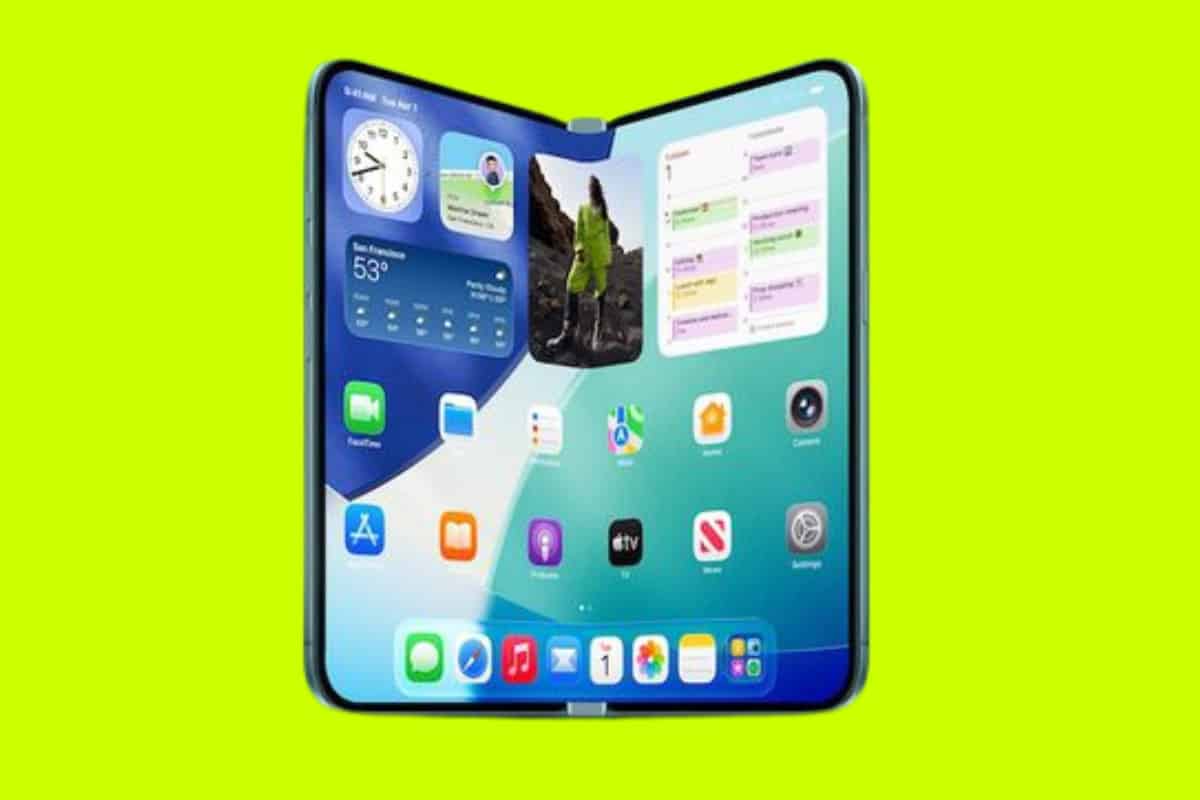
Apple says the Duo supports Split View on its 7.6-inch inner display, letting you use two apps side by side. iOS adapts as you fold the phone, turn it or switch between the inner and outer displays.
That’s a meaningful change from a regular iPhone, where you usually use one app at a time. Picture in Picture lets you keep a small video window open over another app, but it doesn’t give you two full app views.
Apple’s description is clear about Split View and switching between apps. It doesn’t promise iPadOS, Stage Manager or a laptop-style desktop. So treat the Duo as an iPhone with a larger, multitasking-friendly display, not as an iPad that folds up.
What could you do with two apps open?
The best examples are ordinary tasks that currently involve a lot of app switching:
- Safari and Notes: Read a page while making notes or collecting information.
- Mail and Calendar: Check a message while looking for a date.
- Messages and Maps: Discuss where to meet while keeping the route visible.
- Files and Mail: Find a document while writing an email.
- YouTube and Safari: Watch a tutorial while following its written instructions.
- Photos and Messages: Choose images while keeping the conversation open.
These combinations aren’t new to phones in general. Android foldables have offered split-screen use for years. What’s new is Apple building this format into an iPhone and adapting iOS around it.
For it to work well, apps need layouts that make sense on the wider screen. A narrow phone app simply stretched across half the display could feel cramped. Apple says iOS adapts the experience to the Duo, but the quality will vary by app and how its developers support the larger screen.
You don’t have to pay $1,000+ for a new phone. Buying refurbished saves you, on average, 40% to 50%.
Which means you skip the inflationary price hikes, side-step the 2026 memory cost crisis, and still get the flagship performance and specs you want.
Recommended Options For 2026How the two displays fit into daily use
The Duo’s outside screen is 5.4 inches. It works as the compact, everyday display for quick tasks. Open the phone and the 7.6-inch screen gives you more space for reading, video, games and Split View.
The important test is whether apps move between the two displays smoothly. Apple says iOS adapts as the phone folds and switches to the appropriate display. That should let you start something on the outer screen and continue on the inner one, or close the phone when you’re done with the larger view.
Apple has also shown the Duo using StandBy on either display. You can prop it open or closed to show a clock, widgets or other information.
The hinge may also make the phone useful as its own stand for video calls or watching something hands-free. That’s a practical benefit of the fold, although it doesn’t depend on running two apps at once.
What the Duo doesn’t promise
The original rumours around the foldable described a broad set of possible iPad-style features. Now that Apple has announced the product, it’s better to stick to what the company has actually shown.
Apple has confirmed Split View, app switching and an interface that responds to the phone’s position. It has not described the Duo as running iPadOS or promised:
- Stage Manager
- Freely resizable, floating desktop windows
- Three or four apps open at once
- An iPad-style desktop workspace
- Support for every iPad-only app
That doesn’t mean Apple could never add more features. It means buyers shouldn’t pay $1,999 based on features Apple hasn’t announced.
You’re paying too much for data. Way too much.
Visible+ gives you unlimited premium data on Verizon’s 5G Ultra Wideband network, plus hotspot data and travel perks.
Compare top-ranked plansVisible+ includes
- Unlimited premium dataVerizon 5G Ultra Wideband
- Unlimited hotspot dataSpeeds up to 15 Mbps
- Travel extrasCanada and Mexico coverage, plus 2 days of Global Pass each month
What early hands-on reports say
The hands-on response so far has been positive about the hinge and the way iOS adapts to the fold. PhoneArena’s reviewer liked the hinge’s movement and said the software looked polished for a first attempt, while warning that developers will need time to make their apps fit the new display.
MacRumors noted that the crease is still visible in some lighting and that Split View apps can’t be resized in the version it tried. Digital Camera World questioned whether people will use side-by-side apps often enough to make the format worthwhile, based partly on conversations with Android foldable owners.
The Wall Street Journal saw the bigger-screen concept as a possible reason to use an iPad mini less. That’s a useful way to think about the Duo: it may replace some tablet use, but it won’t suit everyone who owns a tablet.
These are early hands-on impressions, not long-term reviews. The first customer units are due on October 23, so reviewers haven’t yet had months to judge app support, durability or how often multitasking proves useful.
US pricing: is multitasking worth $700 extra?
The iPhone Duo starts at $1,999 for 256GB. Higher-capacity versions cost more, reaching $3,199 for 2TB. The iPhone 18 Pro Max starts at $1,299, making the Duo $700 more expensive at the base storage level.
That’s a large premium for the foldable design. Apple hasn’t published a breakdown of what it costs to make the Duo, so exact claims about component costs or profit margins would be guesswork. The flexible display, hinge, dual-battery design and compact construction all add engineering and manufacturing demands, but Apple hasn’t said how much each contributes to the retail price.
The Duo also gives up some familiar Pro features. It uses Touch ID rather than Face ID and has two rear cameras, without a dedicated telephoto lens. The Pro Max has the more conventional flagship setup.
So the question is what you’ll actually do with the larger display. If you regularly work between two apps, read long documents, take video calls or use your phone for games and video, the Duo has a clearer case. If you mostly message, browse, take photos and use social media, the Pro Max will probably do the job for $700 less.
Is the Duo a replacement for an iPad mini?
Possibly, if your tablet use is light. The Duo could handle reading, email, video, browsing and some two-app tasks in one device. You wouldn’t need to carry a separate phone and small tablet for those uses.
But it isn’t simply an iPad mini that folds. It runs iOS, and Apple’s confirmed multitasking features are more limited than a full iPad workspace. If you rely on iPad-only apps, extensive window management or a larger screen for long work sessions, the Duo may not replace your tablet.
It could be a phone that cuts down on how often you reach for the iPad. Whether that’s worth $700 extra depends on how often you use the tablet now.
The bottom line
The iPhone Duo’s multitasking is real: Apple has confirmed Split View and app switching on its 7.6-inch inner display. That gives the foldable a clear job beyond simply offering a bigger screen.
But don’t mistake it for an iPhone that runs like a Mac, or an iPad mini with a phone attached. Apple hasn’t confirmed Stage Manager or desktop-style windows, and early hands-on reports raise questions about app support and how useful split-screen will be in everyday use.
At $1,999, the Duo costs $700 more than the $1,299 iPhone 18 Pro Max. Buy it if you can see yourself using the inside screen regularly. If you mainly want the best conventional iPhone, the Pro Max is the more sensible choice.
Sources
- Apple: iPhone Duo announcement and confirmed features
- Apple: iPhone 18 Pro and Pro Max US pricing
- PhoneArena: Hands-on impressions of the Duo’s hinge and software
- MacRumors: Hands-on look at the crease and Split View
- Digital Camera World: Are the Duo’s apps enough to make it worthwhile?
- The Wall Street Journal: First impressions of the iPhone Duo
Keep reading
More useful guides from this section of KnowYourMobile.
