Apple’s first folding iPhone is expected to be unveiled alongside the iPhone 18 Pro and Pro Max in September 2026, although sales may not begin until October or later. It should use a book-style design that opens into a large internal display.
Reported features
Key numbers
Nothing here is confirmed by Apple — design, specs and pricing are based on current reporting and could change before launch.
Apple has spent years watching Samsung, Google, Honor, Motorola and Huawei release folding phones.
Its response is now almost here.
Apple’s first foldable iPhone is expected to be announced in September 2026 alongside the iPhone 18 Pro and iPhone 18 Pro Max. It will reportedly open like a book, giving you a normal phone screen on the outside and an almost iPad mini-sized display on the inside.
It may be called the iPhone Ultra, although iPhone Fold remains another possibility. Whatever Apple calls it, this won’t simply be an iPhone 18 Pro with a folding screen.
It is expected to have a different design, a new version of iOS built around two displays, side-mounted Touch ID instead of Face ID, two rear cameras rather than three and the largest battery Apple has ever fitted inside an iPhone.
It could also cost somewhere between $2,000 and $2,500, making it the most expensive phone released by Apple (and pretty much anyone else) to date. Higher-storage versions may a reach a butt-clenching $3,000.
Yes, you read that correctly.
Here’s everything currently known about the iPhone Ultra, including how its displays will work, its folding design, camera limitations, battery, A20 processor, software, expected release date and whether buying a first-generation foldable iPhone is remotely sensible.
iPhone Ultra: Expected Specifications
Apple has not announced the phone, its name or any of the specifications below. The table is based on current supply-chain reporting, analyst claims and leaks from the device’s development and manufacturing process.
| Feature | Expected specification |
|---|---|
| Product name | iPhone Ultra or iPhone Fold |
| Announcement | September 2026 |
| Release | Possibly October to December 2026 |
| Design | Book-style foldable |
| External display | Approximately 5.3 to 5.5 inches |
| Internal display | Approximately 7.7 to 7.8 inches |
| Internal aspect ratio | Approximately 4:3 |
| Unfolded thickness | Approximately 4.5 to 4.8mm |
| Folded thickness | Approximately 9 to 9.5mm |
| Frame | Titanium and aluminium reportedly used |
| Hinge | Liquid metal, titanium or 3D-printed metal parts |
| Processor | Apple A20 or A20 Pro |
| Memory | 12GB expected |
| Rear cameras | Two 48MP cameras |
| Front cameras | External and internal cameras expected |
| Face ID | Not expected |
| Fingerprint security | Touch ID built into power button |
| Cellular modem | Apple C2 expected |
| Battery | Approximately 4,800 to 5,000mAh currently indicated |
| Storage | 256GB, 512GB and 1TB expected |
| Colours | Black and white rumoured |
| Starting price | Approximately $2,299 to $2,499 |
The screen sizes, book-style design, Touch ID and dual rear cameras have been reported repeatedly. Exact battery capacity, chip version, materials, colours and retail pricing remain less certain.
Is It Really Going To Be Called The iPhone Ultra?
Maybe.
The phone has been referred to as the iPhone Fold throughout most of its development, but that may simply be a descriptive name used by reporters and analysts.
More recent reports claim Apple has chosen the iPhone Ultra name.
Ultra would make sense within Apple’s current branding. The company already sells the Apple Watch Ultra, while its most expensive processors use names such as M3 Ultra. “Ultra” tells customers immediately that the product sits above the Pro Max.
It would also allow Apple to treat the foldable as a separate range rather than making it another member of the numbered iPhone 18 family.
That distinction matters because the standard iPhone 18 won’t arrive until 2027. Apple’s expected autumn 2026 range is:
- iPhone 18 Pro
- iPhone 18 Pro Max
- iPhone Ultra
The regular iPhone 18, iPhone 18e and iPhone Air 2 should follow around March 2027.
You can see how the six devices fit together in our iPhone 18 models compared guide.
Until Apple announces the phone, however, iPhone Ultra is still an unconfirmed name.
When Will The iPhone Ultra Be Released?
Apple is expected to announce the iPhone Ultra during its September 2026 event alongside the iPhone 18 Pro and Pro Max.
Tuesday, September 8 has been suggested as the likely event date, but Apple has not confirmed it.
Getting the phone into customers’ hands may take longer.
Supply-chain analyst Ming-Chi Kuo believes Apple could repeat the release pattern used for the iPhone X in 2017. Apple announced the iPhone X alongside the iPhone 8 in September, but pre-orders didn’t open until late October and deliveries began in November.
The iPhone Ultra could follow a similar path:
- Announcement in September
- Pre-orders opening in October or later
- First deliveries during the final quarter of 2026
- Wider availability stretching into 2027
The reason is production.
Building a conventional iPhone at Apple’s scale is difficult enough. A foldable adds a flexible OLED panel, ultra-thin cover glass, two connected halves, a complicated hinge and much tighter tolerances.
Some reports say Apple has ordered parts for around 10 million units. Kuo has provided a lower shipment estimate of approximately seven to eight million devices during the initial period.
Either figure would make the Ultra much rarer than a normal flagship iPhone.
Early stock may sell out quickly, with delivery times stretching to four or six weeks. Scalpers will inevitably try to take advantage of that. Paying above Apple’s already eye-watering retail price would be madness.
Our wider iPhone 18 release date guide tracks the expected announcement and sales windows across the whole generation.
Why Is The Standard iPhone 18 Missing?
Apple is reportedly splitting its iPhone launches for the first time in years.
The iPhone 18 Pro, Pro Max and Ultra will arrive first. The cheaper phones will come approximately six months later.
Supplier comments from Pegatron and Largan Precision support this timetable, as do reports from Reuters, Nikkei Asia, Ming-Chi Kuo and The Information.
The foldable is likely one reason for the change.
Apple needs suppliers to concentrate on a completely new and difficult product. Launching six new iPhones at once would spread manufacturing capacity across too many models, especially while memory and storage components remain expensive and harder to secure.
Apple can instead prioritise its three most expensive phones during the Christmas buying period, then launch the cheaper devices in spring.
That means there may be no brand-new, sub-$1,000 iPhone at Apple’s September event.
We’ve covered the supplier reports and new timetable in our article explaining why there may be no standard iPhone 18 launch in 2026.
How Will The iPhone Ultra Fold?
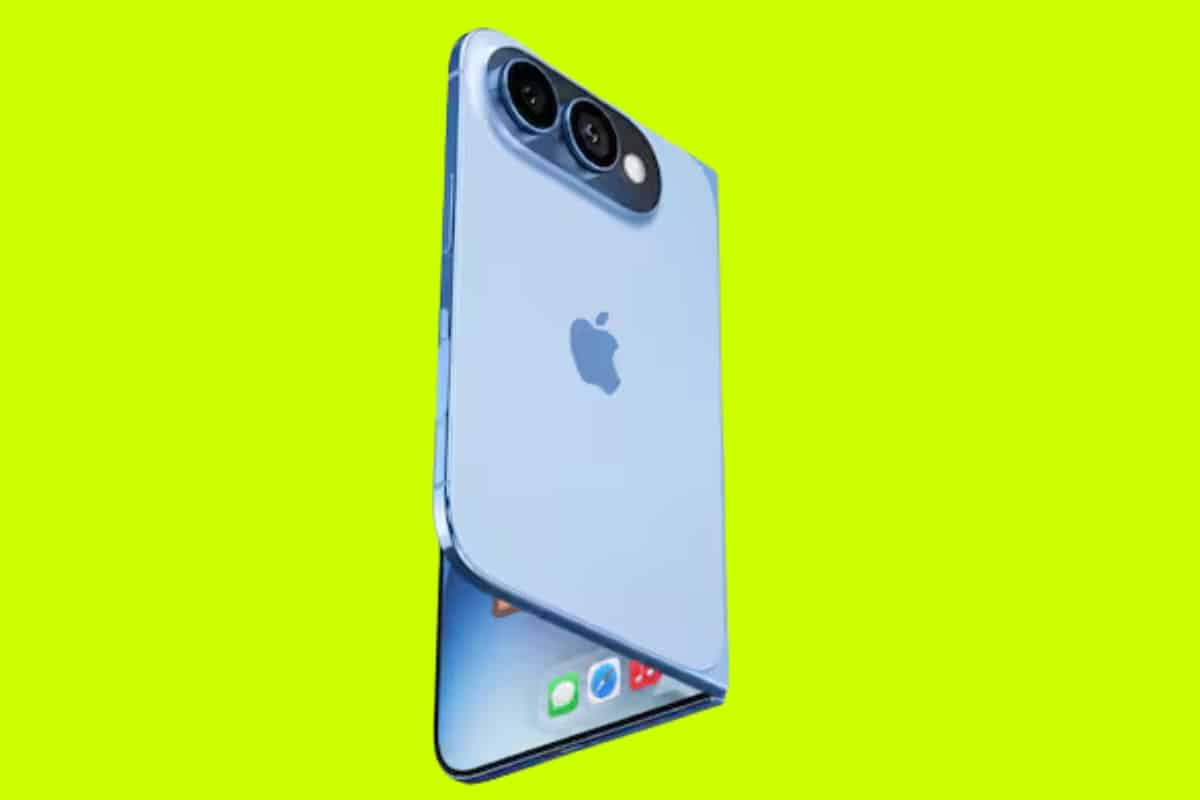
The iPhone Ultra is expected to use a book-style design.
When closed, you’ll use a smaller display on the outside. Open it along the vertical hinge and a much larger internal screen becomes available.
This is broadly the same idea used by Samsung’s Galaxy Z Fold and Google’s Pixel Fold series. It is not expected to use the compact clamshell design found on the Galaxy Z Flip or Motorola Razr.
The advantage is that the iPhone Ultra can operate as two products:
- A compact iPhone when closed
- A small tablet when opened
You could answer a message or check directions without unfolding it. Open the phone and you’d have more room for films, games, reading, editing photographs or running two apps together.
The drawback is portability.
Book-style foldables are usually thicker and heavier than normal phones when closed. Their external screens can also feel narrow compared with a conventional smartphone display.
Apple appears to be fighting that problem with an extremely thin chassis.
How Thin Will The iPhone Ultra Be?
Reports suggest the iPhone Ultra will measure approximately 4.5 to 4.8mm thick when opened.
That would make each half thinner than the iPhone Air, which measures 5.6mm.
When folded, the two halves and hinge would bring the total thickness to around 9 to 9.5mm. That is thicker than a conventional iPhone, but still thin for a book-style foldable.
For context:
- iPhone Ultra unfolded: approximately 4.5 to 4.8mm
- iPhone Ultra folded: approximately 9 to 9.5mm
- iPhone Air: 5.6mm
- iPhone 17 Pro: 8.75mm
A sub-5mm body creates several engineering problems. Apple has to fit batteries, speakers, cameras, charging components and circuit boards into two unusually thin sections.
Some familiar iPhone features have reportedly been removed because there simply isn’t enough room for them.
That includes Face ID and the Pro line’s third rear camera.
iPhone Ultra Display Sizes
The most repeated display figures are:
- External display: approximately 5.5 inches
- Internal display: approximately 7.8 inches
A report from The Information gave slightly smaller measurements of 5.3 and 7.7 inches. Differences like this can come from rounded measurements, active screen area or changes made during development.
Either way, the basic idea remains the same.
The External Screen
The 5.3 to 5.5-inch cover display will be smaller than the screen on a modern standard iPhone.
It should still be large enough for messages, calls, maps, music, payments and quick web searches. In size terms, it is close to the old 5.4-inch iPhone mini, although the shape may be narrower.
This could make the Ultra surprisingly manageable when closed. You wouldn’t need to unfold a nearly eight-inch screen every time you wanted to check a notification.
The Internal Screen
The internal OLED display should measure around 7.7 to 7.8 inches with an approximately 4:3 aspect ratio.
That places it just below the 8.3-inch iPad mini.
It should be especially useful for:
- Reading websites and books
- Viewing and editing photographs
- Watching video
- Playing games
- Checking large documents
- Using maps
- Managing email
- Running two apps side by side
A 4:3 screen provides more usable vertical room than an ultra-wide phone display. It should feel more like a small iPad than a stretched iPhone.
Will The Screen Have A Visible Crease?
Yes, probably, but Apple is reportedly working to make it far less obvious.
Earlier reports described the display as virtually crease-free. Later reporting has used more restrained language, suggesting the crease will be reduced rather than removed entirely.
That sounds more realistic.
Flexible OLED material has to bend in the same place every time the phone closes. Even with clever hinge engineering and supporting plates beneath the panel, eliminating all evidence of that bend is extremely difficult.
Apple reportedly delayed its entry into foldables partly because it was unhappy with screen creases and long-term durability.
Its solution may involve:
- A hinge that spreads pressure across a wider area
- Ultra-thin cover glass supplied by Corning
- A reinforced plate beneath the display
- Tighter control over how the screen bends
- A newer, thinner Samsung OLED panel
- A colour-filter layer built directly into the display stack
The revised Samsung panel reportedly removes one of the conventional screen layers. That should make it thinner, lighter and more power efficient.
Apple doesn’t need to make the crease literally invisible. It needs to stop users noticing it during normal use, particularly when looking straight at the screen.
What Is The Hinge Made From?
The hinge is one of the least settled parts of the rumour story.
Ming-Chi Kuo originally reported that Apple would use a mixture of stainless steel and titanium. Other reports have mentioned 3D-printed titanium parts.
More recently, a leaker claimed Apple has settled on liquid metal.
Liquid metal is an amorphous metal alloy. Unlike conventional metal, its atoms don’t form the same regular crystalline structure. This can give it a strong strength-to-weight ratio and better resistance to wear and corrosion.
Apple has held rights to use Liquidmetal technology in consumer electronics since 2010. Until now, its best-known use has been in small components such as SIM-ejector tools.
Using it for a folding hinge would be a much tougher test.
A foldable phone may be opened and closed hundreds of thousands of times. The hinge has to remain smooth, hold the screen at different angles and stop dust or debris reaching the display mechanism.
Reports suggest Apple encountered problems during testing, including hinge noise and manufacturing tolerances that caused more defective units than expected. Later reports say many of those issues have now been addressed.
We won’t know the final material until Apple publishes its technical details. The broader point is clear: the hinge has consumed a great deal of engineering time because the entire product depends on it.
Will The iPhone Ultra Be Durable?
Apple reportedly believes it has solved two of the biggest complaints about existing foldables: screen quality and durability.
That doesn’t mean the iPhone Ultra will be as tough as a conventional iPhone.
A folding screen is softer than the glass used on a normal phone. The hinge introduces moving parts, and small particles can cause problems if they enter the mechanism. The internal display also needs a flexible protective layer that may scratch more easily than Ceramic Shield.
Questions Apple will need to answer include:
- How many folds is the hinge rated for?
- How scratch-resistant is the internal screen?
- Is the phone dust resistant?
- What water-resistance rating does it have?
- Can the internal screen protector be replaced?
- How much will a damaged display cost to repair?
- Will AppleCare+ cover hinge failure or screen wear?
- Does the crease become more visible over time?
I would expect Apple to make a big point of its testing during the launch. I would not assume a first-generation foldable will be as fuss-free as a normal iPhone 18 Pro.
If reliability matters more than owning Apple’s newest design, waiting for the second generation would be the safer move.
Why The iPhone Ultra May Use Touch ID Instead Of Face ID
The iPhone Ultra is expected to bring Touch ID back.
Rather than placing the fingerprint reader beneath the screen, Apple will reportedly build it into the power button, much like it does on several iPad models.
This isn’t necessarily because Apple thinks Touch ID is better. It is a space-saving decision.
Face ID requires Apple’s TrueDepth camera system, which includes several components for projecting and reading infrared data. Fitting that system inside a chassis measuring less than 5mm per half is difficult.
A side-mounted Touch ID sensor takes up less internal room and can work whether the phone is open or closed.
It may also be easier to use on a folding phone. Your finger naturally rests near the power button when picking up the device, and Touch ID avoids needing separate Face ID hardware for two displays.
Still, a $2,000-plus iPhone shipping without Face ID will feel strange.
Some buyers may see Touch ID’s return as a benefit. Others will view it as an obvious compromise caused by the design.
How Many Cameras Will The iPhone Ultra Have?
The iPhone Ultra is expected to use two rear cameras rather than the three found on Apple’s Pro models.
These will most likely be:
- 48MP main camera
- 48MP ultra-wide camera
There is currently no telephoto camera expected.
That means the most expensive iPhone Apple has ever made may have less optical zoom than the considerably cheaper iPhone 18 Pro and Pro Max.
Again, thickness is the likely reason. A folded telephoto or periscope system takes up internal space that Apple doesn’t have inside a 4.5 to 4.8mm body.
The rear cameras may sit inside a shorter plateau similar to the one used by the iPhone Air. Reports suggest the two lenses could be arranged horizontally.
The Ultra should also have cameras for selfies and video calls in both configurations:
- A camera accessible while the phone is closed
- A camera for use with the internal display
One report claims Apple could use a 24MP under-display camera beneath the folding screen. Under-panel cameras usually trade image quality for a cleaner display, so it will be interesting to see whether Apple can avoid the soft, hazy results seen on some rival devices.
A simpler hole-punch camera remains another possibility.
Will It Get The iPhone 18 Pro’s Variable-Aperture Camera?
Probably not.
The variable-aperture system is currently associated with the iPhone 18 Pro and Pro Max. There has been no dependable report saying the Ultra will receive it.
The foldable’s thin body makes the feature less likely. A variable aperture requires mechanical parts inside the lens assembly, adding thickness and cost.
Apple may prioritise a slimmer dual-camera system instead.
That creates a slightly odd situation. The iPhone Ultra could cost twice as much as the Pro Max while having fewer camera tools.
You would be paying for the folding display and new form factor, not Apple’s best possible camera system.
Our iPhone 18 Pro variable-aperture guide explains what Ultra buyers may miss, while our wider iPhone 18 camera guide covers the expected camera hardware across the range.
A20 Chip And 12GB Of RAM
The iPhone Ultra is expected to use an A20-series processor with 12GB of memory.
Reports disagree on whether it will receive the standard A20 or the A20 Pro. Given its price and launch position, using the Pro version would seem logical. Apple could also use a custom variation designed around the foldable’s thermal limits.
The chip is expected to be manufactured using TSMC’s 2nm process. Compared with the 3nm process used by recent iPhones, it should provide better performance, reduced power use or a combination of both.
Apple is also expected to use newer WMCM packaging, which places memory closer to the processor’s CPU, GPU and Neural Engine.
That could help the Ultra with:
- Running two apps simultaneously
- Resizing and switching between app layouts
- On-device Apple Intelligence
- Photo and video editing
- Gaming on the larger display
- Managing two active screens
- Reducing power consumption
The Ultra’s thin design makes efficiency especially important. A fast chip isn’t much use if it overheats after ten minutes and reduces its performance.
Apple may tune the processor more conservatively than the chip inside the iPhone 18 Pro Max. The phone is also rumoured to use vapour-chamber cooling to spread heat across a wider area.
For more on the processor and what ordinary users may notice, read our A20 and A20 Pro guide.
iOS 27 Could Turn It Into A Small iPad
Hardware alone won’t make the iPhone Ultra work. Apple needs to change iOS around the folding display.
The internal screen is expected to support a simplified form of iPad-style multitasking, including two apps running side by side.
That could let you:
- Write an email while reading a document
- Watch a video while replying to messages
- Keep Maps open beside travel details
- Edit a photograph with a larger tool panel
- Drag information between compatible apps
- Compare two websites or products
- Join a video call while viewing notes
Apps may gain iPad-style sidebars when the phone is open. A mail app, for example, could display folders on the left and the selected message on the right. Photos could show albums beside the main library. Messages could display your conversations and the active chat together.
When the device is closed, those apps would return to a conventional single-column iPhone layout.
The transition needs to feel instant. If an app reloads, loses your position or displays a broken layout whenever you open the phone, the folding design becomes frustrating very quickly.
Apple is reportedly creating new developer tools to help apps move between external and internal layouts. The device is expected to run iOS rather than iPadOS and may not run every iPad app.
That limitation could be annoying. A 7.8-inch display is close to an iPad mini, but Apple may still keep the two software libraries separate.
What Makes A Folding iPhone Useful?
The obvious question is: why bother?
A normal iPhone already handles communication, photography, navigation, games, banking and media perfectly well. Folding it adds cost, weight and more ways for something to break.
The reason is screen space.
A 7.8-inch display can change how certain jobs feel:
Reading
Web pages, digital magazines, PDFs and books should be easier to read without constant zooming or scrolling.
Maps And Travel
The larger screen can show more of a route while keeping controls, directions and destination details visible.
Photography
You could capture an image using the cover screen, then unfold the phone to inspect details or make edits on a larger canvas.
Apple may also let the external display act as a preview for the person being photographed, allowing them to frame themselves while you use the better rear camera.
Video
The larger panel should be better for YouTube, Apple TV+ and downloaded films, although the 4:3 aspect ratio will create black bars around widescreen content.
Work
Side-by-side email, calendar, Notes, Safari and document apps could make light work possible without carrying an iPad.
Gaming
The screen should provide more room for controls and game content. The nearly square shape may work particularly well for strategy games, emulators and cloud gaming.
The iPhone Ultra won’t replace a MacBook. It could replace an iPhone and iPad mini for people who currently carry both.
How Big Will The Battery Be?
Battery rumours have changed during development.
Earlier reports claimed Apple was testing capacities between 5,400 and 5,800mAh. A later claim suggested the battery would exceed 5,500mAh.
More recent supply-chain information points to two battery cells rated at 1,921mAh and 2,962mAh. Combined, that produces a minimum rated capacity of 4,883mAh, with a marketed capacity likely somewhere around 4,900 to 5,000mAh.
The two-cell arrangement makes sense because each half of the phone needs its own battery section.
A capacity close to 5,000mAh would still be strong for such a thin foldable, although it would be lower than some of the earlier claims.
Battery life will depend on more than the capacity:
- The internal screen is much larger than a normal iPhone display
- The external screen may be used for shorter jobs
- The 2nm A20 chip should use less power
- The new OLED panel is reportedly thinner and more efficient
- Apple’s C2 modem should reduce cellular power use
- iOS can put unused parts of the display system to sleep
The phone could last a full day if you mainly use the external screen and open it when needed. Constant use of the internal display, particularly for gaming or video, will drain it faster.
You can follow battery reports across the full range in our iPhone 18 battery and charging guide.
How Fast Will The iPhone Ultra Charge?
There is no reliable charging figure yet.
A large dual-cell battery could let Apple use a higher total charging rate while distributing heat across both halves. Foldables can also be difficult to cool because their batteries and charging hardware are divided around the hinge.
Apple is unlikely to chase the extremely high charging figures used by some Android phones. Its focus will probably remain temperature control and battery health.
USB-C and MagSafe are both expected, although the thin chassis may affect the size and placement of MagSafe components.
Our guide to iPhone 18 charging speeds explains why a dramatic charging jump remains unlikely.
Apple’s C2 Modem And Satellite Connectivity
The Ultra is expected to use Apple’s C2 cellular modem rather than a Qualcomm modem.
Apple has gradually introduced its own modem hardware through lower-volume phones before bringing it to more expensive models. The C2 should be designed for improved 5G performance, lower power use and closer integration with Apple’s processor.
Efficiency matters more on a foldable because the larger display already places extra demand on the battery.
Satellite connectivity should return for emergency calls, messages and roadside assistance. Apple is also reportedly working on basic web access over satellite, although it is unclear whether that feature will be ready for launch.
Storage And Colours
Three storage capacities are currently expected:
- 256GB
- 512GB
- 1TB
A 2TB model has not been widely reported, even though the iPhone 17 Pro Max already reaches that capacity.
Apple may want to keep the first generation relatively simple, particularly while memory costs remain high.
Current colour reports point to just two finishes:
- Black
- White
That would be an unusually restrained selection, but it fits a first-generation product. Apple may want the folding design itself to be the focus.
Additional colours could appear later, or the black and white reports may refer only to prototypes rather than the finished retail range.
How Much Will The iPhone Ultra Cost?
This is going to hurt.
Estimates from analysts and supply-chain sources currently range from around $1,800 to $2,500. More recent predictions sit towards the upper end:
- UBS: approximately $1,800 to $2,000
- Ming-Chi Kuo: approximately $2,299 to $2,499
- Fubon Research: approximately $2,400
- IDC: average selling price around $2,500
- Higher-storage estimates: potentially close to $3,000
A possible pricing structure based on current estimates could look something like this:
| Storage | Possible price |
|---|---|
| 256GB | Approximately $2,299 |
| 512GB | Approximately $2,599 |
| 1TB | Approximately $2,899 |
These are not confirmed Apple prices.
Still, several factors point towards a very expensive product:
- Two OLED displays
- Ultra-thin folding glass
- A complicated hinge
- Titanium and specialist metal parts
- A first-generation manufacturing process
- Low production yields
- An expensive 2nm processor
- 12GB of memory
- A large dual-cell battery
- Limited initial supply
This isn’t being designed as a mass-market replacement for the standard iPhone. It is a new top tier above the Pro Max.
Why The Ultra Could Cost More Than A MacBook
At $2,300 to $2,500, the iPhone Ultra would cost more than many MacBooks, iPads and desktop Macs.
That makes the value argument difficult.
You are paying for miniaturisation. Apple is trying to fit two screens, two batteries, multiple cameras, an advanced processor and a durable hinge into a device thin enough to carry in your pocket.
That engineering is expensive, but it doesn’t automatically make the product the best use of your money.
For the same price, you could potentially buy:
- A recent refurbished iPhone Pro
- An iPad mini
- A MacBook Air
- AppleCare+
- Accessories
- And still have money left over
The Ultra only makes financial sense if having one folding device is worth more to you than owning several separate products.
iPhone Ultra Vs iPhone 18 Pro Max
The Ultra will sit above the Pro Max in price, but that doesn’t mean it will be better at everything.
| Feature | iPhone Ultra | iPhone 18 Pro Max |
|---|---|---|
| Design | Folding book-style phone | Conventional phone |
| Main display | Approximately 7.8 inches | 6.9 inches |
| External display | Approximately 5.5 inches | Not applicable |
| Processor | A20 or A20 Pro | A20 Pro |
| Rear cameras | Two | Three |
| Telephoto camera | Not expected | Expected |
| Variable aperture | Not currently expected | Rumoured |
| Authentication | Touch ID | Face ID |
| Battery | Around 4,900 to 5,000mAh indicated | More than 5,000mAh rumoured |
| Durability | More moving parts and a softer inner screen | Safer conventional design |
| Multitasking | Two apps side by side expected | Standard iPhone layout |
| Starting price | Possibly $2,299 to $2,499 | Possibly $1,349 to $1,499 |
The Ultra will be better for screen space and multitasking.
The Pro Max will probably have the better camera system, easier repairs, stronger physical durability and a considerably lower price.
For most people, the iPhone 18 Pro Max will be the better phone. The Ultra will be the more interesting device.
What The iPhone Ultra Will Probably Miss Out On
Its price may place it above every other iPhone, but the thin folding design creates trade-offs.
Currently reported omissions include:
- No Face ID
- No telephoto camera
- No variable-aperture camera
- No confirmed 2TB storage option
- Less conventional screen protection
- No guarantee of full iPad app support
- Potentially weaker dust resistance
- More expensive repairs
It may also lack some stereo speaker hardware or use a different speaker arrangement because of the thin body. That has not been confirmed.
These compromises don’t make the Ultra bad. They show what Apple has prioritised: folding into a pocket while providing a small-tablet display.
Who Is The iPhone Ultra For?
The first iPhone Ultra will make the most sense for a fairly small group of buyers.
Buy It If You Want Apple’s Most Interesting New Hardware
This is likely to be the biggest physical change to the iPhone since the iPhone X removed the Home button.
If you enjoy first-generation technology and don’t mind paying for it, the Ultra will be hard to ignore.
Buy It If You Carry An iPhone And iPad Mini
The Ultra could replace both devices for reading, travel, media and lighter work.
That doesn’t make it cheap, but it gives the folding screen a clear purpose.
Buy It If You Need More Screen Space In Your Pocket
People who regularly review documents, manage email, work with photographs or use maps may find the internal display genuinely useful.
Avoid It If Camera Quality Is Your Priority
The iPhone 18 Pro Max is expected to have three rear cameras, a telephoto lens and variable aperture.
The Ultra will probably have two cameras and no optical telephoto system.
Avoid It If You Keep Phones For Six Or Seven Years
Apple supports iPhones for a long time, but software support isn’t the only concern here. Hinges, flexible screens and internal screen protectors experience physical wear.
A first-generation foldable carries more long-term uncertainty than a standard Pro model.
Avoid It If You Want Good Value
At more than $2,000, value isn’t really part of the pitch.
You’re paying to be first.
Should You Buy The First Foldable iPhone Or Wait?
I’d wait.
Not because the iPhone Ultra sounds bad. It sounds fascinating. But first-generation Apple products often reveal their compromises only after millions of people start using them every day.
The original Apple Watch, first Retina MacBook, first iPad and iPhone X all introduced ideas that became much better in later versions.
A second-generation foldable could bring:
- A lower price
- A less visible crease
- Better battery life
- Improved hinge durability
- Face ID
- A telephoto camera
- A thinner folded design
- Better third-party app support
- Easier repairs
If the first Ultra launches at $2,399, waiting one generation becomes even easier to justify.
There will be buyers for whom none of this matters. They want the new thing, they can afford it and they understand the risks. Fair enough.
For everyone else, the iPhone 18 Pro Max will probably be the safer flagship.
Refurbished iPhones Make The Ultra’s Price Look Even Wilder
The iPhone Ultra may cost four or five times as much as a recent refurbished iPhone.
That is difficult to ignore.
A refurbished iPhone 15 Pro, iPhone 16 or iPhone 16 Pro Max already gives you fast performance, strong cameras, bright OLED displays and years of iOS support. Depending on the model, storage and condition, you can save around 40% to 50% against the phone’s original price.
Apple’s long update policy is what makes these phones such good buys. You aren’t purchasing an obsolete handset that will stop receiving software next year. A recent refurbished iPhone should continue running current apps and receiving security updates for years.
You can browse current refurbished Apple iPhone deals, compare models through our phone collections or use the KYM Phone Finder to narrow the list based on your budget.
We’ve also picked out the best iPhone 18 alternatives currently available for far less.
The iPhone Ultra will do things those phones cannot. But a folding screen needs to be worth an additional $1,500 or more to you personally.
For most buyers, it won’t be.
The Bottom Line
The iPhone Ultra could be the most interesting iPhone Apple has made in years.
Its 7.8-inch internal screen should give users something close to an iPad mini that folds into a pocket. iOS 27 could add proper side-by-side apps, while the A20 chip, 12GB of memory and Apple’s C2 modem should give it the performance and efficiency needed to manage two displays.
Apple also appears to be taking the two weakest parts of current foldables seriously: the visible screen crease and hinge durability.
But the engineering comes with compromises.
The Ultra is expected to lose Face ID, the telephoto camera and possibly some of the camera hardware found on the iPhone 18 Pro. It may arrive later than the other September models, initial stock could be extremely limited and prices may start near $2,300.
This isn’t the new default iPhone. It is an expensive first-generation experiment aimed at people who want one device to work as both an iPhone and a small iPad.
The iPhone Ultra may turn out to be brilliant. It may also become the phone everyone wants to see but very few people actually buy.
At $2,000 to $2,500, I suspect that is exactly what will happen.
Sources
- MacRumors: Foldable iPhone rumour roundup
- MacRumors: Liquid metal hinge and carrier testing report
- MacRumors: Apple reportedly preparing production for 10 million units
- MacRumors: Possible delayed release after the iPhone 18 Pro
- MacRumors: Foldable production and hinge testing
- MacRumors: Expected screen, software and design changes
- MacRumors: Display crease and durability reporting
- MacRumors: Latest reported battery capacity
- MacRumors: Ming-Chi Kuo’s original design and pricing report
- Reuters: Apple testing foldable iPhone production
- Reuters: Apple prioritising premium iPhones during 2026
Buying tools
Thinking About Buying an iPhone?
Compare current refurbished prices, see how it stacks up against alternatives, and avoid overpaying for the wrong model.
Recommended for this article