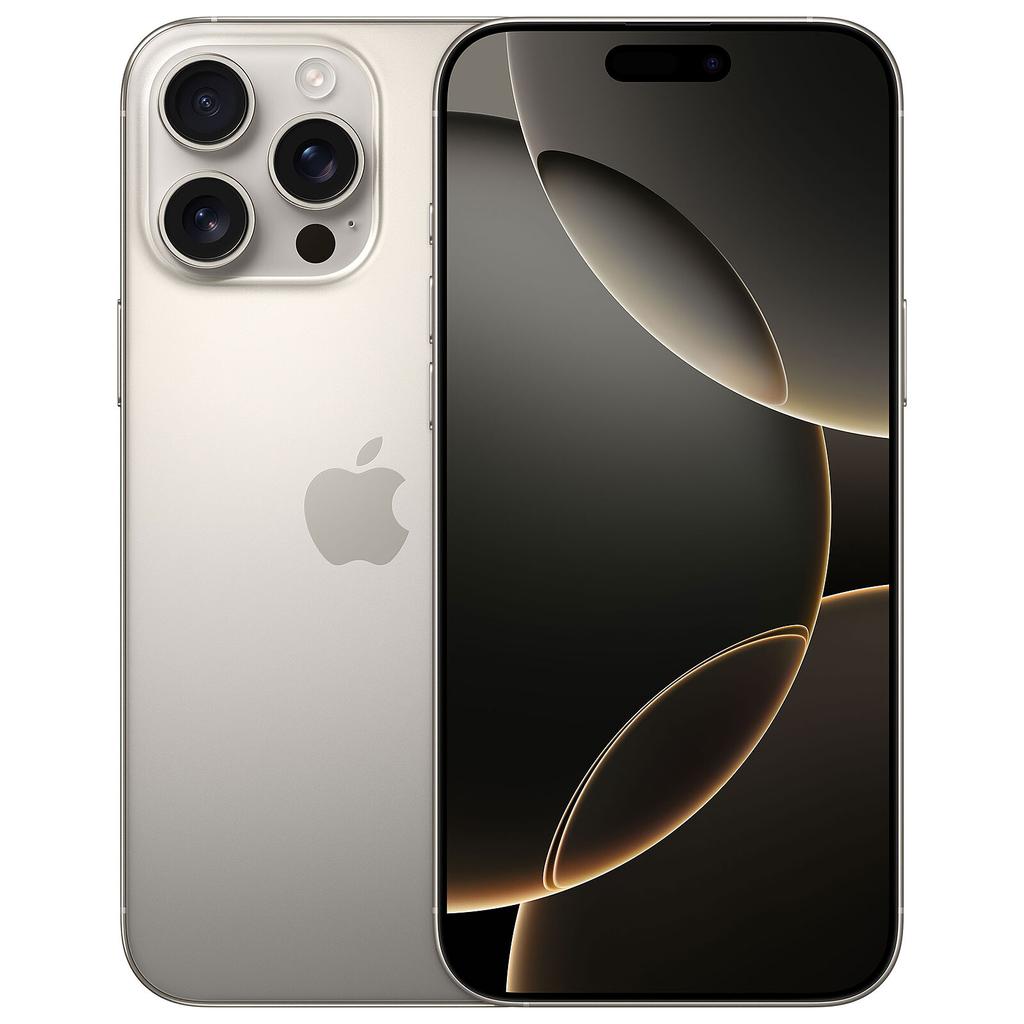
iPhone 18 Battery Life: What The Leaks Say So Far
The Pro Max is expected to get the biggest battery upgrade in years. Here’s what’s leaked so far — and what’s still unconfirmed.
The iPhone 18 Pro Max is expected to get the biggest battery upgrade, increasing to as much as 5,567mAh in the US — a meaningful jump over the current model.
The smaller iPhone 18 Pro may rise to approximately 4,288mAh — barely any capacity increase over the current model.
UK models are expected to retain a physical SIM tray, which takes up internal space — meaning slightly smaller battery capacities than their US equivalents.
Apple’s foldable iPhone could use two battery cells with a combined rated capacity of approximately 4,883mAh — a reasonable figure given the form factor.
No dependable battery capacities have leaked for the standard iPhone 18, iPhone 18e, or iPhone Air 2.
All models should benefit from more efficient 2nm A20 chips. Pro models could also use lower-power LTPO+ displays — meaning real-world battery life gains beyond raw capacity numbers alone.
Faster wired or MagSafe charging has not been confirmed. All capacity figures are based on leaks — nothing has been officially confirmed by Apple.
Want the full iPhone 18 picture? See our complete guide to release dates, specs and prices.
Full iPhone 18 Guide →Apple’s biggest iPhone 18 battery upgrade appears to be reserved for the iPhone 18 Pro Max.
Alleged regulatory listings show the US version increasing from 5,088mAh to 5,567mAh, a gain of nearly 10%. The smaller iPhone 18 Pro appears to receive almost no capacity increase.
Apple’s foldable iPhone is expected to use two separate battery cells with a combined rated capacity of 4,883mAh. Earlier estimates of 5,400mAh to 5,800mAh now look less likely.
There are no dependable battery-capacity figures for the standard iPhone 18, iPhone 18e or second-generation iPhone Air.
Apple has not confirmed any of these phones or battery specifications.
iPhone 18 Battery Sizes
| Model | Rumoured battery capacity | Change |
|---|---|---|
| iPhone 18 Pro, US | 4,288mAh | Up 36mAh, or 0.8% |
| iPhone 18 Pro, physical-SIM version | 4,056mAh | Up 68mAh, or 1.7% |
| iPhone 18 Pro Max, US | 5,567mAh | Up 479mAh, or 9.4% |
| iPhone 18 Pro Max, physical-SIM version | 5,391mAh | Up 568mAh, or 11.8% |
| Foldable iPhone or iPhone Ultra | 4,883mAh rated capacity | First-generation model |
| iPhone 18 | Unknown | No dependable figure |
| iPhone 18e | Unknown | No dependable figure |
| iPhone Air 2 | Larger than current Air expected | No dependable figure |
The percentage changes above compare each regional version with the equivalent iPhone 17 model. Battery capacities can differ because eSIM-only phones have more internal space than models containing a physical SIM tray.
iPhone 18 Pro Battery
Alleged regulatory information lists two iPhone 18 Pro battery capacities:
- 4,288mAh for the US model
- 4,056mAh for the physical-SIM model
The US iPhone 17 Pro has a 4,252mAh battery. That means the iPhone 18 Pro would gain only 36mAh, an increase of approximately 0.8%.
The physical-SIM iPhone 17 Pro has a reported 3,988mAh battery. Its replacement would gain 68mAh, an increase of approximately 1.7%.
| Version | iPhone 17 Pro | iPhone 18 Pro | Difference |
|---|---|---|---|
| US eSIM-only | 4,252mAh | 4,288mAh | +36mAh |
| Physical SIM | 3,988mAh | 4,056mAh | +68mAh |
This would be one of the smallest capacity increases given to a Pro iPhone in recent years.
It does not necessarily mean battery life will remain unchanged. The iPhone 18 Pro is also expected to receive a more efficient processor, display and modem.
iPhone 18 Pro Max Battery
The Pro Max is expected to receive a much larger battery.
Alleged capacities are:
- 5,567mAh for the US model
- 5,391mAh for the physical-SIM model
The US iPhone 17 Pro Max has a reported 5,088mAh battery. The new model would gain 479mAh, an increase of approximately 9.4%.
The physical-SIM iPhone 17 Pro Max has a 4,823mAh battery. Its replacement would gain 568mAh, an increase of approximately 11.8%.
| Version | iPhone 17 Pro Max | iPhone 18 Pro Max | Difference |
|---|---|---|---|
| US eSIM-only | 5,088mAh | 5,567mAh | +479mAh |
| Physical SIM | 4,823mAh | 5,391mAh | +568mAh |
This would make the US iPhone 18 Pro Max battery the largest Apple has installed in a conventional iPhone.
Earlier leaks claimed slightly lower capacities:
- 5,425mAh for the eSIM version
- 5,235mAh for the physical-SIM version
The newer figures of 5,567mAh and 5,391mAh reportedly come from regulatory listings and match separate information published by Digital Chat Station. They are therefore the stronger figures, although the devices in the listings are not identified by their retail names.
Why Does The US iPhone Have A Larger Battery?
Apple has sold eSIM-only iPhones in the US since the iPhone 14 generation.
Removing the physical SIM tray creates additional internal space. Apple used some of that space for a larger battery in the iPhone 17 Pro range and is expected to do the same with the iPhone 18 Pro models.
The alleged filings cover US and Chinese battery versions. China requires a physical SIM tray, resulting in the smaller capacities.
The listings do not confirm the exact batteries intended for the UK or Europe.
If Apple continues putting physical SIM trays in British and European iPhones, those models will probably have capacities closer to the Chinese versions:
- Approximately 4,056mAh for the UK iPhone 18 Pro
- Approximately 5,391mAh for the UK iPhone 18 Pro Max
That is an inference based on internal space, not a confirmed UK specification.
Will The iPhone 18 Pro Max Be Thicker?
The larger battery could make the iPhone 18 Pro Max thicker and heavier.
Current reports put the body at approximately 8.8mm to 9mm thick. The iPhone 17 Pro Max is 8.75mm thick.
One leak claims a weight of around 240g.
The additional internal volume may be needed for:
- The larger battery
- A new variable-aperture main camera
- A larger telephoto aperture
- A thicker camera plateau
- Updated vapour-chamber cooling
- New processor packaging
The iPhone 18 Pro Max is expected to be thicker than both the iPhone 17 Pro Max and the smaller iPhone 18 Pro.
A20 Pro Battery Efficiency
The iPhone 18 Pro models are expected to use Apple’s A20 Pro processor manufactured on TSMC’s 2nm N2 process.
TSMC says N2 can provide:
- 10% to 15% better performance at the same power
- 25% to 30% lower power consumption at the same performance
- Higher transistor density than N3E
These are TSMC’s process-level figures. They do not mean an iPhone 18 will automatically use 30% less power in normal use.
Apple may use some of the efficiency gain to improve performance rather than battery life. Real power consumption will also depend on the display, modem, camera, software, mobile signal and Apple Intelligence workloads.
Even so, the move from 3nm to 2nm should reduce the processor’s power requirements during many everyday tasks.
WMCM Packaging
The A20 Pro is expected to use TSMC’s Wafer-Level Multi-Chip Module packaging, known as WMCM.
This allows Apple to integrate the processor and RAM more closely rather than placing the memory beside the chip using the current arrangement.
Possible battery-related benefits include:
- Shorter connections between the processor and memory
- Reduced communication power
- Better heat management
- A smaller chip package
- More internal room for the battery
- Less energy used for local AI processing
No source has quantified how much battery life WMCM will add.
LTPO+ Display Efficiency
The iPhone 18 Pro and Pro Max are expected to use LTPO+ OLED displays.
LTPO already allows the display to change its refresh rate depending on what is happening on screen. It can run at a high refresh rate while scrolling and reduce it when displaying static content.
LTPO+ is expected to give Apple more precise control over OLED operation. This could reduce display power consumption when using:
- Always-on display
- Low refresh rates
- Static applications
- High brightness
- Outdoor viewing
- Standby mode
The Pro and Pro Max displays are expected to remain 6.3 and 6.9 inches respectively.
No dependable report has provided an exact efficiency percentage for the finished displays.
Apple C2 Modem Efficiency
Apple is expected to expand its in-house modem programme with the C2 modem.
The modem could be used in the iPhone 18 Pro, Pro Max and foldable iPhone. Apple may use Qualcomm modems in some versions if its own hardware does not meet regional mmWave or carrier requirements.
Apple’s existing C1X was designed to consume less power than comparable Qualcomm hardware. The C2 is expected to continue this work while adding better performance and wider network compatibility.
A more efficient modem matters most when:
- Using mobile data
- Operating in a weak-signal area
- Switching between network bands
- Using hotspot mode
- Connecting to 5G
- Using satellite connectivity
Apple has not published C2 performance or efficiency figures.
What Battery Life Can We Expect From The iPhone 18 Pro?
The smaller Pro appears to be receiving almost no increase in physical capacity.
Any improvement will therefore need to come primarily from:
- The 2nm A20 Pro
- LTPO+ display
- C2 modem
- WMCM processor packaging
- iOS 27 power management
There is no dependable report giving an official video-playback figure or number of additional hours.
The most reasonable expectation is a smaller year-on-year improvement than on the Pro Max.
What Battery Life Can We Expect From The iPhone 18 Pro Max?
The Pro Max combines a reported 9% to 12% capacity increase with several power-efficiency changes.
That gives it the best chance of delivering a noticeable real-world improvement.
The relevant changes are:
- Up to 5,567mAh capacity
- 2nm A20 Pro processor
- LTPO+ display
- Apple C2 modem
- WMCM packaging
- Updated thermal system
- iOS 27 power management
There are no trustworthy figures for total video playback, streamed video playback or normal mixed use.
Claims giving an exact number of hours are estimates rather than leaked Apple specifications.
Foldable iPhone Battery
Apple’s first foldable iPhone is expected to use two separate battery cells.
A supplier has allegedly registered cells with rated capacities of:
- 1,921mAh
- 2,962mAh
That gives a combined rated capacity of 4,883mAh.
| Cell | Rated capacity |
|---|---|
| First cell | 1,921mAh |
| Second cell | 2,962mAh |
| Combined | 4,883mAh |
A dual-cell design is normal for a book-style foldable. One battery can be installed in each half, spreading the weight and using the available internal space more efficiently.
References to multiple batteries have also reportedly appeared in iOS 27 code.
Previous Foldable Battery Estimates
Earlier reports placed the foldable’s capacity between 5,400mAh and 5,800mAh.
Those estimates would have made it the largest battery ever installed in an iPhone.
The newer 4,883mAh figure is more believable because it allegedly relates to two registered supplier cells. Digital Chat Station also said supply-chain estimates put the finished capacity between 4,800mAh and 5,000mAh.
Until the phone is dismantled or Apple publishes an energy rating, 4,883mAh should still be treated as an alleged specification.
Rated Capacity Versus Typical Capacity
Battery listings sometimes use rated capacity rather than the larger typical capacity used in marketing.
Rated capacity is the minimum amount the battery is certified to provide. Typical capacity reflects the average expected capacity across manufactured cells.
A combined rated capacity of 4,883mAh could therefore be marketed or listed elsewhere as approximately 5,000mAh.
That does not support the earlier 5,800mAh claim.
Foldable Battery-Life Challenges
The foldable has more battery capacity than many conventional iPhones, but it also has two displays:
- Approximately 5.5-inch external OLED
- Approximately 7.8-inch folding OLED
The inner display will use more power because of its size. Running two apps side by side could also increase processor and display demand.
The phone’s reported 4.5mm unfolded thickness leaves very little room for batteries, cooling and cameras.
Apple is expected to compensate with:
- High-density battery cells
- 2nm A20 Pro processor
- C2 modem
- More efficient display-driver circuitry
- Vapour-chamber cooling
- Variable-refresh OLED displays
- iOS 27 power management
- Two-cell internal arrangement
More Efficient Display Driver
The foldable is expected to use a 16nm display-driver integrated circuit rather than a less efficient 28nm component.
The display driver controls the pixels in the OLED panel. A more efficient driver should reduce the amount of energy consumed whenever the display is active.
This could be particularly useful on the 7.8-inch internal panel.
No reliable figure is available for the actual power reduction.
Foldable Vapour-Chamber Cooling
The foldable is expected to include vapour-chamber cooling.
A vapour chamber moves heat away from the processor and distributes it across a wider part of the chassis.
Cooling does not directly increase battery capacity. It can, however:
- Reduce processor throttling
- Prevent local hot spots
- Improve charging consistency
- Reduce battery exposure to excessive heat
- Help the processor complete demanding work more efficiently
The thin folding chassis makes thermal management harder than it is in a conventional iPhone.
Foldable Battery Replacement
Apple is reportedly using a modular internal arrangement.
The motherboard is expected to sit on one side, while the two battery cells occupy separate internal sections. Cable routing may avoid crossing the back of the folding display.
This could make battery replacement less difficult than on some existing foldables, although there is no repairability assessment yet.
Standard iPhone 18 Battery
No dependable iPhone 18 battery capacity has been reported.
The standard model is not expected until March or April 2027, so its hardware is less settled than the Pro range.
What has been reported is that it should use:
- A20 processor
- TSMC 2nm manufacturing
- Apple C2 modem or a mix of Apple and Qualcomm modems
- 6.3-inch OLED display
- ProMotion
- 9GB of RAM
- iOS 27
The 2nm processor should use less power than the A19 under comparable conditions.
Apple is also reportedly trying to reduce the standard iPhone 18’s manufacturing cost. This could result in a less expensive display or cut-down A20 GPU, but there is no evidence that Apple will reduce its battery capacity.
Any specific iPhone 18 capacity currently circulating should be treated as speculation.
Could The Standard iPhone 18 Have A Smaller Battery?
There is no dependable evidence that it will.
Reports about cost reductions mention:
- Display specifications
- GPU configuration
- Memory
- Shared components with the iPhone 18e
- Camera Control hardware
They do not provide a verified battery reduction.
A lower-brightness display or four-core GPU could actually reduce power consumption, although these changes would primarily be intended to lower manufacturing costs.
iPhone 18e Battery
No reliable battery capacity has been reported for the iPhone 18e.
It is expected to have:
- 6.1-inch display
- A20 processor
- 9GB of RAM
- C2 modem
- Shared components with the iPhone 18
- Spring 2027 release
One unsupported estimate places the battery around 4,000mAh, but it is not backed by regulatory information, an established analyst or a dependable supply-chain report.
It should not be treated as a known specification.
The A20 processor and C2 modem could improve runtime without a major increase in cell capacity.
iPhone Air 2 Battery
Apple reportedly planned a larger battery for the second-generation iPhone Air.
According to The Information’s reporting, the original version under development was intended to be:
- Lighter
- Equipped with a larger battery
- Fitted with vapour-chamber cooling
- Released in autumn 2026
Apple subsequently delayed the Air 2 following weaker-than-expected sales of the first model. It may now arrive in spring 2027, although the revised design is not finished.
It is not known whether all the original battery changes remain in the delayed version.
Is The iPhone Air 2 Getting A 3,500mAh Battery?
A figure of approximately 3,500mAh has appeared in lower-quality reports.
That would represent an increase of around 11% over the original Air’s reported 3,149mAh battery.
There is not enough supporting evidence to treat 3,500mAh as a dependable leak. It has not been tied to a regulatory listing or confirmed supplier document.
What can be said with greater confidence is that Apple was working on increasing the battery capacity before delaying the phone.
iPhone Air 2 Efficiency Changes
The Air 2 could benefit from:
- A20 or A20 Pro processor
- 2nm manufacturing
- Apple C2 modem
- Vapour-chamber cooling
- More efficient OLED construction
- Larger physical battery
- iOS 27 power management
The Air’s thin design limits how large its battery can be. Efficiency will therefore remain more important to this model than it is to the Pro Max.
Will The iPhone 18 Charge Faster?
There is no dependable report confirming faster charging for the iPhone 18 range.
Some specification databases list:
- 40W wired charging
- 25W MagSafe charging
- Qi2 support
- Reverse wired charging
These appear to be estimates based on existing Apple hardware rather than new supply-chain information.
Apple’s current MagSafe charger already supports charging at up to 25W on compatible iPhones. That does not prove the iPhone 18 will exceed 25W.
There is no reliable evidence yet for:
- Charging above 40W
- Faster MagSafe charging
- Reverse wireless charging
- A new charging connector
- Charger changes for the foldable
- Faster charging restricted to the Pro Max
USB-C and MagSafe are expected to remain.
Will Apple Use Silicon-Carbon Batteries?
There is no strong report that Apple will use silicon-carbon batteries in the iPhone 18 range.
Silicon-carbon technology allows manufacturers to fit more capacity into the same physical space. Several Android manufacturers already use it to produce phones with batteries above 6,000mAh without making them exceptionally thick.
Current iPhone 18 reports refer to high-density battery cells, but they do not clearly identify the chemistry as silicon-carbon.
The large Pro Max battery could simply result from:
- A thicker chassis
- Removal of the SIM tray in some countries
- Reorganised internal hardware
- Smaller A20 packaging
- Incremental improvements in battery density
Until a supplier or regulatory document identifies the chemistry, silicon-carbon should not be listed as an expected iPhone 18 feature.
Which iPhone 18 Gets The Biggest Battery Upgrade?
Based on the available figures, the iPhone 18 Pro Max is the clear winner.
| Model | Expected battery change |
|---|---|
| iPhone 18 Pro | Almost no capacity increase |
| iPhone 18 Pro Max | Approximately 9% to 12% increase |
| Foldable iPhone | 4,883mAh dual-cell battery |
| iPhone 18 | Unknown capacity, more efficient A20 expected |
| iPhone 18e | Unknown capacity, more efficient A20 expected |
| iPhone Air 2 | Larger battery planned, exact capacity unknown |
The Pro Max should benefit from both a much larger cell and more efficient hardware.
The smaller Pro will rely mainly on efficiency improvements.
The foldable has a large combined battery, but its 7.8-inch internal display will also consume more power.
What Is Actually Known?
The best-supported battery claims are:
- Alleged regulatory entries show 4,288mAh and 4,056mAh batteries for the iPhone 18 Pro.
- The same entries show 5,567mAh and 5,391mAh batteries for the Pro Max.
- US eSIM-only models have more room for larger cells.
- The Pro Max receives a much larger increase than the smaller Pro.
- The foldable uses two separate battery cells.
- The two foldable cells have a claimed combined rated capacity of 4,883mAh.
- The A20 and A20 Pro are expected to use TSMC’s more efficient 2nm process.
- The Pro models should use more efficient LTPO+ displays.
- The Air 2 was being developed with a larger battery before it was delayed.
The following remain unknown:
- Official battery-life figures
- UK and European battery capacities
- Standard iPhone 18 capacity
- iPhone 18e capacity
- Final iPhone Air 2 capacity
- Foldable typical capacity
- Charging speeds
- Battery chemistry
- Whether every model will use Apple’s C2 modem
- How much runtime the 2nm processor will add
Sources
- MacRumors: Alleged iPhone 18 Pro regulatory battery listings
Covers the 4,056mAh, 4,288mAh, 5,391mAh and 5,567mAh capacities, the battery model numbers, energy ratings and differences between US and Chinese versions. - Gizmochina: iPhone 18 Pro certification listings
Covers the alleged Chinese 3C information and compares the Pro capacities with the iPhone 17 generation. - 9to5Mac: Earlier iPhone 18 Pro Max battery leak
Covers the earlier 5,425mAh eSIM and 5,235mAh physical-SIM claims, showing how the reported figures changed before the alleged regulatory entries appeared. - Macworld: Smaller iPhone 18 Pro battery increase
Covers the limited capacity increase expected for the smaller Pro and compares it with earlier Pro generations. - MacRumors: Foldable dual-cell battery registration
Covers the reported 1,921mAh and 2,962mAh cells, their combined 4,883mAh rated capacity and the newer 4,800mAh to 5,000mAh supply-chain estimate. - T3: Multiple-battery references in iOS 27
Covers iOS 27 code referring to more than one battery, which matches the expected dual-cell foldable design. - TSMC: N2 process technology
Provides TSMC’s figures for 10% to 15% more performance at the same power or 25% to 30% less power at the same performance. - TSMC Research: 2nm platform details
Covers N2 nanosheet transistors, chip density, power reduction and its use in mobile processors. - Ming-Chi Kuo’s A20 report via MacRumors
Covers the use of TSMC’s 2nm process for Apple’s A20 generation and the expected efficiency gains over A19. - The Verge: iPhone Air 2 development and delay
Covers The Information’s reporting that Apple planned a larger battery and vapour chamber before delaying the second-generation Air. - Reuters: Apple delays the next iPhone Air
Covers the Air 2 delay, lower-than-expected demand and the first model’s smaller battery. - MacRumors: iPhone 18 and iPhone 18e A20 details
Covers the A20 processor expected in the standard iPhone 18 and 18e, both due in spring 2027. - ETNews reporting via MacRumors: LTPO+ displays
Covers the expected LTPO+ panels and their potential contribution to lower display power consumption. - The Verge: Apple’s current 25W MagSafe hardware
Provides the current charging baseline and confirms that 25W wireless charging already exists, rather than being a confirmed iPhone 18 upgrade.
Buying tools
Thinking About Buying an iPhone?
Compare current refurbished prices, see how it stacks up against alternatives, and avoid overpaying for the wrong model.
Recommended for this article