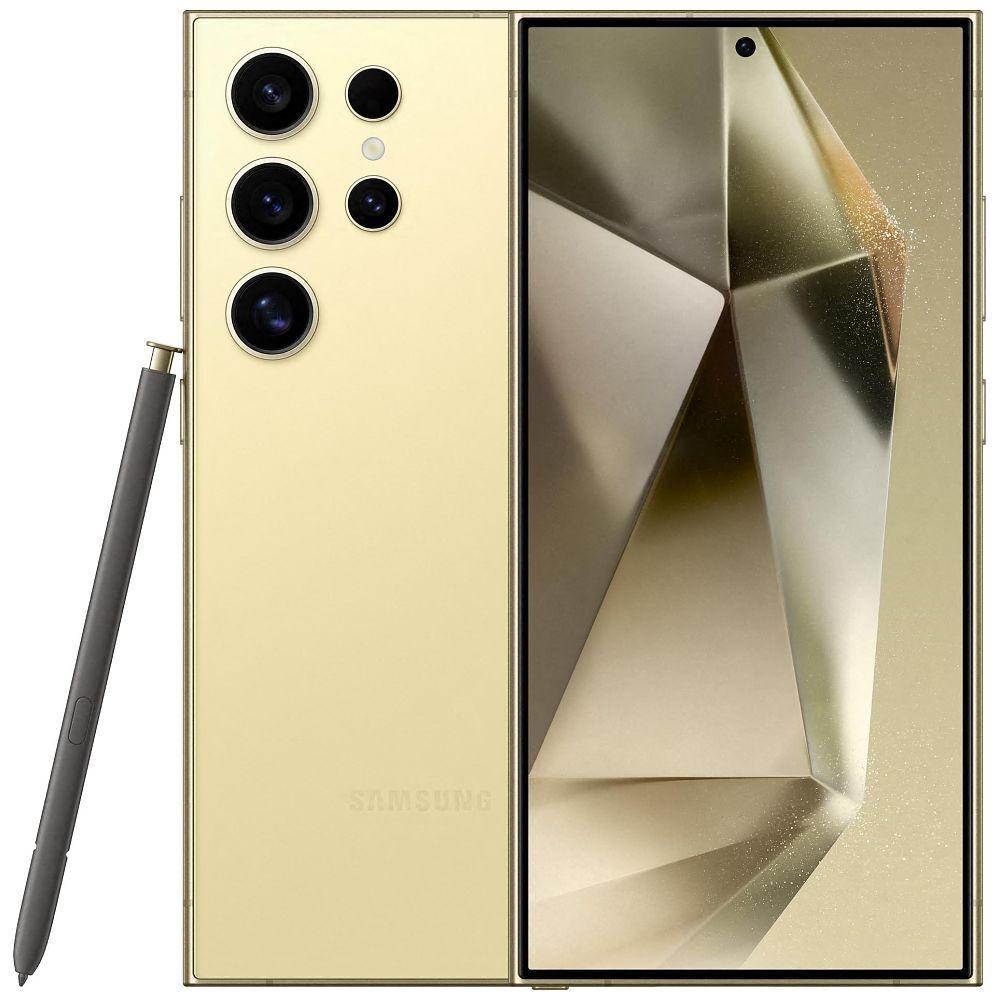
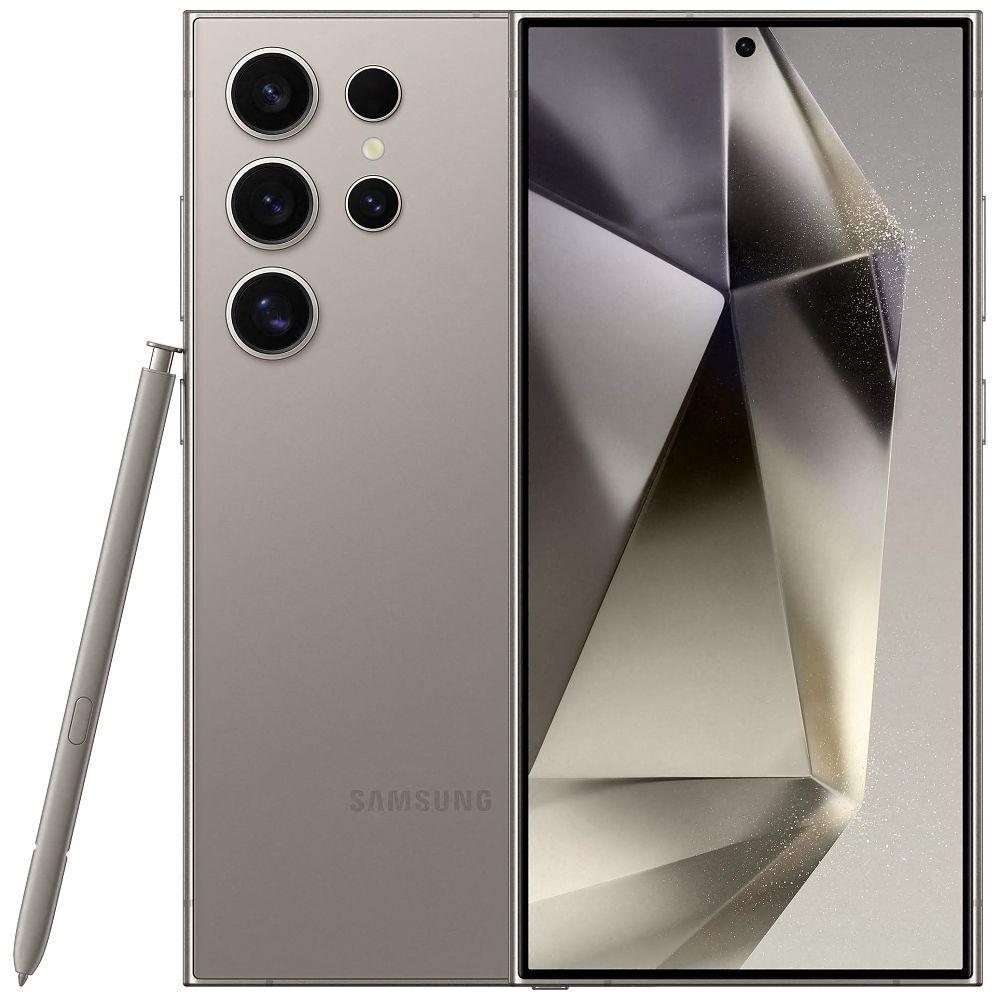
| New Feature | Why It Matters | Expected Models |
|---|---|---|
| Compact Galaxy S27 Pro | Ultra-style cameras and display technology without a huge 6.9-inch body | S27 Pro only |
| Silicon-carbon batteries | More battery capacity without making the phones equally thicker | S27 Pro and S27 Ultra most likely |
| Privacy Display expansion | Stops people beside you reading sensitive information from your screen | Pro & Ultra strongly reported; base and Plus less certain |
| Rebuilt camera range | 200MP cameras on both premium models, with 3x or 5x zoom chosen by model | Major upgrades on Pro and Ultra |
| New 2nm processors | Better efficiency, cooling and on-device AI potential | All four models, but chip brand varies |
Want the full story, including release date, prices and the latest leaks?
Read Full Story →Most new phone features are padding or over-marketed, generally useless AI features.
- A slightly brighter screen you will never run at full brightness.
- An AI tool that works beautifully in a controlled demo and then gets ignored.
- A processor that posts a bigger benchmark number while Instagram continues to open at exactly the same speed.
The Samsung Galaxy S27 series given what we know from the past several launches probably won’t be any different. But there are some things I’ve seen in the leaks that did pique my attention.
There’s roughly five that I’d say were genuinely interesting, spread across the range. And this year’s series really will be a range. Samsung is reportedly preparing four S27 models, including an entirely new Galaxy S27 Pro.
The Pro and Ultra may get much larger silicon-carbon batteries, Samsung’s genuinely useful Privacy Display and 200MP camera systems. The chips are moving to second-generation 2nm hardware, while Samsung may finally rethink how its zoom cameras work.
Some of these changes will not appear on every model. That matters. Samsung’s standard marketing will inevitably talk about the “Galaxy S27 series” as one big family, even when the best hardware is limited to the Pro and Ultra.
So, here are the five Galaxy S27 upgrades that look genuinely useful, what they will do in real life and which models are expected to get them.
Quick warning: Samsung has not announced the Galaxy S27 series. The information below is based on current industry reporting and leaks as of August 2026. Hardware can still change before the expected early-2027 launch.
Galaxy S27’s Best New Features
My early favourite is not the new processor or camera. It is the Galaxy S27 Pro itself.
Samsung appears to have realised that plenty of people want its best phone hardware but do not want a phone the size and weight of a small paving slab. The Pro could fix that.
For more on the entire range, including expected prices and release timing, read our Samsung Galaxy S27 series guide.
1. The Galaxy S27 Pro: A Smaller Ultra Without The S Pen
The best new Galaxy S27 feature may be an entire phone.
Samsung is reportedly adding a fourth model called the Galaxy S27 Pro. It should sit above the S27+ and below the S27 Ultra, with a 6.47-inch display and many of the Ultra’s premium components.
According to ETNews, the Pro is being designed to share most of the Ultra’s specifications while leaving out pen input. That means buyers may get a 200MP main camera, premium OLED panel, Privacy Display and a large battery without accepting the Ultra’s enormous 6.9-inch body.
This is what makes the Pro interesting: it solves an actual problem.
Samsung has spent years forcing camera buyers toward the Ultra. You could buy the smaller standard model, but you lost the 200MP camera and strongest zoom system. The Plus gave you a larger screen and battery, but it still was not a smaller Ultra.
The Pro changes the structure of the range:
- Galaxy S27: Compact and relatively affordable
- Galaxy S27+: Bigger screen and battery without Ultra pricing
- Galaxy S27 Pro: Compact premium phone with Ultra-style hardware
- Galaxy S27 Ultra: Maximum hardware, largest screen and built-in S Pen
Why you will notice it
A smaller phone is easier to use one-handed, easier to fit in a pocket and less tiring to hold while taking photos or watching video. You benefit every time you pick it up, not just when you open a particular app.
This approach is also far more sensible than the Galaxy S25 Edge. That phone charged premium money for being thin, but its reduced battery and camera hardware made the compromises obvious. The Pro appears to remove the S Pen rather than the things most buyers care about.
If you use an S Pen every day, the Ultra remains your phone. If the pen has spent the last year untouched inside your current Ultra, the Pro is probably being built for you.
Which models get it?
- Galaxy S27 Pro: Yes, this is the new model
- Galaxy S27 Ultra: No, but it remains the larger premium option
- Galaxy S27 and S27+: No, these remain Samsung’s regular flagship tier
We have a full breakdown of the positioning in our Galaxy S27 Pro vs Galaxy S27 Ultra comparison.
2. Silicon-Carbon Batteries Could Finally Break Samsung’s 5,000mAh Ceiling
Samsung has used a 5,000mAh battery in every Galaxy S Ultra since the S20 Ultra.
Seven generations. Same headline capacity.
Battery life improved through more efficient screens and processors, but Samsung watched Chinese phone companies move beyond 6,000mAh while it remained stuck at five. The Galaxy S27 could finally end that run.
The Pro is tipped to use a battery with a rated capacity of roughly 5,087mAh, which would probably be advertised at around 5,200mAh. The Ultra has been linked to a 5,534mAh rated cell, likely sold as approximately 5,700mAh.
| Model | Current battery expectation | Change from S26 generation |
| Galaxy S27 | Around 4,300mAh | Little or no change currently expected |
| Galaxy S27+ | Around 4,900mAh | Little or no change currently expected |
| Galaxy S27 Pro | Around 5,200mAh | New model |
| Galaxy S27 Ultra | Around 5,700mAh | Up from 5,000mAh |
These are not confirmed capacities, but they are more believable than rumours claiming Samsung will jump straight to 6,000, 7,000 or even 20,000mAh.
Why silicon-carbon matters
Silicon-carbon battery technology increases energy density. Put simply, it lets Samsung store more power in roughly the same physical space.
That matters because the usual ways of improving battery life are not particularly attractive:
- Make the phone thicker
- Make the phone heavier
- Reduce screen performance
- Limit processor speed
- Ask people to turn useful features off
A denser battery can provide longer runtime without demanding the same increase in size. Samsung has already introduced silicon-carbon anodes in its 2026 foldables, so the technology is no longer purely theoretical for the company.
What difference could 5,700mAh make?
A 14% capacity increase does not automatically produce 14% more screen time. Processor efficiency, display use, mobile signal and software all affect the result.
It should still provide more breathing room for heavy days. Think an hour of navigation, photos throughout the day, 5G use, Bluetooth audio and a train journey home without reaching for a charger at 5pm.
The Pro may be even more interesting. Pairing roughly 5,200mAh with a smaller 6.47-inch display could make it one of Samsung’s longest-lasting conventional phones, assuming its processor behaves itself.
Which models get it?
- Galaxy S27 Pro: Strongly rumoured
- Galaxy S27 Ultra: Strongly rumoured
- Galaxy S27: Currently expected to retain conventional battery hardware or receive only a small capacity change
- Galaxy S27+: Currently expected to miss the main battery upgrade
SamMobile reports that cost may restrict silicon-carbon batteries to the Pro and Ultra. That is an important distinction. “Coming to the S27 series” does not necessarily mean coming to all four phones.
3. Privacy Display Is Expanding Beyond The Ultra
Privacy Display is one of those features that sounds boring until you use your phone on public transport.
It changes how light leaves the OLED panel so people viewing from the side struggle to see what is on your screen. You still see the display clearly from the front.
Unlike a privacy screen protector, it can be controlled through software. You can enable it only for certain apps or situations rather than making the screen darker and harder to view all day.
Practical uses include:
- Opening a banking app on a train
- Reading work email on a flight
- Entering a password in a coffee shop
- Viewing private messages in a crowded room
- Checking medical information while someone sits beside you
- Hiding notification previews without disabling them entirely
That is useful. It solves a real privacy issue without requiring you to stick a murky plastic sheet over an expensive OLED display.
The feature debuted as an S26 Ultra exclusive. ETNews reports that Samsung plans to offer it on two S27 models, expected to be the Galaxy S27 Pro and Ultra.
Another industry report has suggested a wider rollout across all four phones, but the two-model report is more specific and fits Samsung’s stated Pro positioning. Until better confirmation arrives, I would treat Pro and Ultra support as likely and base/Plus support as possible.
Which models get it?
- Galaxy S27 Pro: Expected
- Galaxy S27 Ultra: Expected
- Galaxy S27: Possible, but not firmly supported
- Galaxy S27+: Possible, but not firmly supported
Why this matters for the Pro
Privacy Display helps separate the Pro from the Plus.
Without it, the Pro risks looking like a slightly smaller S27+ with better cameras. Add the Ultra’s specialised screen technology and the hierarchy becomes clearer: standard and Plus are regular flagships, Pro and Ultra are Samsung’s premium pair.
4. A Proper Camera Split: 3x For The Pro, 5x For The Ultra
Samsung may reduce the number of cameras on the S27 Ultra, but that does not automatically make it worse.
The Ultra currently uses separate short and long telephoto cameras. Current reporting says Samsung may remove the 10MP 3x lens and keep a higher-resolution 50MP 5x telephoto, leaving the Ultra with three rear cameras.
The expected premium camera layouts are:
| Camera | Galaxy S27 Pro | Galaxy S27 Ultra |
| Main | 200MP | 200MP |
| Ultrawide | 50MP | 50MP |
| Telephoto | 10MP 3x | 50MP 5x |
| Front | 16MP rumoured | 16MP rumoured |
The standard S27 and S27+ are currently linked to more familiar 50MP main, 12MP ultrawide and 10MP 3x systems. That would preserve a clear gap between Samsung’s regular and premium phones.
Why fewer Ultra cameras may not be bad
Camera count is a lazy way to judge a phone.
The Ultra’s existing 3x camera uses a relatively modest 10MP sensor. A better 200MP main sensor can crop into the frame for shorter zoom levels, while the 50MP 5x camera handles distant subjects. If Samsung gets the processing right, removing the weak middle camera may have little effect on everyday photographs.
The danger is the awkward space between 2x and 5x. Portraits and indoor photos often look most natural around 3x. Samsung needs its main-camera crop to cover that distance cleanly or the change will feel like cost-cutting, because that is at least part of the reason reportedly behind it.
Why the Pro’s 3x camera makes sense
The Pro is designed as the easier everyday phone, and 3x zoom matches that job.
It works well for portraits, pets, children, product shots and details across a room. Most people will use 3x more regularly than 5x.
The Ultra’s 5x camera will remain better for concerts, sport, wildlife, architecture and travel landmarks. Its 50MP resolution also provides more room to crop beyond the optical zoom point.
Which models get what?
- Galaxy S27: 50MP main with 3x telephoto expected
- Galaxy S27+: 50MP main with 3x telephoto expected
- Galaxy S27 Pro: 200MP main, 50MP ultrawide and 3x telephoto expected
- Galaxy S27 Ultra: 200MP main, 50MP ultrawide and 50MP 5x telephoto expected
This configuration comes from reporting summarised by 9to5Google. Exact sensor models and apertures are still unknown.
Variable aperture, incidentally, now appears to be off the table. Samsung reportedly tested the technology but rejected it because it added cost and camera thickness without enough practical gain. That is probably the correct decision. A feature is not automatically useful because the lens physically moves.
5. Second-Generation 2nm Chips Could Improve More Than Speed
Every new phone promises a faster processor. Most people do not care, and they are right not to.
The interesting part of the Galaxy S27 chips is efficiency and heat, not benchmark bragging rights.
Samsung has confirmed that it is developing the Exynos 2700. The chip is expected to use the company’s second-generation 2nm manufacturing process, while Qualcomm’s coming Snapdragon 8 Elite Gen 6 family is also expected to move to 2nm production.
Smaller process technology can allow a chip to perform more work using less energy. It does not guarantee better battery life or cooler operation, because chip design and Samsung’s tuning still matter. But it creates the opportunity for both.
The likely processor split is:
| Model | US and North America | UK, Europe and many other markets |
| Galaxy S27 | Snapdragon expected | Exynos 2700 expected |
| Galaxy S27+ | Snapdragon expected | Exynos 2700 expected |
| Galaxy S27 Pro | Snapdragon expected | Exynos 2700 expected |
| Galaxy S27 Ultra | Snapdragon 8 Elite Gen 6 Pro expected | Snapdragon 8 Elite Gen 6 Pro expected |
This plan is not official, but SamMobile reports that the Ultra may remain the only S27 model using Snapdragon worldwide.
What you might actually notice
A good 2nm chip could improve:
- Battery drain while using 5G
- Heat during gaming and video recording
- Camera processing speed
- Sustained performance during long tasks
- On-device transcription and translation
- Multi-app AI actions
- How well the phone performs several years into its life
That last point matters. Samsung is expected to provide seven generations of Android updates. A phone bought in 2027 could still receive current software in 2033 or 2034. Extra processing and neural-engine headroom may matter far more in year five than it does on launch day.
What about Galaxy AI?
The S27 series should launch with Android 17 and One UI 9.5, with further updates to Bixby, Gemini, Now Brief and Samsung’s Personal Data Engine.
I have not listed “new AI” as a separate feature because Samsung has not revealed a specific S27 tool worth getting excited about. Generic promises about agents doing things across apps are easy to make. They only become useful when they work reliably with the apps and services people already use.
The new processors may make those tools faster and allow more processing to happen privately on the phone. That is worth watching. An unnamed AI feature is not yet a reason to buy anything.
Which Galaxy S27 Gets The Most Good Stuff?
Here is the current feature picture in one place:
| Feature | S27 | S27+ | S27 Pro | S27 Ultra |
| New compact premium design | No | No | Yes | No |
| Silicon-carbon battery | Unlikely | Unlikely | Expected | Expected |
| Major battery-capacity increase | Unlikely | Unlikely | Expected | Expected |
| Privacy Display | Possible | Possible | Expected | Expected |
| 200MP main camera | No | No | Expected | Expected |
| 3x optical telephoto | Expected | Expected | Expected | No dedicated 3x expected |
| 5x optical telephoto | No | No | No | Expected |
| Built-in S Pen | No | No | No | Yes |
| 2nm-generation processor | Expected | Expected | Expected | Expected |
| Snapdragon in every country | No | No | No | Expected |
The table also exposes a problem: the standard S27 and S27+ currently look like minor updates.
They should be excellent phones, but most of the genuinely new hardware is clustering around the Pro and Ultra. Unless more base-model upgrades emerge, Samsung’s marketing may be more exciting than the products at the cheaper end.
Which Feature Matters Most?
For me, it is the combination of the new Pro model and its battery.
A 6.47-inch Samsung phone with an approximately 5,200mAh battery, 200MP main camera and Privacy Display sounds far more appealing than another very large Ultra. It takes the parts people want and removes the bulk and S Pen many never use.
The Ultra’s jump to roughly 5,700mAh comes second. Samsung is late to larger silicon-carbon batteries, but late is better than another year pretending 5,000mAh is an immovable law of physics.
Privacy Display comes third because it is quietly useful. It will not sell as many phones as a 200MP camera sticker, but it fixes something that happens in real life.
The new chips and camera layout matter too, though both require independent testing. A 2nm label cannot tell us whether Exynos and Snapdragon versions behave the same, and fewer cameras only work if Samsung’s cropping and image processing cover the missing zoom range properly.
Early Verdict: The Pro Is Where The Interesting Changes Are
The Galaxy S27 Ultra will remain Samsung’s technical flagship. It should have the largest battery, longest optical zoom, biggest display, worldwide Snapdragon chip and built-in S Pen.
The Galaxy S27 Pro looks like the model with the smarter idea behind it.
It is smaller, should retain most of the premium camera hardware, gets the new battery technology and reportedly inherits Privacy Display. For buyers who do not need a stylus or 5x telephoto, it may provide almost everything that matters about the Ultra in a phone that is nicer to live with.
The standard S27 and S27+ appear less exciting so far. They get the new processor generation and may receive wider access to Privacy Display, but current reports do not point to the same battery or camera changes.
That could change before launch. As things stand, however, Samsung’s 2027 range looks like a two-tier release:
- S27 and S27+: Safe yearly upgrades
- S27 Pro and S27 Ultra: Where the genuinely new hardware lives
If you are thinking about waiting, those are the two models worth watching.
If you need a phone now, waiting until 2027 is harder to justify. A refurbished Galaxy S24 Ultra already gives you a 200MP camera, S Pen, 5x zoom and years of remaining updates for far less than a new S27 Ultra will probably cost.
You can also compare current refurbished phone prices or use our Phone Finder to find the best model for your budget.
Sources & Side Quests
- ETNews: Samsung preparing four S27 models and a new premium Pro
- ETNews: Galaxy S27 Pro and its reported 6.47-inch display
- 9to5Google: Reported S27 camera configurations
- SamMobile: Silicon-carbon batteries may be limited to Pro and Ultra
- SamMobile: Expected Exynos and Snapdragon model split
- Samsung: Official Galaxy S26 specifications and Privacy Display background
Buying tools
Thinking About Buying a Samsung Galaxy?
Compare current refurbished prices, see how it stacks up against alternatives, and avoid overpaying for the wrong model.
Recommended for this article