The Fairphone 6: Something Of An Oddity — In The Best Way
It won’t win on benchmarks, camera quality or charging speed against a Pixel, an iPhone or a Galaxy. What it offers instead is a phone you can actually repair — removable battery, replaceable display and charging port, microSD expansion, updates through 2033 and guaranteed spare parts. No other major phone maker offers anything close to that.
| Release date | 25 June 2025 |
|---|---|
| Price | From €549 new; €499 refurbished |
| Display | 6.31-inch LTPO OLED, 10–120Hz |
| Processor | Qualcomm Snapdragon 7s Gen 3 |
| RAM & storage | 8GB RAM, 256GB |
| Expandable storage | microSD up to 2TB |
| Rear cameras | 50MP main with OIS, 13MP ultrawide |
| Front camera | 32MP with autofocus |
| Battery | 4,415mAh — user-replaceable |
| Charging | 30W wired; 50% in 25 minutes |
| Water resistance | IP55 |
| Software | Android 16; support through 2033 |
| Repairability | 12 replaceable parts; iFixit 10/10 |
| Colours | Cloud White, Forest Green, Horizon Black |
Ready to buy? Check current Fairphone 6 pricing and stock.
Shop Fairphone 6 Deals →More From Fairphone
Latest Fairphone news, buying advice, repair guides and product updates.
Loading the latest Fairphone stories…
The Fairphone 6 isn’t the fastest phone you can buy for the money. It doesn’t have the best cameras, the thinnest body or the most advanced charging system, either.
But that rather misses the point. You see, this isn’t a phone that is designed or even marketed to do battle with Google’s Pixel 11, Samsung’s incoming Galaxy S27 series or even Apple’s iPhone 18 series.
Fairphone has built a phone you can open, repair and keep for years.
- Its battery comes out.
- Its USB-C port can be replaced.
- A cracked screen doesn’t have to turn the entire phone into an expensive paperweight.
- You also get software support and replacement parts until at least 2033.
In a market full of sealed glass slabs with glued-in batteries, that makes the Fairphone 6 properly different.
It launched on 25 June 2025 and remains Fairphone’s current phone in 2026. Prices now start at £509, while an official refurbished version is available for €499 in supported European markets.
Is it worth buying? For the right person, absolutely. But you need to understand what you’re paying for, and that’s what this little resource is designed to help you understand.
What Is The Fairphone 6?
The Fairphone 6, officially named The Fairphone (Gen. 6), is a mid-range Android phone made around a simple idea: you should be able to own, maintain and repair the device you paid for.
That sounds obvious. In the phone industry, it really isn’t.
Most modern phones use large amounts of glue, proprietary parts and tightly packed internal layouts. Even a basic battery replacement can mean booking a repair, surrendering the phone for several days and paying for labour on top of the part.
The Fairphone 6 uses screws and separate modules instead. There are 12 replaceable parts in total, including the battery, display, cameras and USB-C port. Many repairs need little more than a screwdriver, and Fairphone publishes the instructions.
iFixit awarded it 10 out of 10 for repairability. The screen and battery can be removed without fighting through layers of adhesive, while commonly damaged parts are sold separately.
This is proper modularity. It isn’t the cosmetic type seen on the CMF Phone 1, where you can swap a rear cover or attach accessories. Those ideas are fun, but the CMF Phone 1’s modular design is mostly about customisation.
Fairphone’s version can materially extend the life of the device.
Fairphone 6 Price And Availability
The Fairphone 6 originally launched in Europe in June 2025. As of August 2026, Fairphone lists the standard Android model at €549, down from its original €599 launch price in the eurozone.
Fairphone now also sells an official refurbished Fairphone 6 for €499 in supported markets. That only saves €50 at current prices, so the new model is still the easier recommendation unless the refurbished discount grows or stock is bundled with a better warranty or accessory deal.
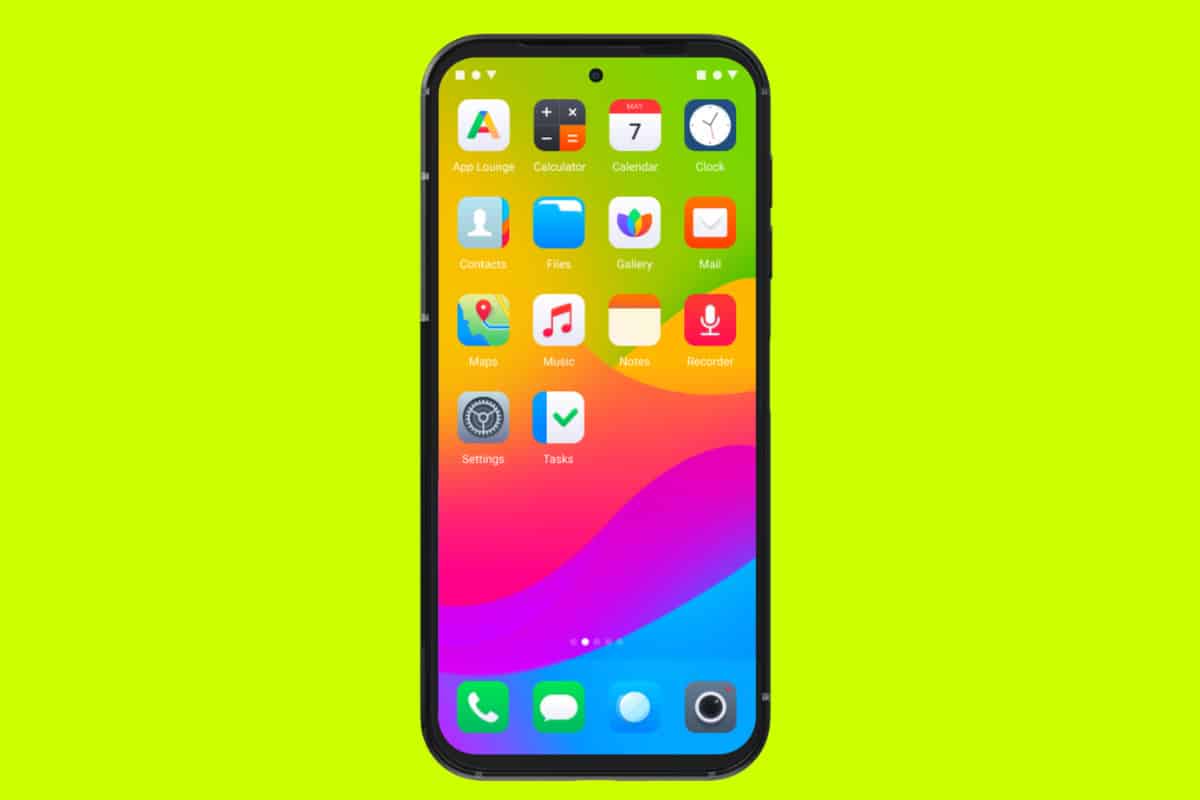
There is also a privacy-focused version running Murena’s /e/OS. It costs more than the standard Android version and removes Google’s usual services and data collection from the phone.
UK stock is normally sold through Fairphone and authorised retail partners, but prices can move independently of the euro price. Check the final price, warranty terms and whether the listing includes standard Android or /e/OS before buying.
The Fairphone 6 is not officially sold as a normal Google Android phone in the United States. A US version became available through Murena with /e/OS, but it isn’t the simple, fully supported carrier purchase that American Pixel, Samsung and iPhone buyers are used to.
US buyers should check network bands, VoLTE support and the returns policy before importing one.
Fairphone 6 Full Specifications
| Specification | Fairphone 6 details |
| Display | 6.31-inch LTPO P-OLED |
| Resolution | 1116 x 2484, 431ppi |
| Refresh rate | Adaptive 10Hz to 120Hz |
| Brightness | 800 nits typical, 1,400 nits peak |
| Cover glass | Corning Gorilla Glass 7i |
| Chipset | Qualcomm Snapdragon 7s Gen 3 |
| Memory | 8GB LPDDR5 RAM |
| Storage | 256GB UFS 3.1 |
| Memory card | Dedicated microSD slot, up to 2TB |
| Main camera | 50MP Sony Lytia 700C, OIS, autofocus |
| Ultrawide camera | 13MP, autofocus and macro mode |
| Selfie camera | 32MP, autofocus |
| Video | Up to 4K at 30fps |
| Battery | 4,415mAh removable battery |
| Charging | 30W wired; no wireless charging |
| Connectivity | 5G, Wi-Fi 6E, Bluetooth 5.4 LE, NFC |
| SIM | Nano-SIM plus eSIM, both 5G |
| USB | USB-C running at USB 2.0 speeds |
| Protection | IP55; Gorilla Glass 7i; drop-tested |
| Size | 156.5 x 73.3 x 9.6mm |
| Weight | 191.4g |
| Software | Launched on Android 15; Android 16 now available |
| Support period | Software and spare parts through at least 2033 |
| Warranty | Five years after registration |
The Big Feature: You Can Actually Repair It
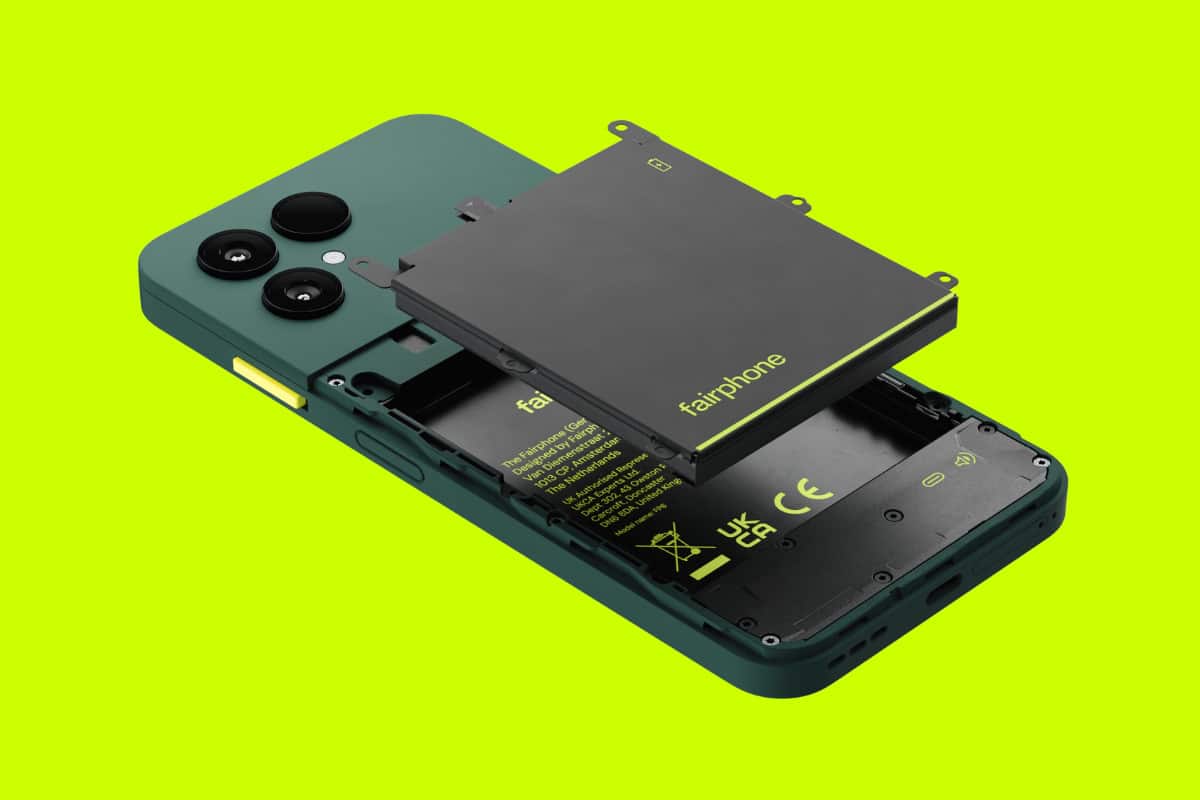
The removable battery gets most of the attention, and rightly so. Battery ageing is one of the main reasons a perfectly usable phone starts feeling old.
After three or four years, the processor is usually still fine. The screen still works. Your apps still run. It is the tired battery that makes the phone die by late afternoon and pushes you towards replacing the entire device.
With the Fairphone 6, you remove the back, undo the relevant screws and fit a fresh battery. You don’t need heat, adhesive remover or a trip to an authorised repair shop.
The same thinking applies elsewhere. Fairphone sells separate replacements for commonly damaged or worn parts, including:
- Battery
- Display
- USB-C charging port and loudspeaker unit
- Main rear camera
- Ultrawide rear camera
- Front camera and earpiece
- Top unit
- SIM and microSD tray
- Back covers
Fairphone guarantees spare-parts availability until at least 2033. That commitment matters almost as much as the modular design. A phone isn’t meaningfully repairable if the required part disappears after two years.
There is one limit worth spelling out: modular does not necessarily mean upgradeable.
You can replace a broken camera with the same camera module. Fairphone has not promised that you’ll be able to drop in a future processor, newer camera or upgraded USB module. Buy the Fairphone 6 for repairability, not because you expect to turn it into a Fairphone 7 one part at a time.
Software Support Runs Until 2033
Fairphone promises at least seven Android version upgrades and a further year of security support, taking the phone’s total support period to eight years. It launched with Android 15, received Android 16 in March 2026 and is scheduled to remain supported until at least 2033.
That puts it in rare company.
Google and Samsung now offer seven years of updates on selected phones, but Fairphone pairs its long software window with parts availability and a removable battery. Those three things together give it a better chance of actually making it to the end of its support period in usable condition.
This is also why software support needs to be considered when buying any older or refurbished Android phone. A cheap handset isn’t much of a saving if security updates end a year later.
Fairphone’s promise is very good, but there is still a difference between a support policy and delivery. Google controls Android and its Pixel hardware, while Samsung operates at a much larger scale. Fairphone has a smaller software team, so major Android updates may arrive later than they do on a Pixel.
The trade is straightforward: a Pixel is likely to get new Android releases first. The Fairphone should be much easier to keep physically working for the whole support window.
Android Or /e/OS: Which Version Should You Buy?
Most buyers should choose the standard Android version.
It includes the Google Play Store, Google Wallet, Android Auto and the services most Android owners expect. The software is close to stock Android, without the huge pile of duplicated apps that often comes with a cheaper handset.
The /e/OS version is for people who specifically want a de-Googled phone. It uses an open-source Android base, alternative cloud services and privacy controls intended to reduce tracking.
That comes with compromises. Some banking apps, smart-home products, DRM-protected streaming services and apps tied closely to Google services can behave differently or fail. Android Auto is another problem because it depends on Google’s proprietary software.
If you have to ask whether you need /e/OS, buy the normal Android model. The privacy version makes sense for a smaller group of buyers who already understand the app and service trade-offs.
Fairphone Moments: A Physical Switch For A Quieter Phone
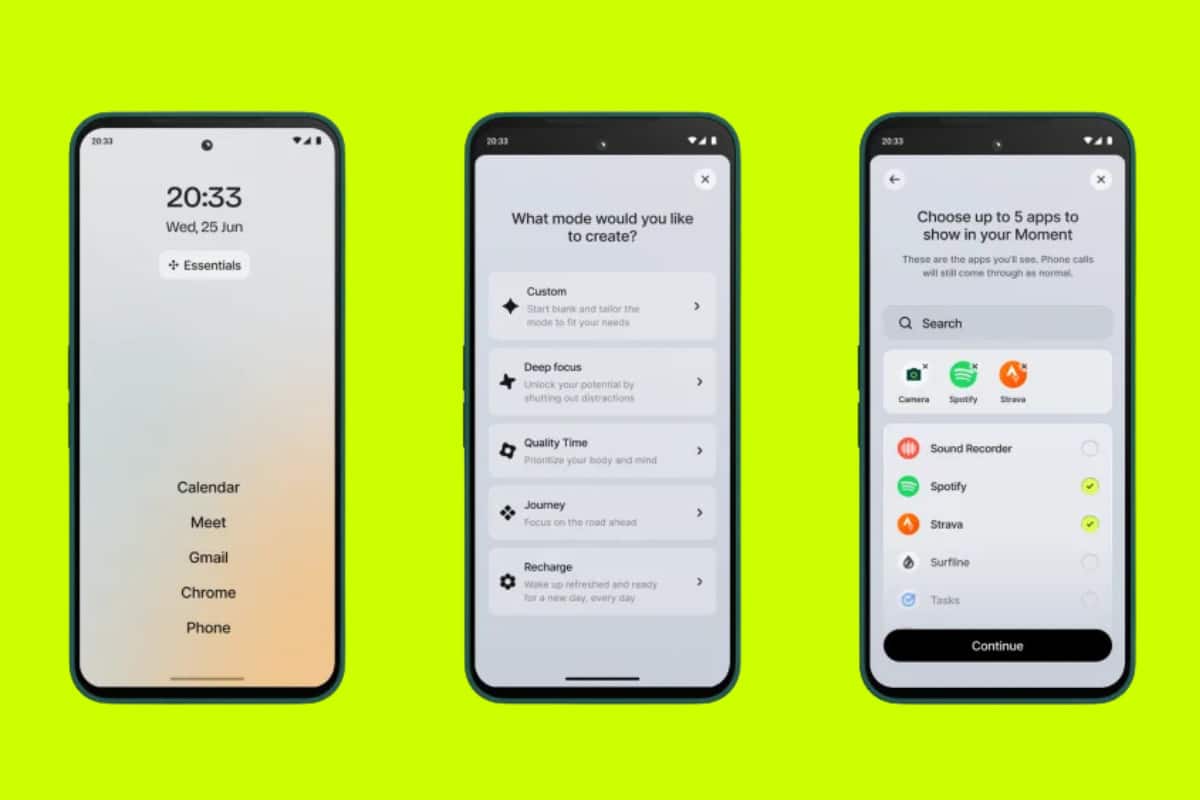
The bright switch on the side activates Fairphone Moments, a reduced interface that limits the phone to five chosen apps.
By default, those apps are Camera, Browser, Maps, Messages and Phone. You can change the selection and control who is allowed to contact you while the mode is active.
Android already has focus modes. The difference is that Fairphone has made this one physical. Flick the switch and the usual app-filled home screen is replaced by the stripped-back Moments interface.
Is it essential? No. But it is more useful than another AI photo filter.
The physical action removes the usual friction of finding a setting, choosing a profile and then ignoring it five minutes later. It gives the phone two clear states: everything is available, or only the things you’ve decided matter right now.
Display: Smaller, Brighter And Much Smoother
The Fairphone 6 uses a 6.31-inch LTPO OLED display with a sharp 1116 x 2484 resolution and an adaptive refresh rate between 10Hz and 120Hz.
That is a good screen specification for a mid-range phone. LTPO technology lets the panel lower its refresh rate when the image is static, then rise to 120Hz when you scroll or play supported games. The result is smoother movement without forcing the display to run at maximum speed all day.
Peak brightness reaches 1,400 nits, with typical brightness rated at 800 nits. Gorilla Glass 7i covers the panel.
At 6.31 inches, it is also smaller than the 6.46-inch display used on the Fairphone 5. The body weighs 191.4g, roughly 8% less than its predecessor. It isn’t a tiny phone, but it is far less cumbersome than many 6.7-inch Android models.
The bezels are still more noticeable than those on a Galaxy or Pixel. That is part of the compromise required by the internal layout and removable screen assembly. If edge-to-edge design is your priority, Fairphone isn’t going to win you over.
Performance: Fast Enough, But Not A Flagship
Qualcomm’s Snapdragon 7s Gen 3 sits at the heart of the Fairphone 6, paired with 8GB of LPDDR5 RAM and 256GB of UFS 3.1 storage.
For normal use, that is plenty. Messaging, browsing, maps, streaming, banking and photo editing should all run comfortably. The 120Hz screen also makes the phone feel quick when moving around Android.
It is not a flagship gaming chip. Demanding games will need lower graphical settings than they would on a Snapdragon 8-series phone, and anyone buying for emulation or sustained heavy gaming can get more raw speed elsewhere for the money.
The 256GB of standard storage is generous. Better still, the Fairphone has a dedicated microSD slot supporting cards up to 2TB. You can use a physical SIM, eSIM and microSD card at the same time, so expanding storage doesn’t cost you the second line.
That is becoming extremely rare, especially on phones costing £500 or more.
Cameras: Better Than Before, But Not The Reason To Buy It
The Fairphone 6 has two proper rear cameras and a third opening containing its time-of-flight sensor. The camera system consists of:
- A 50MP main camera using Sony’s Lytia 700C sensor, with autofocus and optical image stabilisation
- A 13MP ultrawide with autofocus, electronic stabilisation and a macro mode
- A 32MP front camera with autofocus
The main sensor is the important part. Its 1/1.56-inch size and OIS give the Fairphone a sound base for daytime shots and better low-light photography than older Fairphone models. You can also shoot at the full 50MP resolution rather than always relying on pixel-binned images.
The ultrawide can focus as close as 2.5cm, so it doubles as a macro camera. That is far more useful than the fixed-focus 2MP macro cameras added to many cheaper Android phones simply to increase the lens count.
Video tops out at 4K and 30 frames per second. There is no telephoto camera and no 4K/60fps recording.
In plain English: the cameras look perfectly usable, but a Pixel remains the safer buy if photography is your main concern. Google’s image processing, portrait handling and low-light results are hard for a smaller manufacturer to match. Fairphone’s advantage is that if the main camera fails, you can buy the module and change it yourself in minutes.
Battery Life And Charging
The 4,415mAh battery is smaller than the 5,000mAh cells now common in Android phones, but Fairphone rates it for almost two days of mixed use under the EU energy-label test.
Real battery life will depend on signal strength, screen brightness, camera use and whether you play games. The efficient Snapdragon chip and LTPO display should make a full day realistic for most people. Heavy users may need to charge sooner.
Charging reaches 50% in 25 minutes when using a compatible 30W charger. There is no charger or cable in the box, so factor that into the purchase if you don’t already own a suitable USB-C setup.
There is also no wireless charging.
That looks dated next to a Pixel or Galaxy, but the removable battery changes the long-term maths. Four years from now, you can fit a new cell rather than tolerating poor battery life, paying for labour or replacing the phone.
I’d take that over wireless charging if the aim is to own the device for as long as possible. Not everyone will agree, of course.
How Tough Is The Fairphone 6?
The Fairphone 6 uses Gorilla Glass 7i and has passed drop testing from 1.8 metres under one test standard and 1.5 metres under MIL-STD-810H testing.
Its IP55 rating means it is protected against dust ingress that could interfere with operation and against water jets. Fairphone describes it as rainproof.
It is not waterproof.
An iPhone, Pixel or Galaxy flagship with IP68 protection is far better suited to accidental submersion. Don’t take the Fairphone swimming, don’t leave it beside the bath and don’t assume a removable back can keep out water like a heavily sealed flagship body.
The trade-off is repair access. Fairphone has managed better protection than you might expect from a phone designed to open easily, but IP55 is still one of its clearest weaknesses.
Five-Year Warranty: Registration Matters
Fairphone offers a five-year warranty at no extra cost, but you need to register the device.
That is far longer than the standard cover supplied with most phones and supports Fairphone’s claim that the device is meant to stay in use. The warranty applies regardless of where or how the phone was bought, including if it was received as a gift, subject to Fairphone’s terms and regional rules.
Normal warranty exclusions still apply. Accidental drops, liquid damage and wear are not manufacturing defects. The good news is that many of those problems can be handled by buying the affected part instead of paying for a complete replacement phone.
Register it as soon as you buy it. A five-year warranty is no help if you forget the one step needed to activate it.
Materials And Manufacturing
Fairphone says more than 50% of the phone’s materials by weight are fair or recycled. It identifies 14 fair-mined or recycled materials across the device, including aluminium, copper, cobalt, gold, rare earths, silver, tin and tungsten.
The company also funds living-wage bonuses and worker programmes in its supply chain. For every phone sold, Fairphone says it takes back the equivalent weight in electronic waste, making the product 100% e-waste neutral by its accounting.
No new smartphone has no environmental cost. Mining, manufacturing, shipping and charging all require energy and materials. The best environmental choice is usually to keep the phone you already own.
If that phone genuinely needs replacing, the next best moves are buying a properly checked refurbished phone or choosing a new device that can stay in use for a long time. The Fairphone 6 makes a very strong case on the second point.
This is also the basic idea behind circular technology: repair, reuse and refurbishment should keep products working rather than treating them as disposable.
Fairphone 6 vs Fairphone 5: What Changed?
| Fairphone 6 | Fairphone 5 | |
| Display | 6.31-inch LTPO OLED, 10-120Hz | 6.46-inch OLED, 90Hz |
| Processor | Snapdragon 7s Gen 3 | Qualcomm QCM6490 |
| Battery | 4,415mAh removable | 4,200mAh removable |
| Main camera | 50MP Sony Lytia 700C | 50MP Sony IMX800 |
| Ultrawide | 13MP | 50MP |
| Weight | 191.4g | 212g |
| Water resistance | IP55 | IP55 |
| Software support | Until at least 2033 | Until at least 2031 |
| Special feature | Fairphone Moments switch | Notification LED |
The Fairphone 6 is smaller, lighter, faster and supported for longer. Its LTPO display is more efficient and can reach 120Hz, while the newer processor is a better fit for a phone expected to remain in service well into the next decade.
The Fairphone 5 does have a higher-resolution 50MP ultrawide camera and its notification LED, both of which disappeared on the newer model. It also uses USB 3 rather than the Fairphone 6’s slower USB 2 connection.
If you already own a working Fairphone 5, keep it. It remains supported until at least 2031 and replacing a repairable phone after two or three years defeats much of the reason for buying one.
For a new buyer choosing between the two, the Fairphone 6 is the better long-term purchase unless a heavily discounted Fairphone 5 appears.
What Are The Fairphone 6’s Biggest Weaknesses?
Fairphone asks you to pay mid-range money for some hardware that sits below the best mid-range phones. That is the price of its smaller production scale, modular construction, longer parts commitment and supply-chain work.
The main drawbacks are easy to identify:
- The camera system isn’t class-leading. A Pixel is the safer option for point-and-shoot photography.
- IP55 protection is limited. Heavy rain is one thing; submersion is another.
- There is no wireless charging. You are limited to 30W wired charging.
- USB 2.0 is slow. Large wired file transfers will take longer, and there is no wired desktop mode.
- The processor is mid-range. It is good for daily use, not built to chase gaming benchmarks.
- The design is fairly thick. At 9.6mm, it isn’t trying to compete with slim flagship phones.
- Nothing is included for charging. The box contains the phone, paperwork and SIM tool, but no cable or power adapter.
None of these are hidden deal-breakers. They simply tell you who the phone is for.
Should You Buy The Fairphone 6?
The Fairphone 6 is something of an oddity in a world of single-use devices. The fact you can replace its battery means you could, technically, run for as long as you wanted. Decades, maybe. You won’t get support for that long. But the phone will still function because the battery, usually hermetically sealed on all modern smartphones, is the one thing that eventually kills a phone.
It’s also NOT a flagship. It’s a mid-range phone, a minimal fuss option for people that want value for money and the ability to repair their phone when something goes wrong.
Its value isn’t measured by how many benchmark points you get for £500. It comes from being able to replace the parts that wear out, keep receiving updates until 2033 and use a five-year warranty if the phone develops a fault.
That can make it cheaper to own over six or seven years, even if another mid-range phone gives you a better camera or faster processor on day one.
There are better choices for photographers, gamers and anyone who wants flagship water resistance. A Pixel will take better automatic photos. Apple’s iPhones will give you a faster chip and much quicker charging. Samsung provides a more polished and potent overall product. But you cannot repair or easily replace the battery or charging ports on any of these phones.
With the Fairphone 6 you get a removable battery, replaceable charging port, replaceable display, microSD expansion, eight years of support and guaranteed spare parts.
No other brand is doing this. Fairphone stands apart from literally every other brand on the market.
That is the Fairphone 6’s reason to exist. And honestly, more phone makers should be embarrassed that it remains so unusual.
Fairphone 6 FAQs To Know Before You Buy
When was the Fairphone 6 released?
The Fairphone 6 launched on 25 June 2025. It remains Fairphone’s current smartphone in 2026.
How much does the Fairphone 6 cost?
Fairphone currently lists the standard model from €549 in supported European markets. The official refurbished version starts at €499. UK prices vary by retailer and can change separately from Fairphone’s euro pricing.
Is the Fairphone 6 available in the US?
It is available through Murena in the US with the privacy-focused /e/OS software. Fairphone does not sell the usual Google Android model in the US in the same way it does in Europe. Check carrier and app compatibility before ordering.
Is the Fairphone 6 waterproof?
No. It has an IP55 rating and can cope with rain and water jets, but it is not rated for submersion.
Does the Fairphone 6 have wireless charging?
No. It supports up to 30W wired charging through USB-C.
Can you replace the Fairphone 6 battery?
Yes. The 4,415mAh battery is user-replaceable and can be changed without glue or specialist repair machinery.
Does the Fairphone 6 have a headphone jack?
No. Wired headphones need a USB-C connection or USB-C-to-3.5mm adapter.
Does the Fairphone 6 have expandable storage?
Yes. It has 256GB internally and a dedicated microSD slot supporting cards up to 2TB. You can use the microSD card alongside a nano-SIM and eSIM.
How long will the Fairphone 6 receive updates?
Fairphone promises support until at least 2033, including at least seven Android upgrades and an additional year of security coverage.
Does the Fairphone 6 come with a charger?
No. Fairphone does not include a charger or USB-C cable in the box.
Is the Fairphone 6 better than a Pixel?
It depends on what you want. A similarly priced Pixel is likely to have a better camera and faster Android updates. The Fairphone is much easier to repair, has a replaceable battery and supports microSD cards up to 2TB.
Buying tools
Thinking About Buying an iPhone?
Compare current refurbished prices, see how it stacks up against alternatives, and avoid overpaying for the wrong model.
Recommended for this article