Apple A20 & A20 Pro: What The 2nm Chip Actually Means For iPhone 18
The A20 and A20 Pro are expected to be Apple’s first 2nm iPhone chips. Here’s what the manufacturing numbers mean in practice — and what most people will actually notice.
TSMC says its N2 process can provide 10% to 15% more speed at the same power or 25% to 30% lower power consumption at the same speed. These are manufacturing-process figures, not promised iPhone performance gains.
Apple is expected to use new WMCM packaging that places the processor and memory closer together — potentially improving memory bandwidth and reducing the latency between chip and RAM.
The iPhone 18 Pro, Pro Max and foldable iPhone should get the A20 Pro. The standard iPhone 18 and iPhone 18e should use the regular A20. The Air 2 could use either chip, depending on how Apple positions it.
Most people won’t notice a huge improvement while opening apps or browsing the web. Today’s iPhones are already fast enough for everyday tasks — the A20’s benefits will show up in different ways.
More noticeable changes could include better battery life, reduced heat during sustained workloads, steadier gaming frame rates and faster on-device AI processing.
The A20 Pro should have a stronger GPU, higher memory bandwidth and better sustained performance under load — making a bigger difference for video editing, gaming and AI workloads than for everyday use.
No specific feature has been officially confirmed as exclusive to the A20 Pro. Apple hasn’t announced either chip. All details remain based on supply chain reports and are subject to change.
Apple’s A20 generation could be one of the more meaningful iPhone chip updates in years, and not just because it will open your Instagram app 15% faster.
The bigger story is efficiency. The A20 and A20 Pro are expected to become Apple’s first iPhone chips manufactured using TSMC’s new 2nm process. Apple is also reportedly changing how the processor and memory are packaged together.
That combination could give the iPhone 18 better battery life, cooler sustained performance and more capacity for running AI models directly on the phone.
The downside: it’s going to cost Apple A LOT more to acquire, and Apple will be passing on that extra cost to you, the consumer.
The A20 Pro should push graphics, camera processing and local AI further than the standard A20. However, most people probably won’t notice a dramatic difference during normal tasks such as messaging, browsing or opening apps.
They’re more likely to notice the indirect effects: longer battery life, less heat, smoother games, faster photo processing and AI features that work without sending as much data to the cloud.
A20 And A20 Pro Comparison
| Feature | A20 | A20 Pro |
|---|---|---|
| Expected models | iPhone 18 and iPhone 18e | iPhone 18 Pro, Pro Max and foldable iPhone |
| Manufacturing process | TSMC N2 2nm expected | TSMC N2 2nm expected |
| CPU | New-generation Apple CPU | Same generation, possibly higher clocks |
| GPU | Reduced core count likely | More GPU cores expected |
| Neural Engine | New generation expected | Faster version or higher capacity expected |
| RAM | 9GB or 12GB rumoured | 12GB expected |
| Memory packaging | WMCM possible | WMCM strongly expected |
| Memory type | Unknown | LPDDR5 or LPDDR6 disputed |
| Ray tracing | Expected | Faster implementation expected |
| Sustained performance | Good | Better, aided by vapour-chamber cooling |
| Pro video processing | Some formats may be omitted | Full ProRes and ProRAW pipeline expected |
| Main benefit | Efficiency and everyday performance | Graphics, cameras, AI and demanding workloads |
Apple has not confirmed core counts, clock speeds, memory bandwidth or Neural Engine performance.
The table reflects how Apple has previously separated its standard and Pro processors, combined with current A20 reporting.
Which iPhones Will Use The A20?
The standard A20 is expected in:
- iPhone 18
- iPhone 18e
- Possibly iPhone Air 2
The iPhone 18 and iPhone 18e are not expected until spring 2027, several months after the Pro phones.
The Air 2 is harder to place. Apple could give it the regular A20 to protect the Pro range, or use a cut-down A20 Pro as it did with the first iPhone Air and its A19 Pro.
Its chip may also depend on cooling. A very thin body cannot sustain the same performance as a thicker Pro phone even when both contain related silicon.
Which iPhones Will Use The A20 Pro?
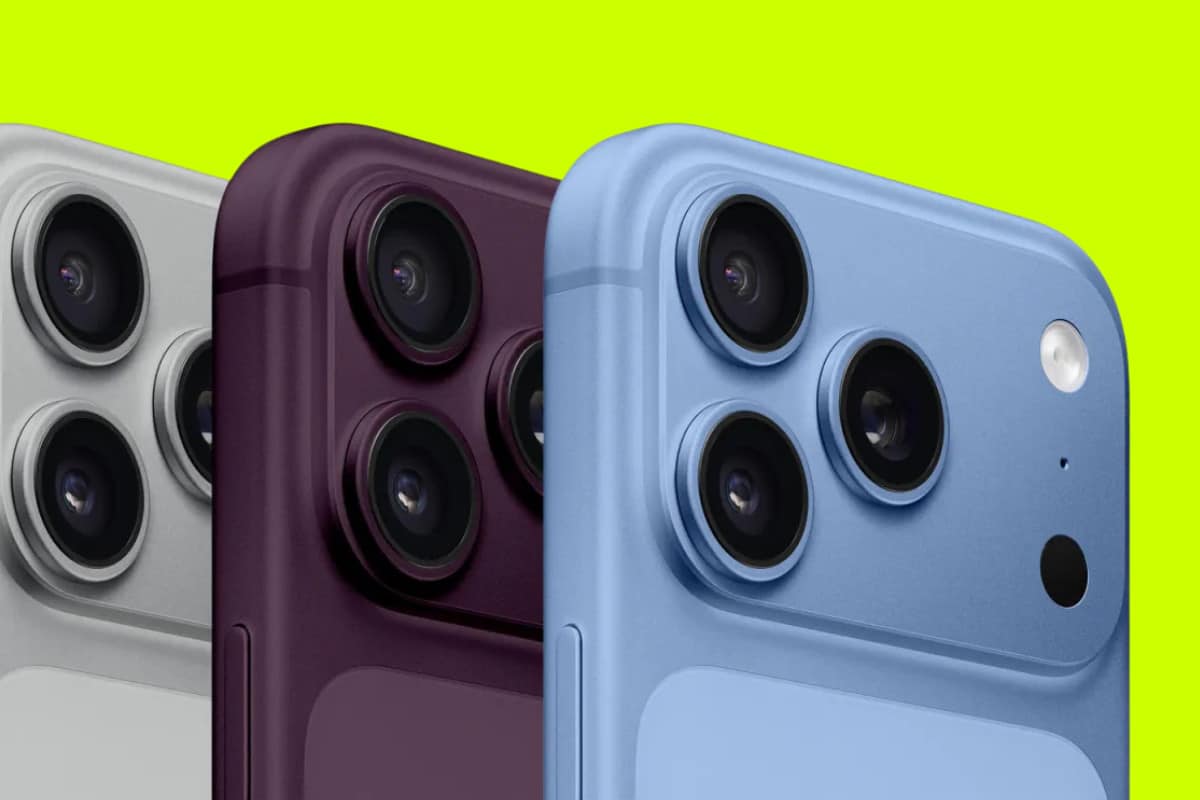
The A20 Pro is expected in:
- iPhone 18 Pro
- iPhone 18 Pro Max
- Foldable iPhone
- Possibly iPhone Air 2
The Pro, Pro Max and foldable should arrive in autumn 2026.
Analyst Jeff Pu expects all three to combine the 2nm chip with 12GB of RAM and Apple’s C2 modem.
The foldable may need Pro-level processing for its large internal display, multitasking interface and two-screen arrangement. It should also cost more than $2,000, so giving it the standard processor would look a bit mean.
What Does “2nm” Actually Mean?
The A20 generation is expected to move from TSMC’s N3P process to its first-generation N2 process.
You’ll often see this described as a change from 3nm to 2nm.
Those numbers don’t refer to a single physical measurement inside the processor. They’re names used to distinguish generations of semiconductor manufacturing.
What matters is that N2 allows TSMC to fit more transistors into a given area while improving power control.
More transistors can be used for:
- Faster CPU cores
- More powerful graphics
- Larger caches
- Neural processing
- Camera processing
- Media encoding
- Security functions
- Better power management
Apple doesn’t need to make every part of the chip faster. It can use the additional transistor budget to create dedicated hardware that performs one type of work more efficiently.
That is often how chip changes turn into new iPhone features.
TSMC’s Claimed N2 Improvements
Compared with its N3E process, TSMC says N2 can provide:
- 10% to 15% more performance at the same power
- 25% to 30% lower power consumption at the same performance
- More than 15% greater chip density
These are alternatives, not three gains that automatically happen together.
Apple could use N2 to build a processor that is 15% faster while consuming roughly the same amount of power.
It could instead maintain similar performance while cutting power consumption by close to 30%.
The finished A20 will probably sit somewhere between those two extremes.
For example, Apple might target:
- 8% faster CPU performance
- 15% faster graphics
- Lower power consumption during normal tasks
- Higher performance during short bursts
- Better sustained performance before heat becomes a problem
Apple determines the final balance through core design, clock speeds, voltage, cooling and software.
TSMC’s 30% figure should not be interpreted as 30% longer iPhone battery life.
The Move From FinFET To Nanosheet Transistors
The underlying transistor design is changing too.
Apple’s recent iPhone chips use FinFET transistors. TSMC’s N2 process moves to gate-all-around nanosheet transistors.
Without turning this into an electrical engineering lecture, the change gives the chip better control over the flow of current.
The gate surrounds more of the channel through which current travels. This makes it easier to switch the transistor on and off cleanly.
The practical benefits can include:
- Less wasted power
- Lower leakage
- Better performance at reduced voltage
- More predictable power delivery
- Improved efficiency during lighter workloads
Lower leakage is particularly relevant to smartphones.
An iPhone spends much of its life performing small background tasks, waiting for input or sitting in standby. Reducing wasted power across billions of transistors can help even when the phone isn’t working particularly hard.
What Is WMCM?
The A20 Pro is also expected to use TSMC’s Wafer-Level Multi-Chip Module packaging, normally shortened to WMCM.
A modern iPhone processor isn’t just a CPU. The package contains or connects several systems, including:
- CPU
- GPU
- Neural Engine
- Image signal processor
- Secure Enclave
- Media engines
- System cache
- Memory controllers
- RAM
Current Apple chips use Integrated Fan-Out packaging, known as InFO. The memory sits very close to the processor but remains a separate component connected through the package.
WMCM should integrate the processor and memory more closely at the wafer level.
This could provide:
- Shorter electrical connections
- Lower communication power
- Higher memory bandwidth
- Reduced latency
- Smaller package size
- Better heat distribution
- More flexible internal layout
It won’t make RAM part of the CPU in the literal sense. The processor and memory remain different components, but the connection between them should become tighter and more efficient.
Why The Memory Connection Matters
The CPU, GPU and Neural Engine constantly move information in and out of memory.
The faster and more efficiently this happens, the better the phone can handle:
- Large AI models
- High-resolution games
- Multiple applications
- Computational photography
- 4K video
- RAW image processing
- Background tasks
- Large webpages
- Photo and video editing
Moving data consumes energy.
If Apple can shorten the path between the processor and RAM, it may reduce the power used every time data is transferred.
This is especially helpful for AI because local models move large sets of weights and data through memory repeatedly.
The processor’s raw speed matters, but memory capacity and bandwidth can be the real bottleneck.
Will Every A20 Chip Use WMCM?
That isn’t clear.
Ming-Chi Kuo and Jeff Pu have linked WMCM most strongly to the iPhone 18 Pro models and foldable iPhone launching in autumn 2026.
The standard iPhone 18 won’t arrive until spring 2027.
Apple could:
- Use WMCM across both A20 versions
- Reserve it for the A20 Pro
- Introduce it on Pro devices first, then extend it to the standard A20
- Use different packaging depending on production cost
Giving the standard A20 older packaging would create another way for Apple to separate the chips without changing the CPU dramatically.
For now, WMCM is strongly expected on the A20 Pro but less certain on the standard A20.
How Much RAM Will The A20 Have?
Reports disagree.
The most commonly reported possibilities are:
- 9GB for the iPhone 18 and iPhone 18e
- 12GB across the entire iPhone 18 range
Earlier reporting from Ming-Chi Kuo placed the standard iPhone 18 and 18e at 9GB. More recent claims say Apple could move the standard iPhone 18 to 12GB.
The A20 Pro is on firmer ground.
The following models are expected to have 12GB:
- iPhone 18 Pro
- iPhone 18 Pro Max
- Foldable iPhone
The iPhone 17 Pro models already have 12GB, so this would not be a capacity increase. The improvement would instead come from tighter packaging, possible bandwidth changes and the new processor.
What About LPDDR6 Memory?
An alleged image of the A20 Pro package has been interpreted as showing LPDDR6 memory with a 96-bit bus.
This could provide more bandwidth and better energy efficiency than LPDDR5-generation memory.
However, the image has not been authenticated.
Other analyst reporting still points to 12GB of LPDDR5 memory.
The safe position is:
- 12GB is strongly expected on the A20 Pro
- WMCM packaging is strongly reported
- LPDDR6 remains unconfirmed
- Exact memory bandwidth is unknown
If Apple does move to LPDDR6, the difference would be most useful for AI, graphics and high-resolution camera processing rather than basic applications.
How Will A20 Differ From A20 Pro?
Apple hasn’t revealed the final architecture, but recent generations show how it normally separates the chips.
The A20 Pro is likely to receive:
- More GPU cores
- Higher GPU performance
- Larger cache
- More memory bandwidth
- Faster Neural Engine performance
- Higher sustained power limits
- Additional media-processing hardware
- Full hardware ray tracing
- Pro camera and video support
The standard A20 may use:
- Same-generation CPU architecture
- Fewer GPU cores
- Lower memory bandwidth
- Reduced sustained power
- Fewer professional video functions
- Smaller cache
- Lower-cost packaging
Apple has previously used nearly identical CPU core counts across standard and Pro chips while creating most of the difference through graphics, memory and media hardware.
That makes sense because normal applications rely heavily on CPU responsiveness, while Pro workloads tend to hit the GPU, memory and video engines harder.
Will The A20 CPU Be Much Faster?
Probably not in a way most people will immediately notice.
TSMC’s process could allow a theoretical performance improvement of up to 15% at the same power. Apple’s own CPU architecture could add further gains.
A reasonable expectation would be:
- Faster single-core performance
- Faster multi-core performance
- Quicker JavaScript execution
- Faster application compilation
- Reduced processing time for large exports
- Better performance per watt
But current iPhones are already extremely fast.
Opening WhatsApp, checking email or loading Settings doesn’t push an A19 anywhere near its limits. Making the chip faster won’t necessarily make those actions feel different.
Application-launch speed also depends on:
- Storage
- App design
- Network speed
- Animation length
- Background processes
- iOS behaviour
Apple could make the processor 15% faster and the interface might still look exactly the same because the animations run at a fixed duration.
What Normal Users Will Actually Notice
Most people are unlikely to notice the A20 through obvious processing speed.
They may notice it through several smaller changes.
Longer Battery Life
More efficient transistors and memory connections should reduce power consumption.
This could be visible as:
- Less standby drain
- More screen-on time
- Longer video playback
- Better battery life on mobile data
- Reduced drain while using AI features
- Longer gaming sessions
- Less power used during photo processing
The effect will vary by model.
The iPhone 18 Pro has almost no reported battery-capacity increase, so its runtime gains will depend heavily on efficiency.
The Pro Max combines the A20 Pro with a battery increase of roughly 9% to 12%. That model should show the clearest battery improvement.
Less Heat
The A20 should perform the same amount of work using less energy.
Less wasted energy generally means less heat.
Users may notice:
- Cooler video recording
- Less warmth during navigation
- Reduced heat during camera processing
- Cooler AI generation
- Fewer temperature warnings
- Better performance while charging
- Less aggressive screen dimming
This does not mean the iPhone 18 will never get hot.
Apple may use the additional efficiency to run the chip faster. Games, video exports and AI models can still generate plenty of heat.
More Consistent Performance
A phone often feels fast for the first few minutes of a demanding task, then slows as heat builds.
This is thermal throttling.
The A20 Pro should combine its more efficient process with vapour-chamber cooling inside the Pro phones.
That could help maintain performance during:
- Long gaming sessions
- 4K video recording
- ProRes capture
- Video exporting
- Photo editing
- Local AI generation
- Large file compression
- Navigation in hot weather
The difference may not appear in a quick benchmark. It should appear after ten, twenty or thirty minutes of sustained use.
Faster AI Responses
On-device AI features could answer more quickly and handle larger requests without contacting a server.
Users might notice:
- Faster text rewriting
- Quicker image editing
- Better live transcription
- More responsive Siri requests
- Faster object removal
- Improved notification summaries
- Better recognition inside photos and video
- More actions completed privately on the phone
None of these functions has been confirmed as an A20 exclusive. They are the sorts of workload the architecture should handle better.
Will Apps Open Faster?
Possibly, but not enough to justify buying the phone on its own.
Simple applications already open almost instantly on recent iPhones.
You may see a difference with:
- Large games
- Video editors
- Photo libraries
- Music-production tools
- Complex webpages
- Applications restoring a large previous session
- Apps loading local AI models
The extra RAM may matter as much as CPU speed.
If the iPhone can keep more applications in memory, they won’t need to reload when you return to them.
That can make the phone feel faster even when the processor isn’t completing individual tasks much more quickly.
Will Battery Life Improve By 30%?
No such claim can currently be made.
TSMC says its N2 process can use 25% to 30% less power than N3E while providing the same performance.
That doesn’t mean an iPhone 18 will last 30% longer.
The chip is only one part of the phone’s total power consumption. Energy is also used by:
- Display
- Modem
- Cameras
- Storage
- Wi-Fi
- Bluetooth
- Speakers
- Sensors
- Background software
Apple may also increase performance rather than taking the full efficiency saving.
The real battery improvement could still be good, particularly on the Pro Max, but it cannot be calculated directly from TSMC’s process figures.
How The A20 Could Improve Apple Intelligence
Apple’s current chip design divides AI work between the CPU, GPU and Neural Engine.
The A19 Pro already includes Neural Accelerators inside each GPU core, alongside a 16-core Neural Engine.
Apple says this arrangement helps it run larger language models directly on the iPhone.
The A20 Pro is expected to continue this approach with:
- More efficient neural processing
- Larger or faster Neural Engine
- Improved GPU accelerators
- Faster access to memory
- 12GB of RAM
- Greater memory bandwidth
- Better sustained performance
An alleged A20 Pro package image appears to show a physically larger neural-processing area. The image is not verified, but a larger AI section would fit Apple’s current direction.
What Does Running AI Locally Mean?
A local AI model runs on the iPhone instead of sending the entire request to a remote server.
This can provide:
- Faster responses
- Better privacy
- Offline availability
- Lower server dependence
- Reduced mobile-data use
- More personal context stored on the device
- Immediate processing of photos, video and audio
For example, the iPhone could analyse a recording, identify speakers, transcribe it and summarise the conversation without uploading the original audio.
It could also search across local messages, email, files and photographs while keeping the source material on the device.
Whether Apple delivers these exact functions will depend on iOS rather than the processor alone.
The A20 provides capacity. Software determines whether that capacity becomes useful.
Will The A20 Unlock A Smarter Siri?
It could help, but the chip isn’t the main reason Siri has struggled.
A faster Neural Engine can run larger language models and process requests more quickly. More RAM allows the phone to hold a larger model in memory.
That could support:
- Better understanding of natural speech
- Longer conversational context
- Awareness of on-screen information
- Personal-context searches
- Multi-step actions
- Offline requests
- Faster response generation
But Siri’s usefulness also depends on Apple’s models, data systems, app integrations and software reliability.
Throwing a faster processor at weak software doesn’t magically fix the software.
The A20 should remove some hardware limits. Apple still has to build the experience properly.
Could A20 Features Be Exclusive To The Pro?
Yes, although no specific exclusive AI function has been confirmed.
Apple could restrict some features because of:
- GPU performance
- Neural Engine capacity
- RAM
- Memory bandwidth
- Thermal limits
- Camera hardware
- Marketing decisions
Possible A20 Pro-only functions could involve:
- More advanced local image generation
- Larger offline language models
- Pro video effects
- Real-time video analysis
- Advanced gaming graphics
- Multi-camera computational video
- Faster generative editing
- More demanding visual intelligence
- Higher-quality background processing
These are possibilities, not leaked features.
Apple may instead keep the same Apple Intelligence feature set across A20 phones and allow the Pro to complete tasks faster.
That would be better for users and easier for developers.
How The A20 Pro Could Improve Photography
The iPhone 18 Pro is expected to introduce a variable-aperture main camera.
The A20 Pro will need to coordinate that physical aperture with:
- Shutter speed
- Sensor sensitivity
- Autofocus
- Subject detection
- White balance
- HDR processing
- Depth mapping
- Noise reduction
- Multi-frame capture
The processor could decide whether to use:
- Wider aperture for low light
- Wider aperture for subject separation
- Narrower aperture for groups
- Narrower aperture for daylight sharpness
- Narrower aperture to control video exposure
It must make that decision almost instantly.
The image signal processor will then combine and process the captured frames.
More processing capacity could mean:
- Faster ProRAW capture
- Reduced delay between photographs
- Better subject freezing
- More accurate skin tones
- Cleaner low-light detail
- Better handling of moving subjects
- More natural portrait separation
- Faster 48MP image processing
The aperture provides the optical option. The A20 Pro decides how and when to use it.
Could It Improve Video?
Video is one of the clearest areas where the Pro chip could pull away.
The A19 Pro already supports:
- ProRes RAW
- 4K recording at high frame rates
- Apple Log
- Hardware ray tracing
- Genlock
- Multiple simultaneous camera feeds
The A20 Pro could build on this with:
- Faster real-time noise reduction
- Better stabilisation
- Improved HDR processing
- More accurate subject tracking
- Higher-quality computational zoom
- Better exposure transitions
- More efficient ProRes encoding
- Real-time AI-assisted effects
- Longer recording before thermal throttling
There is no dependable report confirming 8K recording or a new maximum frame rate.
Any specification page listing 8K video for the iPhone 18 Pro is currently guessing.
Will Gaming Be Better?
Yes, particularly on the A20 Pro.
The A19 Pro already uses a six-core GPU with Neural Accelerators built into each GPU core. Apple also pairs it with hardware-accelerated ray tracing and vapour-chamber cooling.
The A20 Pro could improve:
- Frame rates
- Ray-traced lighting
- Texture quality
- Upscaling
- AI-generated frames
- Loading times
- Power consumption
- Sustained performance
- External-display gaming
Normal mobile games won’t need all of this power.
The benefit should be more visible in console-style titles, emulation, high-refresh gaming and games using advanced lighting.
The bigger improvement may again be consistency.
Holding 60fps for an hour without becoming extremely hot is more useful than briefly reaching a very high benchmark score.
What Are GPU Neural Accelerators?
Apple added Neural Accelerators to the individual GPU cores in the A19 Pro.
These allow parts of an AI workload to run alongside normal graphics work.
A future A20 Pro could use them for:
- AI upscaling in games
- Frame generation
- Image effects
- Video processing
- Generative image tools
- Object recognition
- Real-time depth estimation
- Local language models
The GPU is good at performing many calculations simultaneously. That makes it useful for graphics and AI workloads that involve large amounts of parallel maths.
The Neural Engine remains the dedicated AI processor, but Apple can divide work across the system depending on the task.
Will The A20 Pro Replace A Games Console?
No.
It may run increasingly capable games, but the iPhone still faces:
- Small display
- Touch controls
- Battery limits
- Heat
- Storage requirements
- Limited selection of console-class games
- Developer support
- Mobile pricing expectations
The chip may be powerful enough. The broader gaming platform still has work to do.
Pairing an iPhone 18 Pro with a controller and external display could become more credible, especially if Apple improves external-display support.
No new gaming mode or console interface has been confirmed.
Will The A20 Make The iPhone Cooler?
During the same task, probably.
If an A20 can complete a workload using less power than an A19, it should generate less heat.
But Apple rarely leaves all efficiency gains untouched.
It may use the new process to:
- Increase clock speeds
- Run a larger GPU
- Add more AI hardware
- Process more camera data
- Maintain higher performance for longer
The phone could therefore feel just as warm while completing far more work.
The Pro models should also use vapour-chamber cooling, which spreads heat across a wider section of the body.
That may make the phone feel warm over a larger area while keeping the processor itself at a safer temperature. Warm casing does not always mean poor cooling. It can mean the cooling system is successfully moving heat away from the chip.
Could The Chip Create More Space For The Battery?
Possibly.
WMCM packaging may reduce the overall footprint of the processor and memory package.
Any space saved could be used for:
- Battery
- Cooling
- Camera hardware
- C2 modem
- Antennas
- Folding-display components
The gains will be measured in millimetres, but internal iPhone space is extremely tight.
A smaller package could be especially helpful inside the foldable, where Apple is trying to fit a processor, two battery cells, two displays, cameras and a hinge into a 4.5mm unfolded body.
There is no figure showing exactly how much internal space WMCM will save.
How Will A20 Compare With A19?
| Area | A19 generation | A20 generation expected |
|---|---|---|
| Process | TSMC N3P 3nm | TSMC N2 2nm |
| Transistor design | FinFET | Gate-all-around nanosheet |
| Packaging | InFO | WMCM expected on Pro |
| RAM | 8GB or 12GB depending on model | 9GB or 12GB rumoured |
| CPU improvement | Current baseline | Up to 15% process potential |
| Power efficiency | Current baseline | Up to 30% process potential |
| AI hardware | Neural Engine plus GPU accelerators on Pro | Larger or faster AI system expected |
| Cooling | Vapour chamber on Pro | Vapour chamber expected on Pro |
| Main improvement | Strong sustained performance | Efficiency, memory and local AI |
The “up to 15%” and “up to 30%” numbers come from TSMC’s N2 process comparisons. They are not leaked A20 benchmark results.
How Will A20 Compare With A20 Pro?
The standard A20 will probably feel almost identical during everyday use.
Both should be capable of:
- Fast app performance
- Apple Intelligence
- 4K video
- Computational photography
- Hardware ray tracing
- Modern games
- Years of iOS updates
The A20 Pro should pull ahead when the workload lasts longer or requires more graphics and memory bandwidth.
You’re more likely to see a difference during:
- AAA gaming
- ProRes video
- RAW photo editing
- Video exporting
- Local AI generation
- Multi-camera recording
- External-display use
- Large creative applications
The standard chip should be the better efficiency-per-pound choice. The Pro exists for headroom.
Will Normal People Notice The A20?
Not as “speed.”
An iPhone 18 won’t feel twice as fast as an iPhone 17. It probably won’t even feel dramatically faster than an iPhone 15 during basic use.
Most people could notice:
- Battery lasting longer
- Less heat during demanding tasks
- Apps remaining open in memory
- Faster photo and video processing
- More responsive AI tools
- Smoother high-end games
- Fewer slowdowns during long tasks
- Better weak-signal battery life when combined with the C2 modem
The experience should feel more effortless rather than obviously faster.
That isn’t as exciting as a giant benchmark number, but it is more useful.
Higher and steadier frame rates, better graphics and reduced throttling should be easy to see.
Faster exports, longer high-quality recording and better real-time processing could save actual time.
Quicker ProRAW processing and smarter control over the new variable-aperture camera may improve difficult shots.
Local AI tasks should complete more quickly and may work with larger models.
More RAM and extra processing headroom should help the phone cope with future iOS features.
The A20 Pro will need to manage the large internal display, multitasking and two-screen interface without hammering the battery.
Who Probably Won’t Notice Much?
You may see very little immediate difference if you mainly use your phone for:
- Messaging
- Social media
- Music
- Web browsing
- Banking
- Maps
- Streaming video
- Taking normal daylight photographs
An iPhone from the last few years already handles these tasks without difficulty which is why buying an older iPhone refurbished is often a very good idea (you save 40% to 50% and get flagship performance for less than the cost of a new base model iPhone).
Battery efficiency may still be noticeable, but processing speed alone won’t transform them.
Does The A20 Make Older iPhones Obsolete?
Absolutely not.
Apple’s existing chips are already far ahead of what most applications require.
Even an iPhone several generations old can still handle:
- Everyday applications
- 4K video
- High-quality photography
- Games
- Navigation
- Streaming
- Productivity
- Many Apple Intelligence functions, depending on the chip
The A20 matters most as a base for future features rather than because current iPhones have become slow.
If you don’t need the newest AI or camera hardware, refurbished iPhones offer incredible value for money. A recent Pro model can provide excellent performance, strong cameras and years of software support for far less than the expected iPhone 18 Pro price.
You can compare refurbished Apple iPhones, browse our phone collections or use the Phone Finder to narrow the results by price, size and features.
Is The A20 Worth Waiting For?
Wait for the A20 generation if you care about:
- Maximum battery efficiency
- On-device AI
- Long gaming sessions
- Pro video recording
- Variable-aperture photography
- Keeping the same phone for four or five years
- Buying Apple’s first foldable
- The best possible sustained performance
Don’t wait solely because you expect normal apps to become dramatically faster.
If you own an iPhone 16 or 17, the A20 alone is unlikely to justify an upgrade. The decision should come down to battery, cameras, display, physical design and any new software functions Apple attaches to the chip.
Owners of older devices may notice a much larger combined improvement.
What Remains Unknown?
Apple has not confirmed:
- CPU core count
- CPU clock speeds
- GPU core count
- Neural Engine core count
- Transistor count
- A20 benchmark performance
- A20 Pro benchmark performance
- Exact RAM capacity in the standard iPhone 18
- LPDDR5 or LPDDR6 memory
- Memory bandwidth
- Whether every A20 uses WMCM
- Exact package size
- A20-exclusive software features
- A20 Pro-exclusive AI features
- New gaming features
- New video formats
- Real-world battery savings
- How much faster local AI will be
- Whether the Air 2 uses A20 or A20 Pro
Any page claiming exact benchmark scores, clock speeds or exclusive AI tools is getting ahead of the available information.
What The A20 And A20 Pro Really Mean
The A20 generation is less about making an already fast iPhone open apps more quickly.
It is about giving Apple more performance without a matching increase in power consumption.
The move to TSMC’s 2nm process should reduce wasted energy and allow Apple to fit more processing hardware into a similar chip area. WMCM should bring the processor and memory closer together, helping with workloads that constantly move large amounts of data.
Normal users are most likely to notice longer battery life, less heat and AI tools responding more quickly.
Pro users should see more from sustained gaming, video processing, RAW photography and local AI workloads.
The A20 Pro will almost certainly win every benchmark comparison. That doesn’t mean everyone needs it.
If Apple gives the standard A20 the same core AI functions and enough RAM, it should provide almost the same everyday experience for much less money.
The real test won’t be whether the A20 Pro is 12% or 15% faster. It will be whether Apple turns all that new silicon into features people genuinely use.
Sources & Side Quests
- TSMC: N2 process technology
- TSMC: N2 platform details
- MacRumors: A20 chips expected to use TSMC’s 2nm process
- MacRumors: A20 Pro and foldable chip design
- MacRumors: A20 WMCM packaging
- MacRumors: Expected iPhone 18 RAM
- MacRumors: Standard iPhone 18 could receive 12GB RAM
- Apple: A19 Pro architecture and sustained performance
Buying tools
Thinking About Buying an iPhone?
Compare current refurbished prices, see how it stacks up against alternatives, and avoid overpaying for the wrong model.
Recommended for this article