Will Your Phone Work On Verizon? What You Need To Know
Not every phone that activates on Verizon supports every part of its network. Here’s what actually matters before you buy — especially for imported or refurbished devices.
A phone can activate on Verizon without supporting every part of its network. Activation is not the same as compatibility.
Verizon’s most important modern 5G band is C-band n77. A phone without it will miss the bulk of Verizon’s mid-band 5G coverage.
Verizon also uses mmWave for extremely fast but highly localised 5G Ultra Wideband coverage — airports, stadiums, dense urban blocks. Most users rarely encounter it.
LTE Band 13 remains important for long-range and rural 4G coverage on Verizon. A phone without it will perform poorly outside urban areas.
A phone’s exact model number matters more than its marketing name. Two phones sold under the same name can have completely different band support depending on where they were sold.
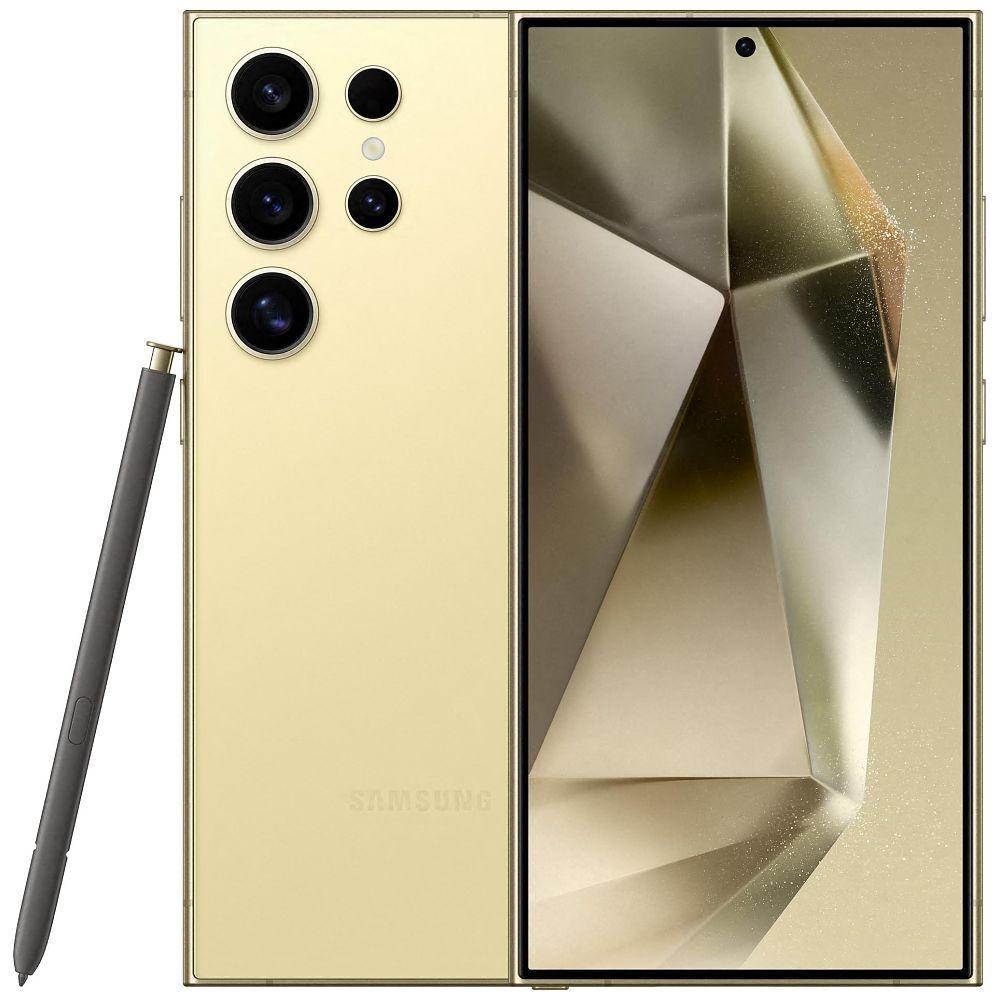
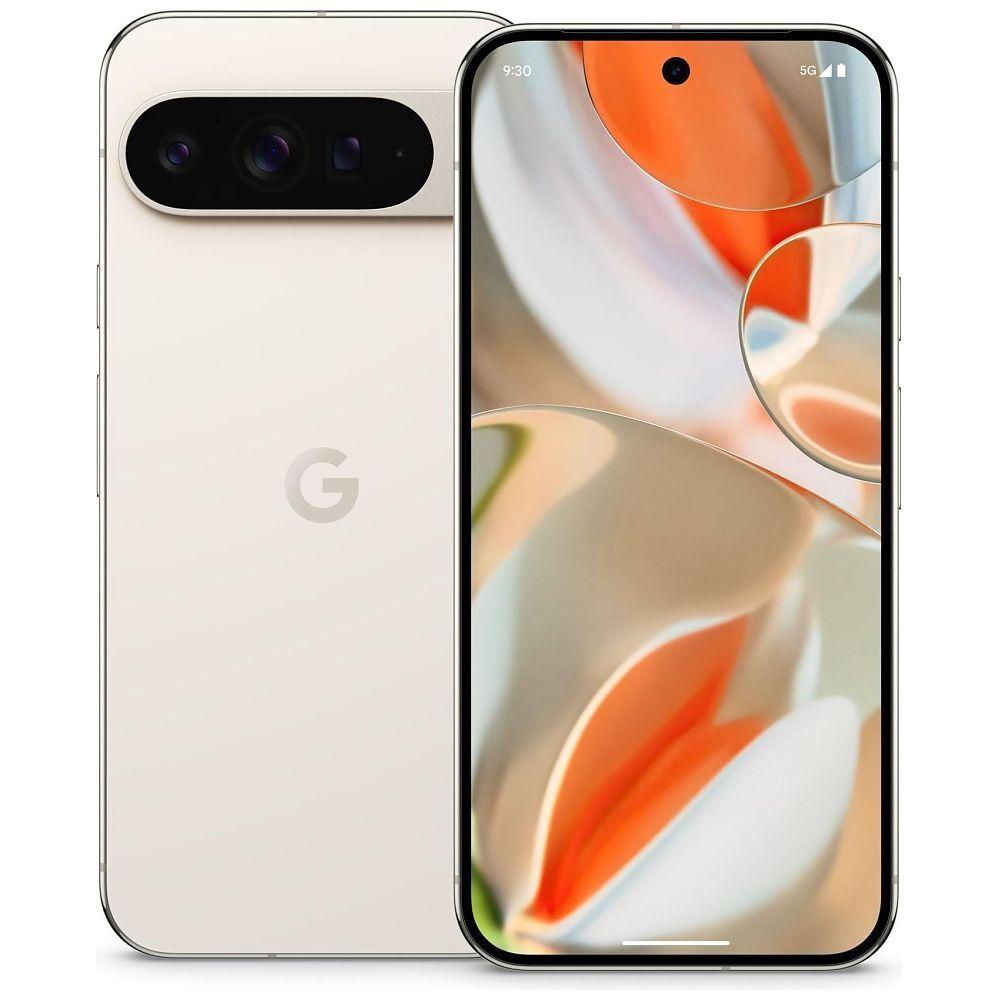
US iPhones, Samsung Galaxy S and Z phones, and US Google Pixel models are normally the safest choices for Verizon. They are built and approved for the US carrier ecosystem.
Imported phones can miss Verizon bands, VoLTE support, Wi-Fi Calling or carrier approval — even if they look identical to the US version. Check the model number before buying.
Verizon’s IMEI checker is the final activation test, but buyers should also check the phone’s supported bands. IMEI approval alone does not guarantee full network performance.
For refurbished phones, confirm the model number, unlock status and IMEI before buying. All three need to check out — not just one of them.
Comparing devices? Use the KnowYourMobile phone finder to check specs and compatibility side by side.
Use Phone Finder →It’s true that some phones do work noticeably better on Verizon than others, and knowing why this is the case is important because no one likes crappy cell service now, do they?
This matters most when you are buying an unlocked, refurbished, imported or older phone. Two devices can both be advertised as “Verizon compatible” while offering very different coverage, data speeds and network features.
The safest choices, if you’re going refurbished with your next phone, are normally recent US-market iPhones, Samsung Galaxy phones and Google Pixel phones. These devices are built with Verizon’s main frequencies in mind and usually support its fastest 5G services.
An imported Android phone may still connect, but that does not mean it will give you the full Verizon experience.
Why One Phone Can Work Better Than Another on Verizon
Smartphones connect to mobile networks through a collection of radio frequencies known as bands.
Different carriers own and operate different combinations of these bands. Verizon’s network is built from several layers, each designed to do a different job:
- Low-frequency spectrum provides broad geographic coverage.
- Mid-band spectrum balances coverage, speed and capacity.
- High-frequency mmWave spectrum provides very high speeds across short distances.
- LTE remains available as a coverage and capacity layer.
A phone does not need to support every Verizon band to display a signal. It could connect through one available frequency while missing several others.
That creates a large gap between:
“This phone can connect to Verizon.”
and:
“This phone supports Verizon properly.”
The second one is what buyers should care about.
Verizon’s Network Explained
Verizon uses three broadly different types of 5G service.
| Verizon service | Spectrum type | Main purpose | What it means in practice |
|---|---|---|---|
| 5G Nationwide | Low-band | Broad coverage | Good reach, but speeds can be similar to LTE |
| 5G Ultra Wideband | C-band / mid-band | Faster everyday 5G | The most useful version of Verizon 5G for most people |
| 5G Ultra Wideband | mmWave / high-band | Maximum local speed | Extremely fast, but only available over short distances |
| 4G LTE | Multiple LTE bands | Coverage and fallback | Still important in rural areas and inside buildings |
Verizon confirms that its 5G Ultra Wideband network combines mid-band C-band and high-band mmWave spectrum. Its standard 5G service uses low-band spectrum to cover much larger areas.
This is why the small “5G” or “5G UW” indicator on your phone can mean very different things.
C-Band n77 Is the Verizon Band Most Buyers Should Care About
Verizon uses 5G band n77 for its C-band network.
C-band is the part of Verizon 5G Ultra Wideband that most customers are likely to encounter regularly. It offers a much better balance between speed and range than mmWave.
It can cover wider areas, enter buildings more effectively and provide higher capacity than low-band 5G. You do not need to stand beside a particular street corner or stadium antenna to receive it.
A modern phone without n77 may still connect to Verizon’s low-band 5G and LTE networks, but it can miss much of the network’s useful high-speed 5G coverage.
That means a phone advertised simply as “5G” is not automatically a good Verizon 5G phone.
The important question is:
Does this exact model support Verizon’s n77 implementation?
For most buyers, C-band support matters more than mmWave support.
Does mmWave Matter?
Verizon uses high-frequency mmWave bands for part of its 5G Ultra Wideband network. US phones commonly list support for bands such as n260 and n261.
When you are close to a mmWave transmitter with a clear signal, speeds can be exceptionally fast. It is useful in places where thousands of people need capacity within a small area, including:
- Stadiums
- Airports
- Convention centres
- Busy city centres
- Transport hubs
- Large entertainment venues
The problem is range.
mmWave signals do not travel as far as C-band or low-band signals. Buildings, walls, foliage and even your position relative to the antenna can affect the connection.
For most people, missing mmWave is not the same as missing C-band. A phone with full Verizon LTE and n77 support can still provide a very good everyday experience without mmWave.
However, if you live or work in one of Verizon’s mmWave areas, regularly attend crowded events or simply want every network feature available, you should buy a US model with n260 and n261 support.
Verizon 4G LTE Bands Still Matter
It would be a mistake to check only the 5G specification.
Verizon continues to use LTE, and your phone can fall back to it when 5G is weak or unavailable. LTE also remains relevant inside buildings and across less densely populated areas.
The main Verizon LTE bands commonly associated with its network include:
| LTE band | General role |
|---|---|
| Band 13 | Long-range coverage and rural service |
| Band 2 | Additional coverage and capacity |
| Band 4 | AWS capacity |
| Band 5 | Low-band coverage in supported markets |
| Band 48 | CBRS capacity in selected areas |
| Band 66 | Extended AWS capacity |
Band 13 is particularly important.
Its 700MHz frequency travels relatively long distances and penetrates buildings better than higher-frequency capacity bands. Verizon built a large part of its original LTE coverage around it.
Many US phones support Band 13. Some international devices do not because it is far less important outside North America.
An imported phone without Band 13 might work perfectly in a strong urban coverage area but struggle once you move into a location where Verizon depends more heavily on its long-range LTE layer.
Why Imported Phones Can Be a Problem
An international version of a phone may look exactly like its American equivalent. The processor, cameras, display and storage can all appear identical.
The cellular hardware can still be different.
Manufacturers produce regional variants to support the frequencies and carrier requirements used in different countries. A European or Asian version may prioritise bands that are widely used in those regions while dropping frequencies used primarily by US carriers.
An imported phone might therefore:
- Lack LTE Band 13.
- Lack C-band n77 support in the configuration Verizon uses.
- Lack n260 or n261 mmWave hardware.
- Fail Verizon’s IMEI compatibility check.
- Connect to mobile data but have problems with voice calling.
- Miss Wi-Fi Calling or visual voicemail.
- Receive slower carrier-specific software support.
- Lack access to some carrier aggregation combinations.
- Show 5G without reaching Verizon’s fastest services.
This does not mean every imported device will fail. It means compatibility must be checked using the exact regional model number rather than the public product name.
“Samsung Galaxy S26” is not specific enough. Neither is “Google Pixel 11” or “iPhone 17.”
You need the hardware variant.
Model Numbers Matter More Than Phone Names
Phone listings usually put the familiar product name in the title while hiding the regional model number in the specification table, product description or small print.
That is risky when buying for Verizon.
Consider two hypothetical versions of the same phone:
| Feature | US model | International model |
|---|---|---|
| Verizon activation | Yes | Uncertain |
| LTE Band 13 | Yes | No |
| 5G n77 | Yes | Possibly |
| mmWave n260/n261 | Yes | No |
| Verizon VoLTE | Supported | Uncertain |
| Wi-Fi Calling | Supported | Uncertain |
Both could be unlocked. Both could accept a Verizon SIM. Only one offers the full set of network features.
This is also why refurbished marketplaces should not treat every regional version as interchangeable inventory.
Unlocked Does Not Automatically Mean Compatible
“Unlocked” and “compatible” describe two separate things.
An unlocked phone is not restricted to the carrier that originally sold it. That does not mean the hardware supports Verizon or that Verizon has approved the device for activation.
A phone needs to satisfy several conditions:
- It must be carrier-unlocked.
- It must support the required Verizon network bands.
- It must support Verizon’s voice system, including VoLTE.
- Its IMEI must be accepted by Verizon.
- Its software must support the relevant carrier configuration.
A phone can pass the first condition and fail the others.
Verizon tells BYOD customers to enter the device’s IMEI into its compatibility checker. This is the best way to confirm whether an individual device can be activated.
Do this before paying for a used or refurbished phone whenever possible.
Why Verizon Certification Matters
Band support describes what the radio hardware is technically capable of doing. Carrier approval concerns whether the device has been tested and configured to operate correctly on the network.
That includes more than mobile data.
Certification and carrier configuration can affect:
- VoLTE calls
- Emergency calling
- Wi-Fi Calling
- SMS and MMS
- eSIM activation
- Visual voicemail
- Network handoffs
- Carrier aggregation
- 5G network access
- Software settings
- Verizon MVNO compatibility
Verizon retired its old 3G CDMA network at the end of 2022. Modern voice calls therefore rely on LTE and newer network systems rather than the old CDMA fallback.
That makes proper VoLTE support far more important than it was on older Verizon phones. A device that gets data but cannot register properly for voice service is not a workable everyday phone.
Can Two Fully Compatible Phones Still Have Different Reception?
Yes.
Once band support and activation are taken care of, the phone’s internal design can still affect performance.
The main factors include:
Modem generation
The modem manages the phone’s connection to the network. Newer modem platforms can support newer standards, more band combinations and better power management.
A newer modem does not automatically guarantee better reception everywhere, but it can improve:
- Carrier aggregation
- 5G efficiency
- Handoffs between network layers
- Peak download speeds
- Upload performance
- Battery use while connected
- Performance in congested areas
Antenna design
A phone needs antennas positioned around its body to transmit and receive signals.
Their location, tuning and relationship to the frame affect performance. Foldable phones, compact phones and extremely thin phones give engineers less internal space to work with.
Cases and the way you hold the phone can also affect signal quality, although modern antenna systems are designed to limit this.
Carrier aggregation
Carrier aggregation allows a phone to combine several network bands into one faster connection.
Two phones may support the same individual Verizon bands but differ in which bands they can combine simultaneously. That can affect speeds and stability in busy areas.
This is one reason a simple list of supported bands does not tell the entire story.
MIMO
Multiple-input, multiple-output technology uses several antennas and data streams at once.
A more capable MIMO setup can improve network capacity and speed when the local Verizon equipment supports it. Premium phones normally have more advanced radio and antenna systems than very cheap devices.
Software and carrier profiles
The phone’s modem firmware and carrier configuration tell it how to behave on Verizon’s network.
Software can affect which bands are selected, how quickly the device switches between LTE and 5G, which carrier aggregation combinations are available and whether features such as Wi-Fi Calling work.
This helps explain why an officially supported US phone can perform better than an imported phone containing a theoretically similar modem.
Which Phones Work Best on Verizon?
Recent US-market versions from Apple, Samsung and Google are normally the safest options.
| Phone family | Verizon suitability | What to check |
|---|---|---|
| US iPhone models | Excellent | Exact model, unlock status and battery condition |
| US Samsung Galaxy S models | Excellent | Avoid international Exynos or non-US variants |
| US Samsung Galaxy Z models | Excellent | Confirm variant and mmWave support |
| US Google Pixel models | Excellent | mmWave support can vary between versions |
| US Motorola models | Good to excellent | Compatibility differs widely across the Moto range |
| US OnePlus models | Usually good | Check Verizon approval and exact band support |
| Imported Android phones | Variable | Bands, VoLTE, IMEI acceptance and Wi-Fi Calling |
| Older LTE phones | Variable | VoLTE, Band 13, software support and battery health |
Apple iPhone
Recent US iPhones offer broad Verizon support, including its main LTE bands, C-band and, on applicable US versions, mmWave.
Apple publishes detailed cellular specifications for each regional model. Its US models generally provide the safest multi-carrier support, which is useful if you later move from Verizon to another US network.
If you want to compare current and older models, the KnowYourMobile Apple hub brings together buying guides, specifications and refurbished options. You can also follow the latest devices through our iPhone 18 series hub.
Older refurbished iPhones can be particularly good Verizon purchases because Apple has included Band 13 across many generations. For 5G Ultra Wideband, however, you should focus on compatible US 5G models rather than assuming every imported iPhone has identical radio support.
Samsung Galaxy
US Samsung Galaxy S and Galaxy Z phones are normally built for the major American networks and provide broad Verizon compatibility.
The danger is buying an international version because it is cheaper.
Samsung has historically sold different hardware variants in different regions. The differences can include processors, modems, available bands and mmWave hardware.
Before buying a refurbished Galaxy phone, check the full model number and confirm that it is a US variant. You can compare Samsung models through the KnowYourMobile Samsung hub.
Google Pixel
US Pixel phones are generally strong choices for Verizon, but buyers must be careful about individual variants.
Google’s specification pages separate sub-6GHz and mmWave hardware by model number. A standard retail version in one country may not contain the same mmWave hardware as the US carrier version.
That distinction is easy to miss because both devices carry the same Pixel name.
For current Pixel coverage, visit our Google phone hub or the full Pixel 11 series hub.
Motorola
Motorola produces many US phones with official Verizon support. Some support Verizon 5G, VoLTE and Wi-Fi Calling, while others support only part of that list.
Motorola’s own compatibility pages are useful because they often state support separately for each carrier and feature. Never assume compatibility based on another Moto phone from the same price range.
OnePlus
Recent US OnePlus phones are much better suited to Verizon than some earlier generations.
Compatibility still needs to be checked by exact model. Confirm n77, LTE Band 13, VoLTE and the device’s IMEI status. Do not assume a Chinese or Indian OnePlus model is equivalent to the US version.
Does mmWave Make the Verizon Version Worth More?
Sometimes, but not always.
Certain manufacturers have sold a Verizon-specific model containing mmWave hardware while a cheaper unlocked version supported only sub-6GHz 5G. That made the Verizon edition technically more capable, but it did not necessarily make it the better purchase for everyone.
Paying extra for mmWave makes more sense when:
- Verizon has mmWave coverage near your home or workplace.
- You regularly attend events in supported venues.
- You keep phones for several years.
- You want the complete Verizon network package.
- The price difference is small.
It matters less when:
- You live in an area served mainly by C-band.
- You spend most of your time indoors.
- You are buying a low-cost phone.
- You care more about coverage than peak speed.
- The non-mmWave model still has complete LTE and n77 support.
For the average Verizon buyer, n77 and Band 13 should be checked before mmWave.
Is a Verizon-Branded Phone Better Than an Unlocked US Phone?
Not necessarily.
A factory-unlocked US iPhone, Galaxy or Pixel can work just as well as a Verizon-sold version when it supports the same bands and carrier features.
A Verizon model may offer:
- Guaranteed Verizon compatibility
- Easier activation
- Preconfigured carrier software
- Verizon-specific mmWave hardware on certain devices
- Access to carrier financing and promotions
A factory-unlocked US model may offer:
- Less carrier software
- Easier switching between networks
- Better resale appeal
- No carrier lock when purchased directly as unlocked
- The same core network support on many flagship phones
The important distinction is not simply “Verizon versus unlocked.” It is:
Verizon version versus a fully compatible US unlocked version versus an international version.
The first two can both be excellent. The third requires much closer inspection.
What About Visible, Total Wireless, Xfinity Mobile and Other Verizon MVNOs?
A phone working on Verizon does not always guarantee identical support on every network using Verizon infrastructure.
MVNOs and cable operators can maintain their own activation databases, plan restrictions and supported-device lists. Features such as eSIM, Wi-Fi Calling, visual voicemail and smartwatch pairing may differ.
Before using a phone with a Verizon-based provider, run it through that provider’s own compatibility checker.
Do not rely only on the fact that Verizon accepts it.
How To Check Whether a Phone Will Work Properly
Follow these checks before buying.
1. Get the exact model number
Do not settle for the retail name. Ask the seller for the hardware model or SKU.
On an existing iPhone, it can be found under:
Settings > General > About
On most Android phones:
Settings > About phone
2. Check that the phone is unlocked
Ask whether it is factory-unlocked or carrier-unlocked.
A phone can support every Verizon frequency and still be unusable because it remains locked to another carrier.
3. Check the IMEI with Verizon
Verizon’s BYOD checker uses the device’s IMEI to determine whether it can be activated.
This checks the individual phone rather than only the general model. It can also expose problems such as an unsupported variant.
The IMEI should never be posted publicly. Enter it directly into Verizon’s website.
4. Check the supported bands
At a minimum, look for:
- LTE Band 13
- Verizon’s other main LTE bands
- 5G n77 for C-band
- n260 and n261 if you want mmWave
Band support alone does not guarantee activation, but missing bands can reveal limitations that a simple compatibility label hides.
5. Confirm VoLTE and Wi-Fi Calling
These features should be confirmed for Verizon specifically.
A specification saying that the phone “supports VoLTE” does not always mean it has been enabled and approved for every carrier.
6. Check the phone’s status
For any used or refurbished phone, confirm that:
- The IMEI is clean.
- The phone has not been reported lost or stolen.
- No unpaid financing is attached.
- Activation Lock or Google Factory Reset Protection has been removed.
- The device is not managed by a company or school.
- The seller offers a return window.
What Refurbished Buyers Need To Watch
Refurbished phones are often a much better deal than buying new, but marketplaces can mix stock from several countries and carriers.
A listing may combine reviews and specifications for multiple variants under one product page. The unit shipped to you may not be the version pictured.
Before ordering, ask:
- Is this the US model?
- What is the full model number?
- Was it originally sold by Verizon, another US carrier or overseas?
- Is it fully unlocked?
- Does it pass Verizon’s IMEI checker?
- Does it support Verizon C-band?
- Does it support mmWave?
- Can it be returned if Verizon will not activate it?
- Is the battery covered by the refurbishment guarantee?
You can browse KnowYourMobile’s refurbished smartphone guides for help choosing a used device, or view our phone collections to compare models by features and price.
Bottom Line & Recommendations
If you want the lowest-risk choice, buy a recent US-market model from one of these groups:
- US iPhone
- US Samsung Galaxy S or Z phone
- US Google Pixel
- Verizon-approved Motorola
- Verizon-approved US OnePlus phone
The phone should be unlocked, have a clean IMEI and pass Verizon’s compatibility checker.
Avoid buying an international model based only on the claim that it “supports Verizon bands.” It might work, but support for a few frequencies does not confirm activation, VoLTE, Wi-Fi Calling or full 5G access.
The Bottom Line
Certain phones absolutely work better on Verizon.
The difference is most noticeable when comparing a fully supported US flagship against an imported, older or cheaper unlocked phone. Both may connect, but the better-equipped model can access more of Verizon’s network, maintain service in more places and support carrier features correctly.
For most buyers, the priority order should be:
- Verizon IMEI approval
- Unlocked status
- LTE Band 13
- 5G C-band n77
- VoLTE and Wi-Fi Calling
- mmWave n260/n261
- Exact US model number
If a phone passes all seven checks, it should provide the full Verizon experience. If it passes only the first one, “compatible” may be doing a lot of work.
Refurbished Apple, Samsung and Google phones can provide excellent value here because recent US flagships tend to have broad Verizon support. Use the KnowYourMobile Phone Finder to see how much you could save by buying one refurbished.
Sources
- Verizon: Bring Your Own Device FAQs – Verizon’s activation requirements, IMEI checking and unlocked-device guidance.
- Verizon: 5G and 5G Ultra Wideband FAQs – Explanation of Verizon’s low-band 5G, C-band and mmWave services.
- Verizon: Understanding C-band – How C-band extends faster 5G across a broader area.
- Apple: Supported 5G and LTE Networks – Regional iPhone model numbers and their supported cellular bands.
- Google: Pixel Hardware Specifications – Pixel model variants, sub-6GHz frequencies and mmWave support.
- Motorola: Carrier Compatibility – Model-by-model information covering Verizon, VoLTE, Wi-Fi Calling and 5G support.
- Verizon Open Development – Verizon’s device, module and network-certification resources.
Buying tools
Not Sure Which Phone Wins?
Move from the article into the comparison tool and put real prices, specs, and savings side by side.
Recommended for this article