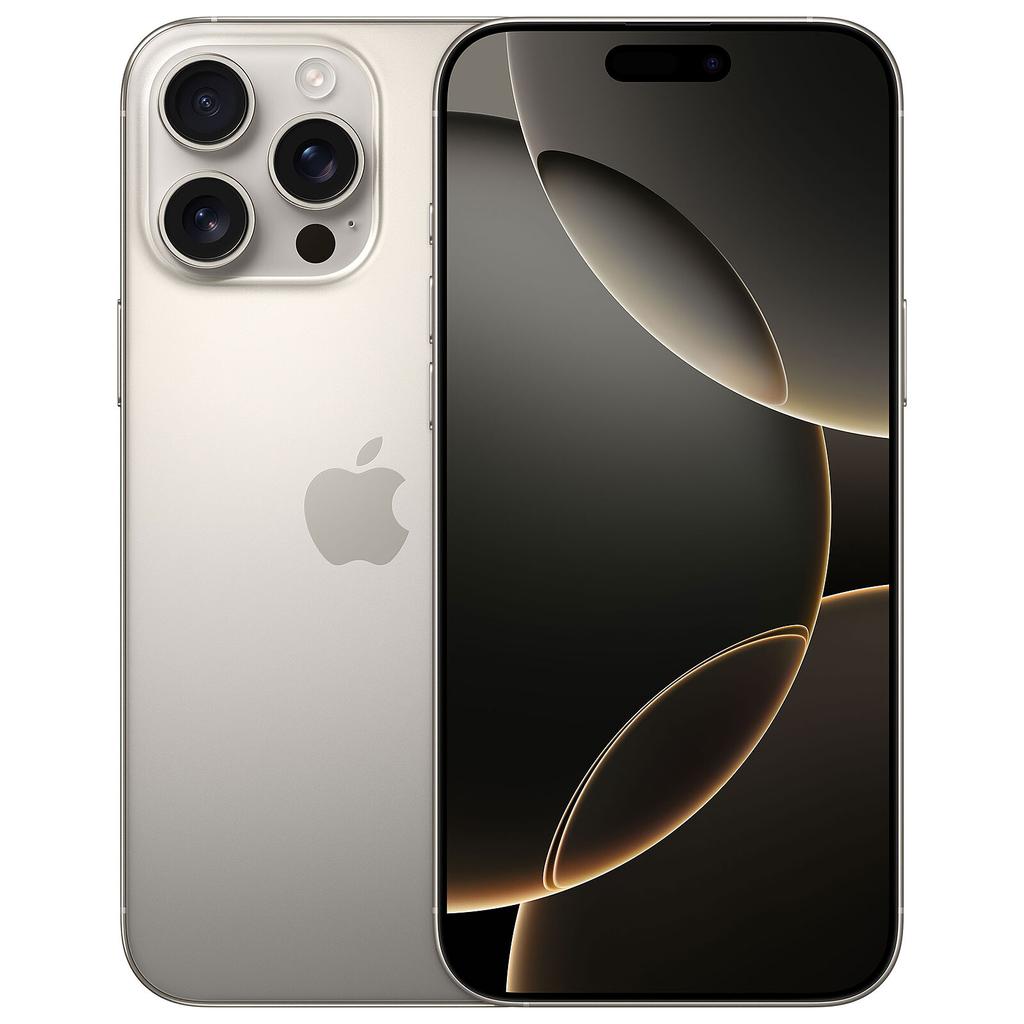
Variable Aperture On iPhone 18 Pro: What It Means & Why It Matters
The iPhone 18 Pro and Pro Max are expected to get a mechanical variable aperture — a first for iPhone. Here’s what it does, why it matters, and what we still don’t know.
A mechanical aperture controls how much light passes through the lens — physically opening wider to let more in, or closing down to restrict it. Smartphones have historically used fixed apertures and relied on software to compensate.
A wider aperture can gather more light in low-light situations, potentially improving night shots and indoor photography without as much reliance on computational processing.
A narrower aperture can keep more of a scene in focus and improve overall sharpness in bright conditions — something fixed-aperture smartphones manage less cleanly.
It could produce more natural background blur without relying entirely on Portrait mode — real optical bokeh rather than a computational approximation applied after the fact.
The biggest improvement may be outdoor video. A variable aperture can reduce light without forcing an unnaturally fast shutter speed — a long-standing limitation of fixed-aperture smartphone video in bright conditions.
It should help Apple balance exposure, shutter speed and image noise more naturally — the three variables that determine image quality in any lighting condition.
We don’t yet know the available aperture settings or whether users will receive manual controls. Apple may handle it entirely automatically, or offer Pro camera users a degree of manual adjustment.
The feature is only expected on the iPhone 18 Pro and Pro Max. Apple has not confirmed it, and all details remain subject to change before launch.
Apple is expected to give the iPhone 18 Pro and iPhone 18 Pro Max its first variable-aperture camera.
It sounds like the sort of feature only professional photographers will care about. In reality, it could improve everything from portraits and night shots to outdoor video and quick photographs of moving children or pets.
The key difference is physical.
Current iPhones use a fixed opening that cannot change. The iPhone 18 Pro’s camera should be able to make that opening wider or narrower depending on the photograph you’re taking.
That gives the camera another way to control light before Apple’s software starts processing the image.
What Is A Variable-Aperture Camera?
The aperture is an opening inside a camera lens through which light travels before reaching the image sensor.
Think of it like the pupil in your eye.
Your pupil expands in a dark room to let in more light. When you step outside on a bright day, it contracts to prevent too much light entering your eye.
A variable camera aperture does the same thing.
It can:
- Open wider when the camera needs more light
- Close down when there is too much light
- Change how much of the image appears in focus
- Alter how the background and foreground are rendered
- Give the camera more control over shutter speed
The aperture is measured using an f-number, such as ƒ/1.4, ƒ/1.78 or ƒ/2.8.
This can seem backwards at first:
- A lower f-number means a wider opening
- A higher f-number means a narrower opening
An ƒ/1.4 aperture is therefore wider than an ƒ/2.8 aperture and allows more light to reach the sensor.
How Current iPhone Cameras Work
The main cameras on the iPhone 14 Pro through iPhone 17 Pro use a fixed ƒ/1.78 aperture.
That means the opening remains at the same physical size for every photograph.
Whether you’re shooting in a dim pub, a bright garden or direct midday sunlight, the lens itself cannot close down.
The iPhone instead manages exposure by adjusting:
- Shutter speed
- Sensor sensitivity
- Multi-frame image processing
- Highlight recovery
- Computational HDR
- Noise reduction
- Tone mapping
Apple’s software is extraordinarily good at doing this, but it is still working around a lens that remains fully open.
A variable aperture would give the camera another physical control.
Instead of solving every exposure problem through shutter speed, sensor gain and software, the iPhone could adjust the amount of light entering the lens in the first place.
How The iPhone 18 Pro Variable Aperture Could Work
Apple has not revealed the aperture range or number of available positions.
The system could use:
- Two fixed aperture positions
- Several preset positions
- A continuously adjustable opening
- Automatic control chosen by the Camera app
- Manual controls inside ProRAW or video modes
Previous phones provide examples of both approaches.
Samsung’s Galaxy S9 switched between ƒ/1.5 and ƒ/2.4. It opened the lens in dark conditions and closed it in brighter environments.
More recent camera phones from Huawei and Xiaomi offer several aperture positions, giving photographers finer control over light and depth of field.
Apple could take either route.
A two-position system would be smaller and easier to operate. A wider adjustable range would provide more creative control but require a more complicated camera module.
Reports indicate that Sunny Optical has begun producing the actuators used to move the aperture mechanism. LG Innotek is reportedly preparing to assemble the more complicated camera modules.
That makes this one of the better-supported iPhone 18 Pro rumours.
Benefit One: Better Low-Light Photography
The most obvious benefit of a wider aperture is its ability to gather more light.
When photographing a dark scene, the camera has several ways to make the image brighter:
- Keep the shutter open for longer
- Increase the sensor’s sensitivity
- Combine several exposures
- Open the aperture
Each option has a trade-off.
A slower shutter can blur moving subjects. Increasing sensor sensitivity introduces noise. Combining multiple images can create ghosting when something moves between frames.
Opening the aperture gathers more light without necessarily requiring those compromises.
That could help when photographing:
- People inside dim restaurants
- Children moving around indoors
- Pets that refuse to sit still
- Night-time street scenes
- Concerts
- Parties
- Food under poor lighting
- Indoor sporting events
The iPhone could use a wider aperture to maintain a faster shutter speed, reducing the risk of subject movement turning into a blurry mess.
It may also need less aggressive noise reduction, preserving more natural detail in skin, hair, clothing and textured surfaces.
It Won’t Automatically Transform Night Mode
A variable aperture won’t make every night photograph perfect.
The final result will still depend on:
- The maximum aperture Apple provides
- Sensor size
- Exposure time
- Subject movement
- Optical stabilisation
- Image processing
- Available light
- Lens quality
If Apple’s widest setting is similar to the current ƒ/1.78 aperture, low-light gains could be modest.
The wider setting may simply maintain current light-gathering performance while the narrower settings provide better daylight control.
It also remains possible that Apple will open the lens beyond ƒ/1.78. No trustworthy report has provided the final values.
Benefit Two: More Natural Portrait Blur
Portrait mode uses depth information and software to separate a person from the background.
When it works, the result can look excellent.
When it doesn’t, you get blurred ears, missing strands of hair and strange edges around glasses, hats or clothing.
A wide physical aperture creates optical background blur before software processing is applied.
That blur is produced naturally by:
- Lens design
- Aperture size
- Sensor size
- Focusing distance
- Distance between the subject and background
The iPhone 18 Pro could use a wider aperture when photographing a nearby subject, creating stronger physical separation between the person and background.
This could result in:
- More natural transitions around hair
- Fewer cut-out-looking edges
- Smoother background blur
- Better rendering around glasses
- More convincing product photographs
- Portraits that need less artificial depth processing
Apple could still use computational depth information to refine the image, but the software would have a better optical starting point.
Don’t Expect Full-Frame Camera Blur
An iPhone sensor and lens are much smaller than those used by a mirrorless or DSLR camera.
That limits the amount of shallow depth of field the phone can create naturally.
Even with a wider aperture, the iPhone 18 Pro won’t suddenly produce the same subject separation as an 85mm ƒ/1.4 lens on a full-frame camera.
The improvement is more likely to appear when:
- Photographing people at close range
- Taking pictures of food
- Shooting small objects
- Creating product photographs
- Using the main camera relatively close to the subject
Portrait mode will still be needed when you want strong background blur around a person standing several feet away.
Benefit Three: Keeping More Of The Scene In Focus
A wider aperture creates a shallower area of acceptable focus. A narrower aperture increases it.
This is known as depth of field.
Imagine photographing two people standing at slightly different distances from the camera. With a very wide aperture, one face may be sharp while the other looks slightly soft.
Closing the aperture can keep both people in focus.
That could help with:
- Group photographs
- Landscapes
- Buildings
- Travel photography
- Documents
- Food arranged across a table
- Products with considerable depth
- Close-up photographs
It may be particularly useful for close-ups.
Smartphone cameras can struggle to keep an entire object sharp when it sits close to the lens. You might focus on the front of a watch, for example, only to find that the rear edge and strap are soft.
A narrower aperture could extend the focused area across more of the object.
Benefit Four: Sharper Daylight Photographs
Current Pro iPhones keep the main lens at ƒ/1.78 even in extremely bright conditions.
A lens does not always produce its sharpest image when used fully open.
Closing it slightly can improve:
- Corner sharpness
- Edge detail
- Consistency across the frame
- Fine textures
- Landscape detail
- Architectural photographs
Samsung made this point with the Galaxy S9. Its camera used the wider ƒ/1.5 setting in the dark and moved to ƒ/2.4 in brighter conditions, where it could produce sharper detail across the image.
Apple could do something similar.
When plenty of light is available, the iPhone 18 Pro could close the aperture and prioritise sharpness rather than gathering the maximum possible amount of light.
This could be useful when photographing:
- Landscapes
- Buildings
- City scenes
- Detailed products
- Printed text
- Large groups
- Outdoor portraits
- Bright holiday scenes
The change may be most visible around the edges and corners rather than the centre of the image.
A Narrower Aperture Can Become Too Narrow
Closing an aperture doesn’t improve sharpness forever.
At very small openings, light begins to spread as it passes through the aperture. This is called diffraction, and it can reduce fine detail across the entire image.
The effect appears earlier on small smartphone sensors than it does on larger cameras.
Apple therefore won’t want to give the iPhone an extremely narrow aperture simply because it can.
The useful range will need to balance:
- Depth of field
- Lens sharpness
- Diffraction
- Available light
- Shutter speed
- Sensor noise
This may be why Apple chooses a limited number of carefully selected aperture positions rather than offering a huge range.
Benefit Five: Better Outdoor Video
This could be the feature’s best use.
Video normally looks most natural when the shutter speed is roughly double the frame rate.
For example:
- 24fps video works well around 1/48 or 1/50 second
- 30fps video works well around 1/60 second
- 60fps video works well around 1/120 second
This produces a small amount of motion blur in each frame. Moving hands, cars and people look smooth rather than unnaturally sharp.
In bright daylight, the current iPhone cannot physically close its ƒ/1.78 aperture. It may need to use a much faster shutter speed to prevent overexposure.
That removes motion blur and can make movement appear harsh or choppy.
Professional iPhone filmmakers often attach neutral-density filters to the lens. These act like sunglasses for the camera, reducing incoming light so the user can maintain a more natural shutter speed.
A variable aperture could perform part of that job internally.
By narrowing the opening, the iPhone could reduce light and maintain a more cinematic shutter speed without requiring an external filter.
Where You Would Notice The Video Difference
The effect could be visible when recording:
- Someone walking through bright sunlight
- Cars passing the camera
- Children running
- Sports
- Panning shots
- Water
- Trees moving in the wind
- Handheld travel footage
- Outdoor interviews
- Social video filmed at midday
Motion should look smoother and less brittle.
It won’t completely replace an ND filter in extremely bright conditions. The aperture may not close far enough to remove all the excess light.
For normal users, however, it could improve outdoor video automatically without requiring any knowledge of shutter angles or filter strengths.
Benefit Six: Smoother Exposure Changes During Video
Imagine recording inside a room and then walking through a door into bright sunlight.
The camera needs to reduce exposure quickly.
A fixed-aperture iPhone has to adjust shutter speed, sensor sensitivity or electronic processing. These changes can sometimes look abrupt.
A variable aperture gives Apple another control it can adjust as the light changes.
In theory, the phone could gradually close the lens as you move outside, producing a smoother exposure transition.
This may help when:
- Moving between indoor and outdoor spaces
- Filming towards windows
- Walking through changing light
- Recording live events with spotlights
- Moving between shade and sunlight
- Turning the camera towards a bright sky
The actual result will depend on how quickly and smoothly the mechanical actuator moves.
If the aperture switches abruptly between only two positions, the change could be visible. Apple will need to coordinate it with shutter speed and sensor sensitivity to hide the transition.
Benefit Seven: Better Photographs Of Moving Subjects
Movement creates one of the hardest problems in smartphone photography.
A camera can brighten a dark image by keeping its shutter open, but the subject may move during the exposure.
Apple attempts to solve this through stabilisation, multi-frame capture and subject recognition. Those systems cannot always recover fine detail from a moving face, hand or animal.
If the aperture can open wider, the camera may be able to use a faster shutter speed while maintaining a bright exposure.
That could improve photographs of:
- Children
- Pets
- Sports
- Dancers
- Performers
- People walking at night
- Moving vehicles
- Indoor events
The benefit is not simply a brighter photograph. It is a better chance of freezing the subject without making the image excessively noisy.
Benefit Eight: More Control For ProRAW Photographers
Apple currently provides manual controls through third-party apps and its professional imaging formats, but the physical aperture cannot change.
Variable aperture could add another control alongside:
- Shutter speed
- Focus
- White balance
- Sensor sensitivity
- Exposure compensation
- Focal length
- RAW capture
A photographer could choose:
- Wide aperture for subject separation
- Narrower aperture for a group
- Wide aperture to maintain a faster shutter speed
- Narrower aperture to control daylight exposure
- A middle setting for maximum lens sharpness
Whether Apple exposes this control is still unknown.
The standard Camera app may choose the aperture automatically. Manual adjustment could be placed inside a Pro mode, restricted to ProRAW or left to third-party applications such as Halide and Lightroom.
There is also a chance Apple provides no direct control at all.
The hardware would still improve automatic photography, but withholding manual access would waste some of its appeal.
Benefit Nine: Better Product And Food Photography
Variable aperture could be especially useful for people who use their iPhone to photograph products, food or items for sale.
A wide aperture can isolate a small product from a messy background. A narrower setting can keep the whole item sharp.
Examples include:
- Photographing a plate of food from an angle
- Taking pictures of products for an online store
- Listing items on eBay
- Capturing watches or jewellery
- Photographing documents
- Taking pictures of phones and accessories
- Creating social-media content
- Scanning receipts or business cards
At close distances, depth of field becomes shallower. The ability to close the aperture could stop part of the item falling out of focus.
This is a far more useful everyday benefit than simply saying the camera has “DSLR-style controls.”
Benefit Ten: Less Dependence On Computational Tricks
Modern iPhone photographs are heavily processed.
The phone may capture several frames, select parts from each and combine them into one finished image. It then adjusts shadows, highlights, texture, noise, colour and local contrast.
This works remarkably well, but it can also produce:
- Over-sharpened textures
- Waxy skin
- Flattened contrast
- Strange HDR around moving objects
- Artificial-looking background blur
- Ghosting
- Excessively bright night scenes
Variable aperture won’t remove computational photography. Apple will continue processing images because it allows a small camera to produce results that would otherwise be impossible.
But better control at the point of capture may reduce how aggressively the software needs to intervene.
If the lens can control light and depth more effectively, the processing pipeline receives cleaner source material.
That should mean fewer problems for the software to fix later.
Could It Produce Starbursts Around Lights?
Potentially.
On conventional cameras, closing a bladed aperture can turn bright points of light into star-shaped patterns. You may see this around streetlights, the sun or decorative lights.
The number and shape of the rays depend on the aperture blades.
A smartphone aperture mechanism may be too small or use too few positions to create a pronounced effect. Apple may also process it out.
Still, variable aperture opens the possibility of different optical rendering that current fixed-aperture iPhones cannot produce.
We won’t know until the camera is tested.
Why Hasn’t Apple Used Variable Aperture Before?
The basic idea isn’t new.
Samsung used dual aperture on the Galaxy S9 and S10 before removing it from later models. Huawei, Xiaomi and Honor have also used adjustable apertures on high-end camera phones.
Apple has probably avoided it because the system adds:
- Moving parts
- Camera thickness
- Manufacturing cost
- Calibration work
- Power consumption
- More potential failure points
- Additional software decisions
- Internal space requirements
Ming-Chi Kuo claims the new lens unit will cost Apple around 50% more than the seven-element lens used by the iPhone 17 Pro.
That is a large increase for one component.
Apple presumably believes it can now get enough photographic and video benefit to justify the added cost.
The feature also helps separate the Pro phones from the standard iPhone 18, which is not expected to receive variable aperture.
Why Did Samsung Remove It?
Samsung’s Galaxy S9 and S10 switched between two aperture settings, but Samsung removed the system from later Galaxy S phones.
That doesn’t prove the idea was bad.
There were several possible reasons:
- The camera module was thicker
- The mechanism increased cost
- Small sensors limited depth-of-field changes
- Computational photography was improving rapidly
- Most users left the camera in automatic mode
- Two aperture positions offered limited creative control
- Larger sensors and better processing produced easier gains
Apple is introducing the feature into a very different camera system.
Modern iPhones have larger sensors, far more processing power and much stronger video tools than the Galaxy S9 generation.
Apple may also use the aperture as part of an automated system rather than presenting it as a manual photography gimmick.
Will Variable Aperture Make The Camera Bump Bigger?
It could.
A mechanical aperture requires additional parts inside the lens assembly. The iPhone also needs an actuator to move those parts accurately and repeatedly.
That can increase:
- Module depth
- Camera-plateau thickness
- Internal area
- Weight
- Manufacturing difficulty
The iPhone 18 Pro Max is already expected to become thicker, although its larger battery and updated cooling system are also contributing factors.
No dependable camera-bump measurements have leaked.
Apple may use the thicker body to absorb some of the module depth, preventing the external camera plateau from growing by the full amount.
Will Both iPhone 18 Pro Models Get It?
Yes, according to the strongest current reporting.
Variable aperture has been linked to:
- iPhone 18 Pro
- iPhone 18 Pro Max
It is not expected on:
- Standard iPhone 18
- iPhone 18e
- iPhone Air 2
- Foldable iPhone
The Pro Max may also receive a new Sony IMX905 main sensor, although it is unclear whether that sensor will be exclusive to the larger phone.
Both Pro models should receive the aperture mechanism itself.
Will You Be Able To Adjust It Manually?
We don’t know.
Reports have claimed that users will be able to change the aperture, but no Camera app interface or final software feature has been shown.
Apple has several options:
- Fully automatic control
- Manual control in the normal Camera app
- Aperture control restricted to ProRAW
- Manual control only during Pro video recording
- Access through third-party camera apps
- Automatic photographs with editable aperture metadata
- Two simple options rather than traditional f-numbers
Apple normally keeps its default Camera app simple.
The most likely arrangement is automatic control for normal photographs, with manual adjustment available through a professional mode or third-party app.
That is an inference, not a confirmed feature.
Will It Make The iPhone 18 Pro The Best Camera Phone?
Not on its own.
A camera system also depends on:
- Sensor size
- Lens quality
- Autofocus
- Stabilisation
- Telephoto performance
- Ultra Wide quality
- Image processing
- Colour reproduction
- Video features
- Low-light consistency
Variable aperture gives the main camera more control. It doesn’t improve every lens, and it cannot compensate for weak image processing or a small sensor.
Its real worth will depend on how Apple uses it automatically.
If the camera simply switches between two positions in rare situations, the difference may be difficult for normal users to spot.
If Apple combines it intelligently with subject detection, shutter speed, ProRAW, Portrait mode and video exposure, it could become one of the most useful iPhone camera changes in years.
Is It Worth Waiting For?
It may be worth waiting if you:
- Record lots of outdoor video
- Photograph people or pets indoors
- Use ProRAW
- Create social content
- Photograph products
- Want more natural portraits
- Regularly attach filters to your iPhone
- Keep your phone for several years
It is less important if you mostly take quick snapshots in good lighting.
Current iPhones already produce excellent photographs, and a variable aperture won’t make older camera systems suddenly obsolete.
If you want a strong iPhone camera without paying the likely iPhone 18 Pro launch price, refurbished iPhones offer incredible value for money. Recent Pro models already provide 48MP capture, ProRAW, ProRes, strong stabilisation and dedicated telephoto cameras.
You can compare refurbished Apple iPhones, browse our phone collections or use the Phone Finder to find an iPhone based on your budget and camera requirements.
What Could Go Wrong?
The feature comes with several possible drawbacks.
More Mechanical Parts
Moving parts can fail, become misaligned or suffer damage following a drop.
Apple will need the actuator to survive thousands of movements across several years.
Added Cost
The variable-aperture lens reportedly costs around 50% more than Apple’s existing Pro main-camera lens.
That cost could contribute to a higher iPhone 18 Pro price.
More Thickness
The mechanism takes up physical space. It may contribute to a thicker camera module or body.
Limited Aperture Range
If Apple provides only two similar positions, the real photographic difference could be small.
No Manual Control
Apple could keep the feature completely automatic, removing much of its appeal to experienced photographers.
Inconsistent Images
Changing aperture affects depth of field, sharpness and lens rendering. Apple will need to stop photographs from looking inconsistent as the camera switches settings.
Smaller Smartphone Sensor
The depth-of-field difference will be less dramatic than it would be on a full-size camera.
None of these problems makes the feature pointless. They simply explain why the final execution matters more than the words “variable aperture” on a specification sheet.
What We Still Don’t Know
Apple has not confirmed:
- The widest aperture
- The narrowest aperture
- Number of aperture positions
- Whether adjustment is continuous
- Whether users receive manual control
- Which Camera app modes support it
- Whether it works during video
- Whether it works with ProRAW
- How quickly the actuator can move
- Whether both Pro models use the same sensor
- Camera-module thickness
- Repair cost
- How the system affects battery consumption
Those details will determine whether variable aperture becomes a genuinely useful camera tool or another feature most owners never notice.
Why The iPhone 18 Pro Variable Aperture Matters
Variable aperture matters because it gives the iPhone control over light before software gets involved.
A wider opening could help the camera photograph moving subjects in poor light. A narrower opening could keep more of a group or product in focus, improve daylight sharpness and give outdoor video more natural motion.
It may also produce more convincing optical background blur, reducing the need for Portrait mode to guess where someone’s hair ends and the background begins.
The improvement won’t be equally obvious in every photograph. Smartphone sensors remain small, and Apple’s processing already compensates for many of the limitations created by a fixed lens.
Video may be where the feature proves its worth.
If Apple can use the aperture to maintain sensible shutter speeds in bright conditions, the iPhone 18 Pro could produce smoother, more natural footage without requiring an external ND filter.
That would be a proper hardware improvement, not just another editing effect or AI camera mode.
Sources & Side-Quests
- MacRumors: iPhone 18 Pro variable-aperture camera enters production
- MacRumors: Variable-aperture camera module cost
- MacRumors: iPhone 18 Pro variable-aperture reporting
- MacRumors: Variable aperture and video exposure
- Samsung: How dual aperture works
- Samsung: Why narrower aperture can improve image sharpness
Buying tools
Thinking About Buying an iPhone?
Compare current refurbished prices, see how it stacks up against alternatives, and avoid overpaying for the wrong model.
Recommended for this article