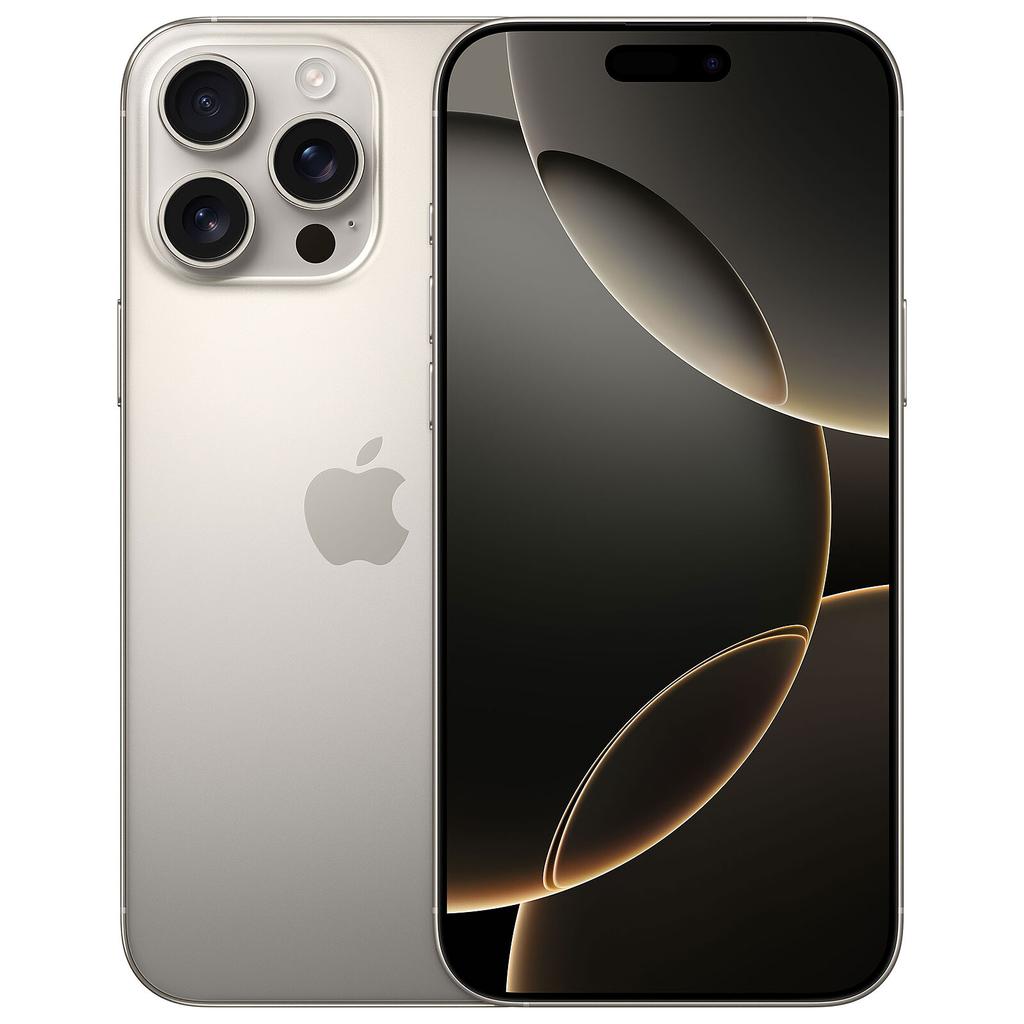
iPhone 18 Charging Speed: What The Leaks Actually Say
Faster charging is one of the most rumoured iPhone 18 upgrades — and one of the least reliably sourced. Here’s what’s actually known, what’s speculation, and what almost certainly isn’t changing.
No dependable source has confirmed faster charging for the iPhone 18 range. The 45W figure for Pro models is circulating but is poorly sourced.
Some reports claim the iPhone 18 Pro and Pro Max will support up to 45W wired charging. Even if technically rated for that, real-world speeds may only reach it briefly before throttling back.
The iPhone 17 Pro Max peaks at approximately 36W in real-world testing despite a higher rated spec. Any iPhone 18 upgrade may be modest in practice regardless of what’s on the box.
MagSafe will probably remain limited to 25W on most models. No credible leak has suggested a significant wireless charging speed increase.
The iPhone Air 2 may remain limited to 20W wireless charging because of its thin chassis — not enough room to handle the heat generated by faster wireless speeds.
USB-C is expected to remain across the range. There is no good evidence for reverse wireless charging or a new magnetic charging port on any iPhone 18 model.
Apple is expected to give the iPhone 18 Pro Max a much larger battery, a new 2nm processor and a more efficient modem.
But will it charge any faster?
Possibly. Just don’t expect the iPhone 18 to suddenly start competing with Android phones capable of charging at 80W, 100W or even 120W.
You may have already seen claims that the iPhone 18 Pro will support 45W wired charging. The problem is that no trustworthy leak, supplier document or regulatory listing has confirmed this.
In fact, the 45W figure appears to be little more than an estimate based on what recent iPhones already support.
How Fast Will The iPhone 18 Charge?
There is currently no confirmed charging speed for any iPhone 18 model.
The figures most frequently repeated online are:
- Up to 40W or 45W wired charging
- Up to 25W MagSafe charging
- Qi2 wireless charging
- USB-C Power Delivery support
These all sound believable. But believable isn’t the same as leaked.
Apple already supports similar speeds across the iPhone 17 range, which means many early iPhone 18 specification pages are simply carrying the existing numbers forward.
| Model | Expected wired charging | Expected wireless charging |
|---|---|---|
| iPhone 18 Pro | Approximately 36W to 45W peak | Up to 25W |
| iPhone 18 Pro Max | Approximately 36W to 45W peak | Up to 25W |
| Foldable iPhone | Unknown | MagSafe expected |
| iPhone 18 | Approximately 28W or higher | Up to 25W |
| iPhone 18e | Unknown | MagSafe expected |
| iPhone Air 2 | Approximately 20W to 30W | Possibly limited to 20W |
Every number in this table is an expectation based on existing Apple hardware. None has been confirmed for the finished iPhone 18 models.
Where Did The 45W iPhone 18 Rumour Come From?
That’s the funny part. There doesn’t appear to be a strong original source.
The 45W claim is repeated across specification databases, charger manufacturers, social-media posts and general phone-rumour sites. Most don’t identify a supplier, analyst, regulatory filing or Apple document.
It appears to be based on three things:
- Recent iPhones can accept power from chargers rated at 40W or above.
- The iPhone 17 Pro models can briefly draw approximately 36W.
- A small increase would put the next generation somewhere around 40W to 45W.
That’s a reasonable prediction. It isn’t evidence.
Until a regulatory listing or production component confirms a new charging system, 45W should be treated as a possible upper limit, not a known iPhone 18 specification.
A 45W Rating Wouldn’t Mean 45W Charging
Phone charging speeds are far less straightforward than the headline number suggests.
An iPhone can be compatible with a 45W USB-C charging profile without continuously drawing 45W into its battery.
The actual power changes throughout the charging cycle. It normally draws the most power when the battery is low, then gradually reduces the wattage as the battery fills or becomes warmer.
The phone may also reduce charging speed because of:
- Battery temperature
- Room temperature
- Battery age
- The current charge level
- Whether the phone is being used
- The charger and cable being used
- Apple’s battery-health settings
- Background processor activity
A theoretical 45W rating could therefore mean the phone reaches something close to 45W for a few minutes before dropping into the 30W range.
That isn’t useless. It could improve the initial 0% to 50% charging time. But it wouldn’t make the iPhone 18 a genuinely fast-charging phone by current Android standards.
We’ve Been Here Before
The iPhone 16 was widely reported to support 45W wired charging after a Chinese certification listed support for 15 volts at 3 amps.
That calculation gives you 45W.
Actual testing told a different story.
ChargerLAB found that the iPhone 16 Pro Max generally charged at around 30W. It briefly reached approximately 37W with Apple’s 140W adapter, but it did not sustain anything close to 45W.
The standard iPhone 16 normally charged closer to 20W.
The certification described the power profile the hardware could accept. It did not describe the amount of power being continuously sent into the battery.
That distinction matters because we could see exactly the same thing happen with the iPhone 18.
How Fast Does The iPhone 17 Charge?
The iPhone 17 generation provides the most useful baseline.
Apple says the iPhone 17, iPhone 17 Pro and iPhone 17 Pro Max can reach 50% in approximately 20 minutes when connected to a compatible 40W or higher adapter.
Independent testing found:
- Approximately 27W to 28W peak charging on the iPhone 17
- Approximately 36W peak charging on the iPhone 17 Pro Max
- Similar speeds expected from the smaller iPhone 17 Pro
- Up to 25W sustained MagSafe charging
The iPhone Air is slower. Apple says it can reach 50% in around 30 minutes using a 20W or higher wired charger.
Its MagSafe charging is also limited to 20W, most likely because the thin chassis cannot move heat away from the battery as effectively.
| Model | Tested or advertised charging |
|---|---|
| iPhone 17 | Around 28W peak; 50% in approximately 20 minutes |
| iPhone 17 Pro | Around 36W peak expected; 50% in approximately 20 minutes |
| iPhone 17 Pro Max | Around 36W peak; 50% in approximately 20 minutes |
| iPhone Air | 50% in approximately 30 minutes |
| iPhone 17e | 50% in approximately 30 minutes |
The iPhone 18 Pro would need to move well beyond 36W before users noticed a dramatic difference.
Will The iPhone 18 Pro Charge Faster?
The iPhone 18 Pro and Pro Max are the most likely models to receive a charging upgrade.
Both are expected to include:
- A20 Pro processor manufactured on TSMC’s 2nm process
- Updated vapour-chamber cooling
- Revised internal packaging
- More efficient modem hardware
- Improved thermal management
- USB-C charging
- MagSafe and Qi2 support
Better cooling may allow the phones to maintain their highest charging speed for longer.
That could matter more than increasing the theoretical peak from 36W to 45W.
For example, a phone that holds 36W for longer could finish charging faster than one that briefly touches 45W and then falls back to 25W because it becomes too hot.
The new thermal system could therefore improve real charging times without giving Apple an especially impressive wattage to put on the box.
The Pro Max Has A Bigger Problem
The iPhone 18 Pro Max is expected to receive the largest battery upgrade in the range.
Alleged regulatory information points to capacities of:
- 5,567mAh for the US eSIM model
- 5,391mAh for versions containing a physical SIM tray
That would represent an increase of approximately 9% to 12% over the equivalent iPhone 17 Pro Max batteries.
A larger battery should give the phone much better runtime. It also means there is more battery to refill.
If Apple retains roughly the same charging curve, the iPhone 18 Pro Max could take longer to charge from empty to full despite supporting the same advertised 50% charging time.
The first half of a battery normally charges quickly. The final 20% is deliberately much slower to limit heat and reduce battery wear.
Apple may therefore need faster or more sustained charging merely to stop the larger battery from increasing the total charging time.
What About MagSafe?
There is no dependable report showing that the iPhone 18 will exceed 25W MagSafe charging.
Apple’s current MagSafe hardware already supports up to 25W on compatible iPhones. Qi2.2 also allows third-party magnetic chargers to provide the same speed when paired with supported devices.
The safest expectation for the iPhone 18 is:
- 25W MagSafe on the iPhone 18
- 25W MagSafe on the iPhone 18 Pro
- 25W MagSafe on the iPhone 18 Pro Max
- MagSafe on the foldable, with the speed unknown
- Possibly 20W MagSafe on the iPhone Air 2
- MagSafe on the iPhone 18e, although the speed is unknown
Apple could improve coil efficiency or heat management without raising the maximum wattage.
That would allow wireless charging to remain closer to 25W for longer, which would be far more useful than a higher peak lasting a couple of minutes.
Will The Foldable iPhone Support Fast Charging?
Very little has been reported about charging on Apple’s first foldable iPhone.
The phone is expected to use two battery cells with a combined rated capacity of approximately 4,883mAh.
A dual-cell arrangement could theoretically support faster charging because incoming power can be divided between the two cells. Several Android manufacturers use this approach to reach much higher charging speeds.
There is no evidence that Apple plans to do the same.
The foldable’s incredibly thin body may also work against it. Reports place the device at approximately 4.5mm thick when unfolded, leaving little room for cooling hardware.
It should support USB-C and MagSafe, but any claim that it will offer 40W wired or 25W wireless charging is currently guesswork.
Will The iPhone Air 2 Charge Faster?
Probably not by much.
Apple is reportedly working on a larger battery and vapour-chamber cooling for the second-generation iPhone Air. Those changes could help it hold higher charging speeds without becoming uncomfortably warm.
However, its thin design will continue to place limits on heat management.
The existing iPhone Air takes approximately 30 minutes to reach 50% using a suitable wired adapter and supports up to 20W MagSafe charging.
The Air 2 could move to 25W MagSafe, but no source has confirmed it.
The more realistic outcome is that Apple improves charging consistency rather than chasing a much higher peak speed.
Is Reverse Wireless Charging Coming?
There is no trustworthy evidence that the iPhone 18 will support reverse wireless charging.
Reverse wireless charging would allow you to place AirPods or another device on the back of the iPhone and use its battery to charge them.
The feature has appeared in iPhone rumours for years. Apple already allows some accessories to draw power from an iPhone through USB-C, but it has not enabled general wireless power sharing.
Early iPhone 18 specification pages listing reverse wireless charging are predicting the feature rather than reporting it.
It could happen. There is currently no reason to expect it.
Is Apple Removing USB-C?
No credible report says Apple will remove the USB-C port from the iPhone 18 range.
Concept images and social-media posts have claimed Apple is preparing a new magnetic connector to replace USB-C. These claims do not match the better reporting around the devices.
The iPhone 18 Pro, Pro Max and foldable are all expected to retain USB-C.
Apple could eventually release a portless iPhone, but removing USB-C would create problems for:
- Wired data transfers
- External storage
- CarPlay
- Professional video recording
- Diagnostics
- Recovery mode
- Accessibility accessories
- European charging regulations
There is no sign that the iPhone 18 will be that phone.
Will You Need A New Charger?
Probably not.
If you already own a good 40W, 45W or 65W USB-C Power Delivery adapter, it should be capable of providing everything the iPhone 18 requests.
Buying a 100W or 140W adapter won’t force the phone to charge faster. The iPhone controls how much power it draws.
A 65W adapter can still make sense if you want one charger for your:
- iPhone
- iPad
- MacBook Air
- Power bank
- AirPods
- Other USB-C devices
But don’t buy a new charger based on unconfirmed 45W iPhone 18 claims.
Wait until the phones have been tested. We’ve already seen how theoretical charging ratings can turn into much lower real-world speeds.
So, Will Apple Finally Fix iPhone Charging?
Probably not in the way most people mean.
The iPhone 18 Pro could charge slightly faster than the iPhone 17 Pro. Better cooling may help it maintain its peak speed, while a possible increase to around 40W or 45W could shorten the first half of the charging cycle.
But there is currently no proper evidence for a large upgrade.
The most likely outcome is:
- A small wired charging improvement
- Approximately 20 minutes to reach 50%
- 25W MagSafe charging
- Slower charging after 80%
- No reverse wireless charging
- USB-C across the range
- Charging speeds still well behind many Android flagships
Apple’s priority appears to be battery life, heat and long-term battery health rather than winning the wattage contest.
That’s not necessarily a bad decision. The iPhone 18 Pro Max may last so long that most owners simply charge it overnight.
But if you’re waiting for an iPhone that goes from empty to full in 20 minutes, I wouldn’t hold your breath.
Sources
Buying tools
Thinking About Buying an iPhone?
Compare current refurbished prices, see how it stacks up against alternatives, and avoid overpaying for the wrong model.
Recommended for this article