Refurbished phone grades are primarily a cosmetic shorthand; they describe external wear, not whether a phone actually works. Every grade tier (Excellent, Good, Fair) should be fully functional; what changes is how the device looks.
Understanding this split between cosmetic grading and functional quality is the single most important thing you can know before buying.
For a curated list of the best options to buy right now for value for money, see our guide to the best refurbished phones.
Or, if you’d like a more granular approach whereby you can search by brand, price, and rating, check out our recommended refurbished phone database.
What Do Refurbished Phone Grades Actually Mean?

The short answer: grades tell you how a phone looks, not how it performs.
Functional testing — screens, cameras, buttons, batteries, radios — runs through a completely separate pipeline. A “Fair” grade device can be mechanically perfect; a “Pristine” grade device can still have a degraded battery if the seller doesn’t specify otherwise.
The Core Grade Tiers (And What They Really Mean)
Most UK and US refurbishers use the same rough framework, even when the labels differ:
| Generic Tier | Common Labels | What It Actually Describes |
|---|---|---|
| Top Tier | Pristine / Excellent / Like New | Looks near-new; only hairline marks visible under close inspection |
| Mid Tier | Good / Very Good / Great | Light scratches or scuffs; nothing visible at arm’s length or when screen is on |
| Budget Tier | Fair / Acceptable | Noticeable wear — deeper marks, possible small dents — but fully working |
| Avoid | Spares / Repairs / Broken | Functional failures; not suitable for normal use |
The critical nuance: “Good” at one retailer can look like “Excellent” at another.
Labels are not standardised across the industry, which is why reading each seller’s specific grade description matters more than the label itself.
How Do Major Retailers Grade Differently?
Gazelle (US): Simple A/B/C Cosmetic Ladder
Gazelle uses a clean three-tier system focused purely on external appearance:
- Excellent / Like New (Grade A): Near-perfect condition with only tiny hairline marks, often invisible at arm’s length.
- Good (Grade B): Light cosmetic blemishes — small scratches or scuffs — but functionally identical to Excellent.
- Fair (Grade C): Visible wear including scratches and dings; still fully functional, with pricing discounted to reflect the cosmetics.
Some reports have suggested Gazelle’s internal grading interpretation can be inconsistent, particularly on trade-ins. Their return window is your most important protection here.
Reboxed (UK): Granular Grading Tied to Battery Health
Reboxed takes a more transparent approach, explicitly linking every cosmetic grade to a minimum battery threshold which makes far more sense:
- Excellent (5.0): Near-perfect casing; light screen marks hard to see when the display is on; battery ≥80% capacity.
- Great (4.0): Small scratches on casing; screen signs of use invisible when lit; battery ≥80%.
- Good (3.0): Moderate wear including scratches and small indentations; screen marks less obvious when lit; battery ≥80%.
The key differentiator here is that the battery minimum is locked to every tier; cosmetic downgrades don’t come with a worse battery. “Great” is typically the sweet spot: meaningful savings over Excellent with the same hardware standard.
How UK and US Sellers Compare
Most mainstream platforms — Back Market, Swappa, Music Magpie — follow a similar cosmetic hierarchy but vary on whether battery health is explicitly guaranteed per grade or buried in small print.
Always check the battery policy separately from the grade description before committing.
What Actually Affects the Price?

Cosmetic Grade vs. Model Generation
The biggest lever on refurbished phone pricing is model generation and storage, not cosmetic grade. Dropping one cosmetic tier often lets you step up an entire model year or storage band.
A previous-year flagship in “Good” condition may be cheaper than a two-year-old phone in “Excellent” — while running faster and receiving software updates for longer.
Cosmetic grade typically accounts for a 10–25% price premium moving from “Fair/Good” up to “Excellent/Like New” for the exact same hardware.
Diminishing returns kick in quickly: the real-world difference between “Great” and “Excellent” is negligible once you’ve got a case on.
The Hidden Battery Cost
A “cheap” high-grade phone with undisclosed battery degradation can end up more expensive once you factor in a replacement.
If a seller doesn’t clearly state a battery minimum, mentally add the cost of a likely battery service to the listed price when comparing options.
For a deeper breakdown of how software longevity interacts with long-term value, our iOS update lifespan guide is worth reading alongside any purchase decision.
What Genuinely Matters (And What Doesn’t)
The Things That Actually Matter
1. Functional testing standard Every device should pass full diagnostics: screen, touch, biometrics, cameras, mic/speaker, Wi-Fi, Bluetooth, cellular, buttons, ports, and sensors. A clearly stated testing policy prevents you getting a cosmetically “perfect” phone with a flaky microphone or weak cellular modem.
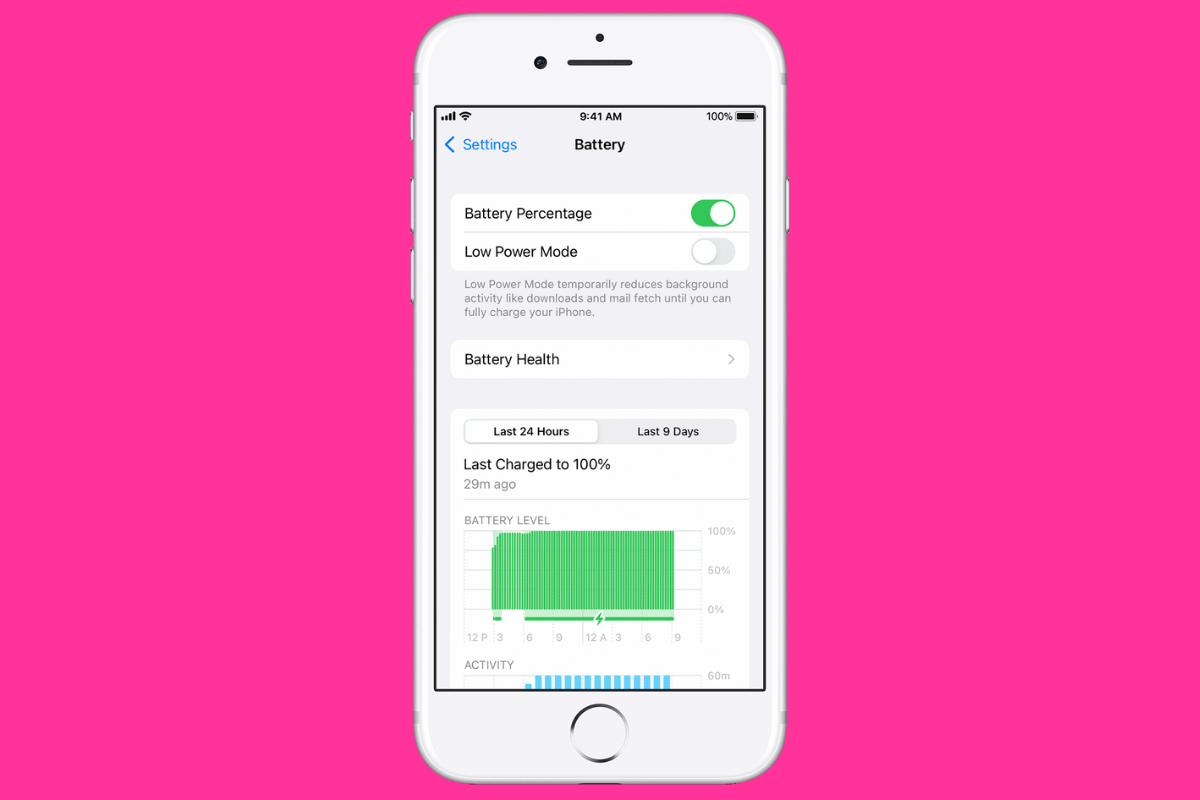
2. Battery guarantee Explicit battery minimums — such as “all phones at least 80% battery health” — matter far more than whether the casing has micro-scratches. A phone at 80–90% has significantly more daily range and ownership runway than one at 70–75%.
3. Warranty length and coverage Reputable refurbishers offer 12 months (minimum 6) covering hardware defects. A warranty isn’t just peace of mind — it’s a structural part of what you’re paying for. A discounted “grade” on a marketplace with zero warranty is not a like-for-like comparison.
4. Return window A 14–30 day no-quibble return policy is your safety net when grading is inconsistent. Treat the first unit as a “sample” — if their “Good” arrives looking like another seller’s “Fair”, you’ve learned how their grading calibrates.
5. Parts policy (OEM vs third-party) Some premium tiers guarantee genuine OEM parts; others use high-quality third-party replacements. This matters specifically for iPhones — non-genuine screens can affect True Tone, and non-genuine batteries can suppress peak performance. Check the seller’s repair and parts policy before buying. For trusted verified retailers, our roundup of the best refurbished phone sites cuts through the noise.
6. Lock status and region Confirm the device is SIM-free/unlocked, check for carrier branding, and verify it’s a domestic model (not a grey import) to ensure 5G band compatibility and valid warranty coverage.
The Things That Matter Less Than They Seem
- Back-glass scuffs under a case Most people put a case on immediately. Small nicks on the frame or rear effectively don’t exist once it’s covered. The exception: structural damage like a cracked rear glass on iPhone models with wireless charging, which shouldn’t be sold under a standard retail grade.
Step-by-Step: How to Buy Smart Using Grade Knowledge
- Decide on model and storage first. Model year, storage capacity, and 5G/eSIM support affect long-term value far more than cosmetics. Lock this in before thinking about grade.
- Set a hard floor for functional quality. Require: full diagnostics statement, explicit battery minimum (ideally ≥80%), at least 6 months warranty, and a 14–30 day return window.
- Choose the lowest cosmetic grade you can live with. Phone going straight into a case? Target “Good/Great” over “Excellent.” Buying as a gift? Bump up one tier to reduce visible wear risk.
- Read each seller’s grade description, not just the label. Look for: distance at which scratches are visible, whether dents are mentioned, and whether screen marks disappear when lit.
- Factor battery into the effective price. No battery guarantee stated? Mentally add the cost of a future replacement when comparing across sellers.
- Use your return window as the final grade check. When it arrives, inspect under bright light. Visible chips in the display bezel, deep gouges, or marks clearly inconsistent with the description are valid return reasons.
I’m currently running a refurbished iPhone 15 Pro Max. I’ve had it for about six months now. It costs less than a new iPhone 17 base model and the camera and screen tech are better.
Know Your Mobile Verdict
The grade label is the least important number on the listing. What you’re actually buying is: a functional test standard, a battery guarantee, a warranty duration, and a return policy.
Get those four things right and the cosmetic tier almost takes care of itself.
Pro Tip: If budget is the priority and the phone is going straight into a protective case, “Good” or “Great” from a seller with explicit battery minimums and 12-month warranty consistently outperforms “Excellent” from a no-warranty marketplace listing, both in value and in real-world risk.
For more on navigating the refurbished market, browse our refurbished phone FAQ hub for answers to the most common buyer questions.
Looking for the best device to buy? Explore our current picks for quality used mobile devices across every budget. You can filter by brand, compare specs and hardware, and view our editorial notes on each model.
Buying tools
Not Sure Which Phone Wins?
Move from the article into the comparison tool and put real prices, specs, and savings side by side.
Recommended for this article