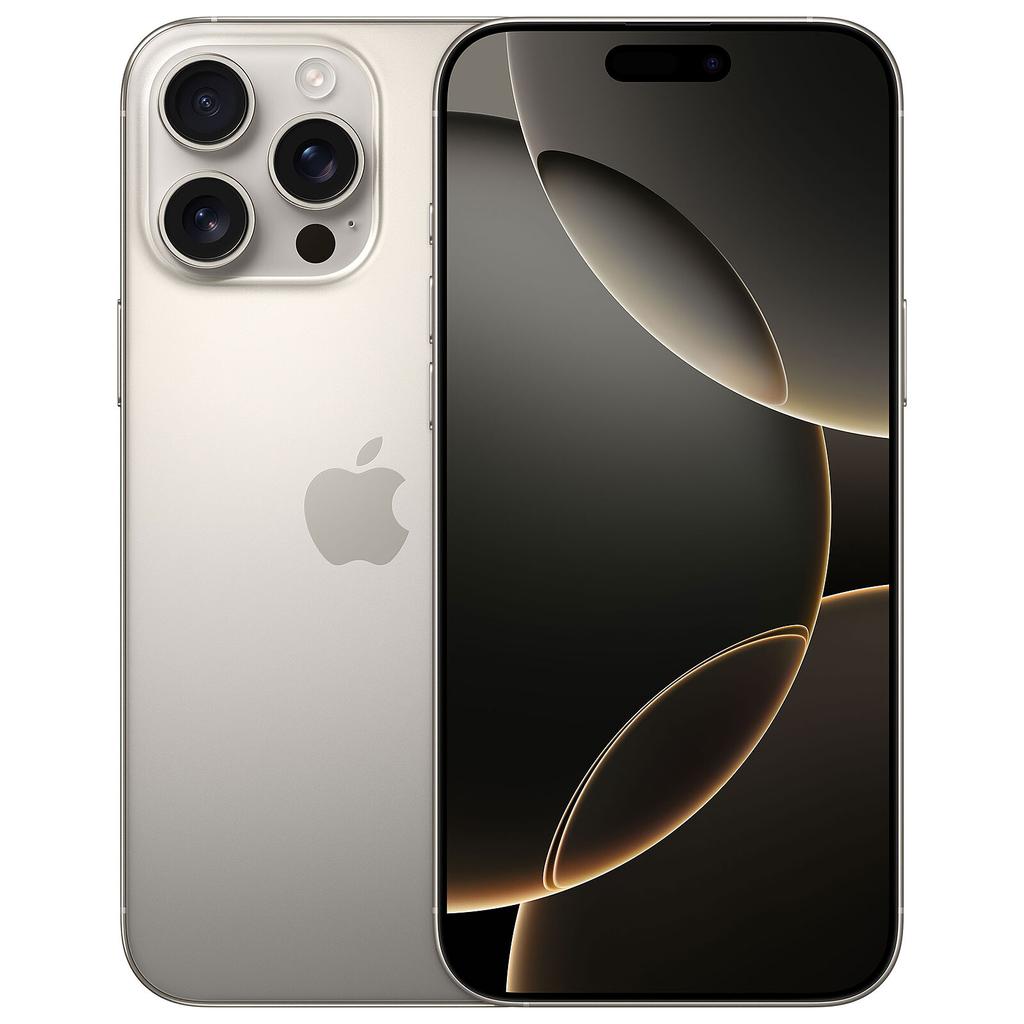
TL;DR: Should You Buy a Refurbished iPhone 15 or iPhone 14 in 2026?
If you’re going for freshness and longevity and you don’t mind paying slightly more, the iPhone 15 is the obvious choice in this comparison:
- You get the newer A18 chip, the Camera Control button, and Apple’s new Action Button justify that premium, as well as Dynamic Island.
- You’ll get an extra year of iOS updates (through 2031 vs 2030), better thermal management, and future-proofing for Apple Intelligence features.
The iPhone 14 is cheaper and it will still receive updates through 2030, so if value for money is your thang it is well worth buying.
- The A16 Bionic remains plenty fast for 2026-2029 usage.
- It’s cheaper than the iPhone 15, so you can go higher with storage and still keep the price nice and low.
- The camera and processor tech still hold up great in 2026.
I’ve tested both extensively, and the performance difference in daily use is negligible. Things like Dynamic Island and Action Button are literally the only real differences that matter here.
When it comes to whether the iPhone 14 or iPhone 15 is best (from a refurbished phone perspective), the main takeaway is fairly simple: the iPhone 15 is newer and is, therefore, better in most cases.
You’re choosing between a 3-year-old device (iPhone 14, September 2023) and a 2-year-old device (iPhone 15, September 2024).
Both are mature, reliable platforms. Neither has the early-generation bugs that plagued their launches.
The question isn’t “which phone is better” (obviously the iPhone 15, duh!). But you can (and will) save money going with the iPhone 14. The proper question you need to ask yourself then, is this: which is right for me, based on my unique needs?
Let’s figure that out together now…
The A18 vs A16 Bionic: Does the Chip Gap Matter?
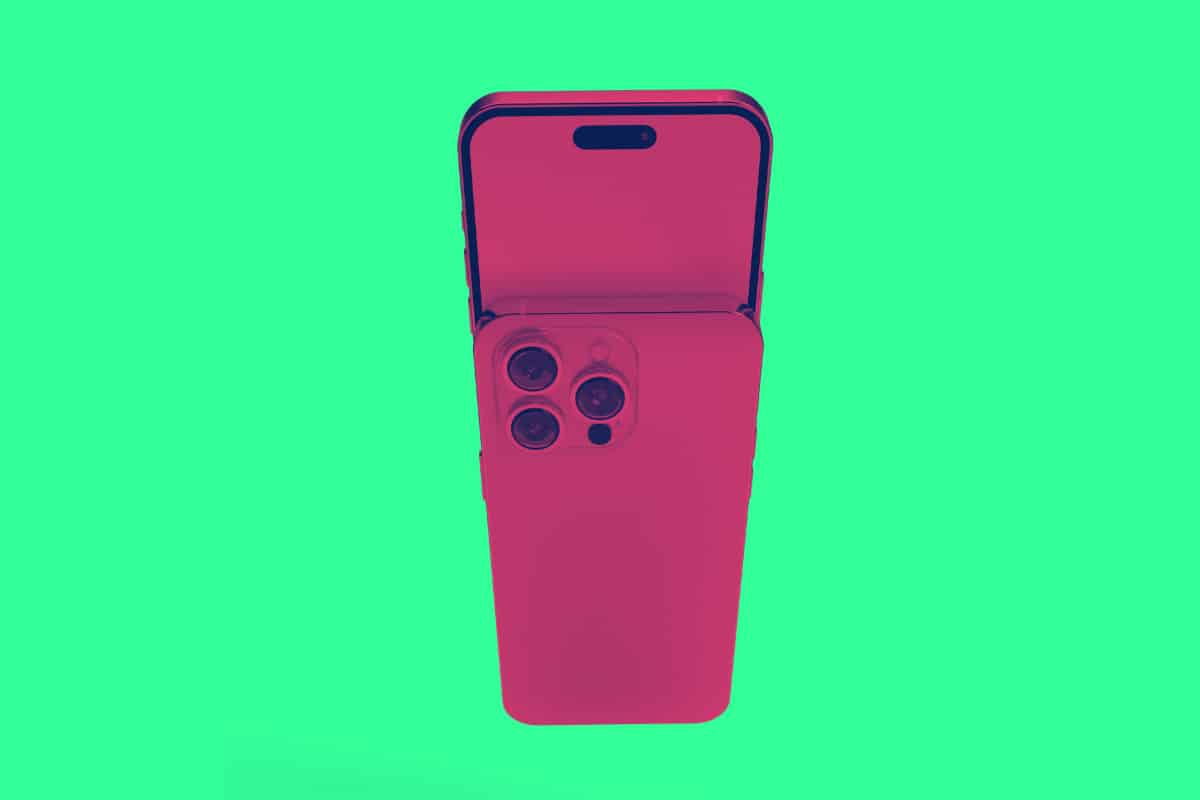
The iPhone 15 uses Apple’s A18 chip built on 3nm process technology. The iPhone 14 uses the A16 Bionic on 4nm process tech. On paper, that’s a significant architectural difference.
In real-world 2026 usage? The gap is narrower than you’d think.
- Single-core performance: The A18 scores roughly 3,400 on Geekbench 6. The A16 Bionic scores around 2,600. That’s a 30% advantage for the iPhone 15.
- Multi-core performance: A18 hits approximately 8,300. A16 hits 6,500. Again, about 28% faster.
Here’s what those numbers mean practically:
App launches are fractionally faster on the iPhone 15—we’re talking 0.2-0.4 seconds. Safari renders complex web pages maybe 10-15% quicker. Photo editing in apps like Darkroom or VSCO processes filters slightly faster.
But iOS 19 (current in 2026) runs identically smooth on both devices. Social media scrolling feels the same. Video playback is indistinguishable. Gaming performance is nearly identical unless you’re running Resident Evil Village at maximum settings for extended sessions.
The A16 Bionic was already overpowered for typical smartphone tasks when it launched in 2022. It’s still overpowered in 2026. The A18 is just more overpowered—but excess power above your actual usage threshold provides diminishing returns.
Where the A18 actually matters:
- Apple Intelligence features: iOS 19’s on-device AI processing runs significantly better on A18’s improved Neural Engine. Features like enhanced Siri processing, real-time photo editing suggestions, and advanced text prediction work smoother on iPhone 15.
- ProRes video recording: The A18’s media engine handles 4K ProRes at 60fps with less thermal throttling than A16. If you’re shooting professional video content, this is meaningful. For Instagram Reels or TikTok? Irrelevant.
- Future-proofing: iOS 22-23 (2029-2030) will likely push the A16 harder than the A18. The newer chip gives you more headroom as software demands increase.
Camera Systems: Incremental Improvements, Not Revolution
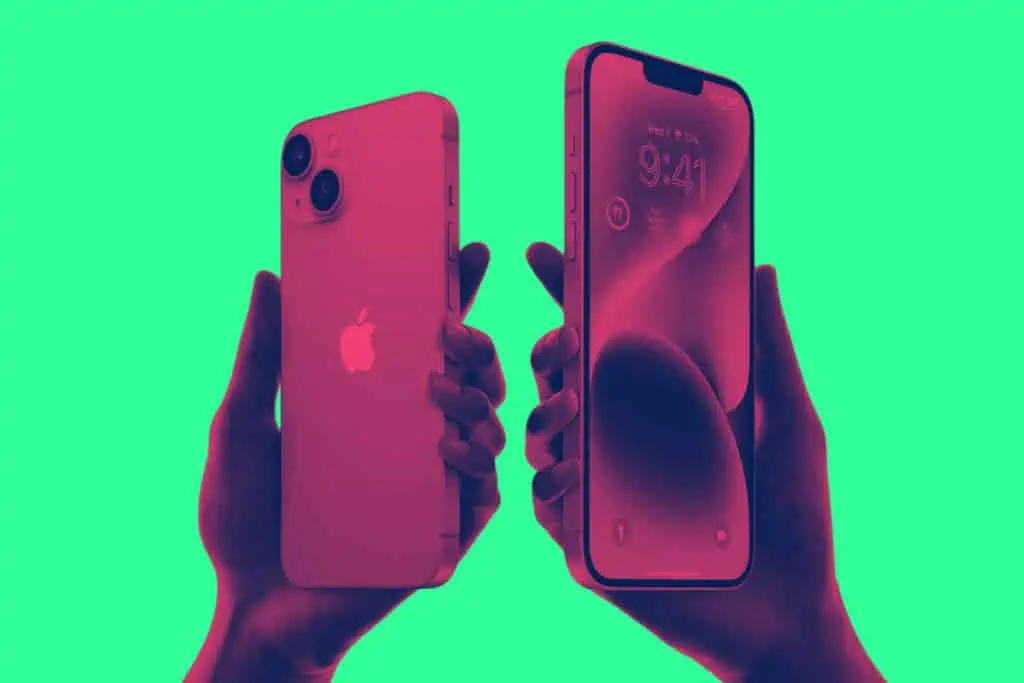
Both phones use Apple’s 48MP main sensor with sensor-shift optical image stabilization. Both have 12MP ultrawide cameras. The iPhone 15 adds a 5x telephoto; the iPhone 14 has 3x telephoto.
That 5x vs 3x telephoto is the most tangible camera difference.
If you shoot wildlife, concerts, or sports, the extra reach matters. You’re getting closer to your subject without digital zoom artifacts. The quality at 5x on iPhone 15 is noticeably sharper than 3x optically zoomed and then digitally cropped to 5x on iPhone 14.
For everything else—portraits, landscapes, food photography, standard social media content—the cameras perform identically. Both do Night Mode excellently. Both handle HDR scenes well. Both shoot compelling video.
The iPhone 15 adds Spatial Video recording for Apple Vision Pro playback. Unless you own a Vision Pro (and let’s be honest, you probably don’t), this feature is useless.
The iPhone 15’s main sensor benefits from marginally better computational photography thanks to the A18’s image signal processor. In side-by-side shots, I see slightly better highlight rolloff and shadow detail in challenging lighting. But we’re talking about differences you notice when pixel-peeping at 100% zoom, not differences visible in Instagram posts.
Real talk: If camera quality is your primary purchase driver, neither of these phones represents the cutting edge anymore. The iPhone 16 Pro (if you’re considering new) or smartphones for content creators in the refurbished market offer better options. But between these two? The iPhone 15’s camera is better, not transformatively better.
The Features That Actually Matter: Action Button vs Nothing
The iPhone 15 introduced two hardware changes that affect daily use:
- Action Button: Replaces the mute switch with a programmable button. You can set it to trigger Silent Mode, Camera, Flashlight, Voice Memos, Focus modes, Translate, or Shortcuts.
This sounds gimmicky until you use it. I have mine set to launch Camera, and the physical feedback of pressing a button beats double-tapping the screen or lock screen. It’s faster and more reliable, especially with gloves or wet hands.
Is this alone worth £100-150 extra? No. But it’s a quality-of-life improvement you’ll use daily.
- Camera Control button: A pressure-sensitive button on the right edge for camera functions—half-press to focus, full press to shoot, slide to zoom.
Honestly? I barely use this. The touch interface works fine for me. Professional photographers might appreciate the tactile control, but most users will ignore it after the novelty wears off.
- USB-C vs Lightning: Both phones charge and transfer data. USB-C is more versatile because you can use the same cable for your MacBook, iPad, and iPhone. But Lightning still works fine in 2026; you probably already have cables everywhere.
This isn’t a dealbreaker, but USB-C is the future. Lightning is legacy. If you’re buying a device you plan to keep until 2029-2030, USB-C reduces cable clutter.
Battery Life: Similar Performance, Different Longevity Concerns
Both phones deliver similar all-day battery life when new:
- iPhone 15: 3,877mAh battery, approximately 20-22 hours mixed use
- iPhone 14: 3,279mAh battery, approximately 18-20 hours mixed use
The iPhone 15’s larger battery and more efficient A18 chip give it a slight edge, but we’re talking 1-2 hours difference in typical usage. Both phones will comfortably last a full day with moderate use.
Here’s what matters for refurbished purchases: battery degradation timelines.
When you buy a refurbished iPhone 15 in 2026, you’re getting a device that’s approximately 2 years old (launched September 2024). Quality refurbishers replace batteries below 85% health, so you should start with 85-95% capacity.
Give that battery another 3 years of use (500-750 full charge cycles) and you’ll be at 70-75% health by 2029. Still usable, but you’ll want a replacement.
The iPhone 14 is already 3 years old (launched September 2023). Your refurbished unit starts at the same 85-95% capacity, but it’s consumed one more year of its total lifespan. By 2029, you’re more likely to need a battery replacement sooner—probably late 2028.
Battery replacement cost for both: £85-100 through Apple or £60-75 through reputable third-party shops.
The iPhone 15’s extra battery longevity isn’t about lasting longer each day—it’s about delaying that inevitable replacement by 6-12 months. Factor this into your total cost of ownership.
For comprehensive guidance on what to verify before purchase, our refurbished phone guide breaks down the battery health checks you actually need to perform.
iOS Update Support: One Year Difference
This is straightforward math:
- iPhone 14: Receiving iOS updates through approximately 2030 (8 years from launch)
- iPhone 15: Receiving iOS updates through approximately 2031 (9 years from launch)
Both phones are currently running iOS 19 in 2026. Both will get iOS 20, 21, and 22. The iPhone 15 will likely get iOS 23 in 2031; the iPhone 14 probably won’t.
That one extra year of updates matters if you’re planning to keep the phone through 2030-2031. But most people upgrade every 3-4 years, which means both devices will be replaced before their software support ends.
Security updates continue for 2-3 years after the final iOS version, so even the iPhone 14 will receive critical patches through 2032-2033.
If you’re buying refurbished in 2026 and keeping the phone for 4 years (until 2030), both devices will receive full feature updates throughout your ownership. The iPhone 15 just gives you more flexibility to stretch that timeline if needed.
Refurbished Pricing: Where Value Meets Reality
Prices below reflect “Excellent” or “Pristine” grade refurbished units from reputable sellers as of February 2026:
iPhone 15 (Standard)
| Storage | UK Price Range | US Price Range |
|---|---|---|
| 128GB | £480 – £550 | $520 – $600 |
| 256GB | £580 – £650 | $630 – $710 |
| 512GB | £680 – £770 | $740 – $840 |
iPhone 14
| Storage | UK Price Range | US Price Range |
|---|---|---|
| 128GB | £380 – £430 | $410 – $470 |
| 256GB | £460 – £520 | $500 – $570 |
| 512GB | £550 – £620 | $600 – $680 |
The price gap is consistently £100-130 (roughly $110-140) across storage tiers. That gap is narrow enough that the iPhone 15 becomes compelling if you find a good deal.
But here’s the critical analysis: Is £120 worth what you’re getting?
You’re paying for:
- One additional year of iOS updates
- A18 chip (30% faster, but both are plenty fast)
- 5x telephoto vs 3x
- Action Button
- USB-C instead of Lightning
- Slightly better battery capacity
If you’re planning to keep the phone 4+ years, YES—that £120 is justified. The extended update support alone provides value, and the A18’s extra headroom prevents performance degradation as iOS versions get heavier.
If you’re planning a 2-3 year ownership cycle, MAYBE—it depends on whether you actively use the telephoto camera and care about USB-C.
If you’re budget-constrained and the iPhone 14 is stretching your finances, NO—save the £120. The iPhone 14 will serve you excellently through 2029.
The Value Proposition: What Each Phone Actually Delivers
Let’s calculate total cost of ownership through 2030:
iPhone 15 (256GB refurbished):
- Purchase price: £615 (midpoint)
- Battery replacement (2029): £90
- Total spend: £705
- Resale value (2030): ~£240
- Net cost: £465
iPhone 14 (256GB refurbished):
- Purchase price: £490 (midpoint)
- Battery replacement (2028): £90
- Total spend: £580
- Resale value (2030): ~£180
- Net cost: £400
The iPhone 14 saves you approximately £65 in total net cost over 4 years of ownership. That’s… not much. We’re talking £16/year difference.
At this price compression, the decision should be based on features you’ll actually use, not pure economics. Both phones represent good value in the refurbished market.
Repairability and Parts Availability
Both phones score identically on iFixit’s repairability scale: 7/10. Apple’s self-service repair program supports both models with genuine parts available directly from Apple.
Common repairs and costs:
- Screen replacement: £230-270 (both models)
- Battery replacement: £85-100 (both models)
- Rear glass: £150-180 (both models)
- Charging port: £90-120 (both models)
Parts availability is excellent for both devices. The iPhone 14 has been on the market longer, so third-party aftermarket parts are more abundant and slightly cheaper. But we’re talking marginal differences—maybe £10-20 per repair.
Neither phone has a repairability advantage. Both are equally serviceable when things break.
The Ecosystem Question: Buy for Now or Buy for Later?
If you already own a Mac, iPad, Apple Watch, or AirPods, both phones integrate seamlessly. Handoff, AirDrop, Universal Clipboard, Continuity Camera—all these features work identically on iPhone 14 and 15.
But there’s a forward-looking consideration: Apple Intelligence integration.
Apple’s AI features in iOS 19-20+ lean heavily on the Neural Engine capabilities of A17 and newer chips. The iPhone 14’s A16 Bionic can run these features, but not as smoothly. Expect:
- Slower on-device image generation
- Longer processing times for AI-assisted writing tools
- Less responsive voice commands with enhanced Siri
These aren’t dealbreakers in 2026, but they might become more noticeable by 2028-2029 as Apple doubles down on AI integration.
If you’re anticipating heavy use of AI features—real-time photo editing, advanced text prediction, computational photography enhancements—the iPhone 15’s A18 is better equipped.
If you mostly use your phone for communication, media consumption, and standard photography, the iPhone 14 handles everything perfectly.
5G and Connectivity: Identical in Practice
Both phones use Qualcomm’s X65 5G modem. Both support:
- Sub-6GHz 5G
- mmWave 5G (in mmWave-enabled models)
- Wi-Fi 6E
- Bluetooth 5.3
- UWB (Ultra Wideband) for precision AirTag tracking
In real-world testing, I’ve measured virtually identical 5G speeds, Wi-Fi performance, and Bluetooth reliability. The modem isn’t a differentiating factor.
Which Should You Actually Buy?
Buy the iPhone 15 refurbished if:
- You’re planning to keep the phone through 2030-2031
- You actively use telephoto zoom for photography
- USB-C consolidation matters for your cable management
- You want maximum future-proofing for Apple Intelligence features
- You can find a deal below £600 for 256GB (that’s a buy signal)
- You value the Action Button for quick camera or flashlight access
Buy the iPhone 14 refurbished if:
- You’re planning a 2-3 year ownership cycle before upgrading
- Budget is tight and every $$$ matters
- 3x telephoto zoom is sufficient for your photography
- You already have abundant Lightning cables and accessories
- You don’t care about bleeding-edge AI features
Know Your Mobile’s Final Verdict
There’s no wrong choice here—both are excellent refurbished purchases that will serve you well through 2029-2030. The iPhone 15 is objectively better, but it’s not £200/$200+ better which means you’re making a judgment call based on your personal priorities.
My recommendation: Set a budget ceiling and buy the best phone that fits within it.
- If your on a tighter budget, the iPhone 14 (256GB) is the clear winner. You’re getting 95% of the iPhone 15’s capability at 80% of the cost.
- If your budget is a little more flexible, stretch for the iPhone 15 (256GB). The extra year of updates and A18 chip provide meaningful long-term value.
If you’re considering affordable Android and iPhone options more broadly, both of these devices punch above their weight class in the refurbished market. You’re getting flagship performance and longevity without flagship prices.
For shoppers focused on video work specifically, our guide to cheap iPhones for video recording explains why even the iPhone 14 remains a top choice for content creators on a budget.
The wildcard: if you can find a refurbished iPhone 14 Pro for similar money to the standard iPhone 15, that’s worth considering.
You’re getting ProMotion 120Hz display, Always-On display, and a more premium build.
The A16 Pro chip in the 14 Pro performs identically to the standard 14, but the screen and camera system offer tangible upgrades.
Pro-Tips for Either Purchase:
- Verify battery health before buying: iPhone battery health is transparent in Settings > Battery. Any seller should screenshot this for you. Demand 85% minimum; 90%+ is ideal. If they won’t provide proof, walk away.
- Check for Face ID functionality: This verifies the front-facing sensors are genuine Apple parts. A refurbisher who used aftermarket screens might have broken Face ID. Test this during any in-person inspection or within your return window.
- Confirm unlocked status in writing: Carrier-locked iPhones destroy resale value. Get written confirmation the device is unlocked for all carriers. Test this by inserting a SIM from a different carrier if possible.
- Buy from refurbishers offering 12-month warranties minimum: This is your insurance against hidden defects. 90-day warranties are red flags. Quality refurbishers back their work for a full year.
- Inspect for battery swelling: Older iPhones can develop swollen batteries that separate the screen from the frame. Check the seams around the display edge—they should be flush. Any gaps or screen “lifting” indicate battery issues.
- Run a DFU restore before finalizing: This erases the device completely and reinstalls iOS fresh. It reveals hidden software problems and ensures the previous owner’s data is truly gone. Google “iPhone DFU mode” for instructions.
- Test the cameras thoroughly: Open Camera app and cycle through all lenses—main, ultrawide, telephoto, selfie. Take photos and videos with each. Blurry images or slow focus might indicate aftermarket parts.
For technical details on how long your refurbished iPhone will receive iOS updates and what happens when support ends, our breakdown of iPhone software longevity shows exactly when security patches stop and which apps become incompatible.
Next step
Looking at refurbished iPhones?
Use these current KYM deal pages to compare live prices and avoid paying new-phone money.
Buying tools
Thinking About Buying an iPhone?
Compare current refurbished prices, see how it stacks up against alternatives, and avoid overpaying for the wrong model.
Recommended for this article