
Android vs iOS: Which is Best For Refurbished Phones?

Written by
TL;DR: Why iOS Beats Android When It Comes To Buying Refurbished
Android phones are great but when it comes to buying refurbished phones, Apple’s iPhone is where most people should be spending their money. Here’s why:
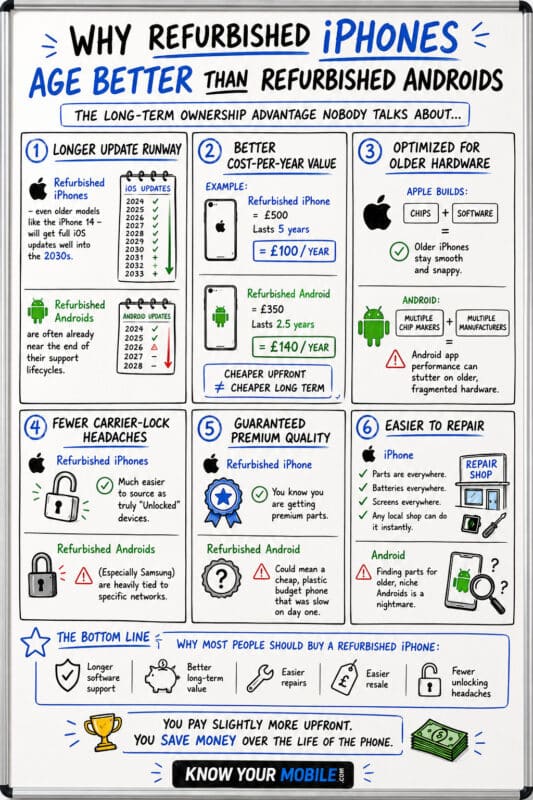
- Longer Update Runway: Refurbished iPhones – even older models like the iPhone 14 – will get full iOS updates well into the 2030s. Older refurbished Androids are often already near the end of their support lifecycles.
- Better Cost-Per-Year Value: iPhones hold their performance longer. Paying a bit more upfront for an iPhone that lasts 5 years is cheaper than buying an Android that slows down after 2 or 3.
- Optimized for Older Hardware: Because Apple builds both the software and the chips, older iPhones stay smooth and snappy. Android app performance can stutter on older, fragmented hardware.
- Fewer Carrier-Lock Headaches: Refurbished Androids (especially Samsung) are heavily tied to specific networks. iPhones are much easier to source as truly “Unlocked” devices.
- Guaranteed Premium Quality: With an iPhone, you know you are getting premium parts. A refurbished Android could mean a cheap, plastic budget phone that was slow on day one.
- Easier Repairs: iPhone parts are everywhere. If you need a cheap battery swap in two years, any local shop can do it instantly. Finding parts for older, niche Androids is a nightmare.
The Bottom Line: For a second-hand device, iPhones offers the best longevity, security, and hassle-free performance for your money.
The Operating System You Go With When Buying Refurbished DOES Make A Difference
Choosing between iOS and Android on a refurbished phone comes down to what you actually want from your phone day to day.
- iOS gives you a simpler, more consistent experience with longer software support.
- Android gives you more choice, more flexibility, and often a lower entry price.
Both deliver excellent value when bought refurbished because you’re skipping the “new phone tax” and getting the hardware you want for 40% to 60% less.
Seriously, use our refurbished phone comparison tool – the savings are mega.
- For most people, a refurbished iPhone 15 (256GB, Unlocked) is the sweet spot: long software support, great cameras, and a price that’s dropped significantly since launch.
- If you want Android, the refurbished Pixel 9 (256GB, Unlocked) is the one to beat: seven years of updates, clean software, and a brilliant camera.
- See the full list of best refurbished phones we’ve tested and rated.
Look, the iOS vs Android debate has been going on for over a decade.
Most of the content you’ll find online is written for people buying brand new.
This guide is different.
It’s specifically for people thinking about going refurbished, and it focuses on the things that actually matter.
We’ll cover real-world use, software lifespan, where the value sits in each ecosystem right now, and which specific models are worth your money.
What’s the Actual Difference Between iOS and Android?
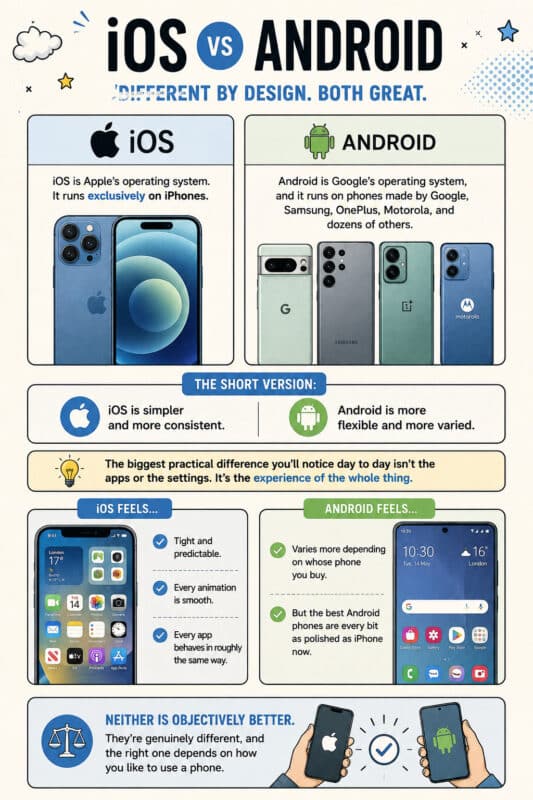
iOS is Apple’s operating system. It runs exclusively on iPhones. Android is Google’s operating system, and it runs on phones made by Google, Samsung, OnePlus, Motorola, and dozens of others.
The short version:
- iOS is simpler and more consistent.
- Android is more flexible and more varied.
The biggest practical difference you’ll notice day to day isn’t the apps or the settings. It’s the experience of the whole thing.
iOS feels tight and predictable. Every animation is smooth. Every app behaves in roughly the same way.
Android varies more depending on whose phone you buy, but the best Android phones are every bit as polished as iPhone now.
Neither is objectively better. They’re genuinely different, and the right one depends on how you like to use a phone.
Which Is Cheaper to Buy Refurbished?
- Android wins on entry price.
- iOS wins on long-term cost-per-year.
You can pick up a solid refurbished Android phone for well under $300.
A refurbished Google Pixel 8 (128GB, Unlocked) is one of the best value phones on the market right now.
It handles everything most people need: photos, social media, WhatsApp, email, navigation. Zero complaints.
On the iOS side, the entry price for a refurbished model worth recommending is a little higher.
A refurbished iPhone 13 (256GB, Unlocked) is the minimum we’d point most people toward, and you’re looking at a bit more than a budget Android.
But here’s the kicker: iPhones tend to last longer.
Apple commits to longer software support windows, which means a refurbished iPhone bought today will almost certainly still be getting security updates in four or five years.
For affordable Android and iPhone deals, the gap has narrowed significantly, but Android still leads when the budget is tight.
Tech Tip: When you’re comparing prices on refurbished phones, think in terms of cost per year rather than upfront price. If an iPhone 15 lasts you five years and an equivalent Android lasts three, the maths often works out in Apple’s favour even if the iPhone costs more upfront.
Which Platform Keeps Getting Updates Longer?
- iOS leads on update length.
- Android is catching up fast, but it depends on the brand.
This matters more on a refurbished phone than on a new one.
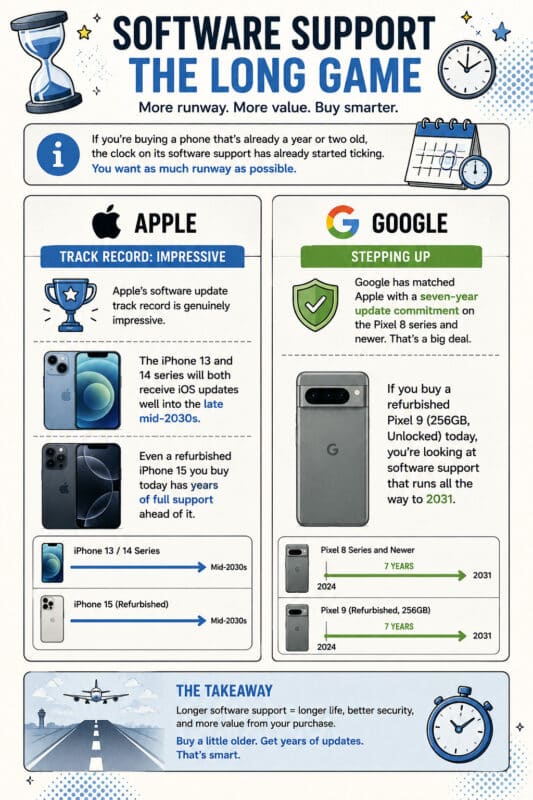
If you’re buying a phone that’s already a year or two old, the clock on its software support has already started ticking.
You want as much runway as possible.
Apple’s software update track record is genuinely impressive.
The iPhone 13 and 14 series will both receive iOS updates well into the late mid-2030s.
Even a refurbished iPhone 15 you buy today has years of full support ahead of it.
Google has matched Apple with a seven-year update commitment on the Pixel 8 series and newer. That’s a big deal.
If you buy a refurbished Pixel 9 (256GB, Unlocked) today, you’re looking at software support that runs all the way to 2031.
Samsung varies. The Galaxy S25 Ultra has a seven-year update promise. Older Samsung models, including most of the S23 series, promise five years.
Which Is Easier to Live With Every Day?
This is where honest, real-world experience matters more than spec sheets.
If you want a phone that just works: go iOS
iPhones are consistent.
- The camera app always opens fast.
- Messages send without drama.
- Apps get updated first (or at least simultaneously).
- iCloud backup is seamless, even if it nags you about storage.
The experience is predictable in the best possible way.
If you’ve used an iPhone before or you’re coming from one, a refurbished iPhone is going to feel immediately familiar.
If you’ve never used one, the learning curve is small.
The one thing iOS doesn’t do well is flexibility.
- You can’t set a different browser as default in the same way you can on Android.
- File management is more limited (meaning it’s terrible).
If you like tweaking your phone, iOS will frustrate you.
If you want more control: go Android
Android gives you more granular control over how your phone’s UX looks and what you can do with it.
You can customise your home screen properly, set different default apps, access your files like a proper folder system, and generally have the phone work the way you want it to work rather than the way Apple decided it should.
Google’s Pixel phones run the cleanest version of Android.
There’s no bloatware, no duplicate apps, no Samsung-specific software layered on top.
The Pixel 9 and Pixel 8 are the best refurbished Android options right now because of this.
Samsung Galaxy phones run Android with their own One UI skin on top. It’s polished and feature-rich, but it’s a heavier experience.
Some people love it. Some people (like me) find it too busy.
Did You Know? Pixel phones have a feature called Call Screen that uses Google’s AI to screen spam calls before they reach you. It answers the call, asks who’s calling and why, and shows you a live transcript. It sounds gimmicky but it’s one of those things you genuinely miss when you go back to iPhone.
What About Switching? Will I Lose Everything?
Switching from Android to iPhone (or vice versa) is easier than it used to be, but it’s not frictionless.
- Switching to iOS from Android: WhatsApp, Gmail, Spotify, Instagram, your bank app, Google Maps. All of it is on the App Store. The things you use every day will transfer without issue. The stuff you’ll miss: Google Assistant (Siri isn’t as capable), default app flexibility, and how Android handles photos across cloud services.
- Switching to Android from iOS: iMessage becomes SMS (green bubbles, smaller file sizes). iCloud photos don’t automatically migrate (you’ll need to export them). Apple Watch won’t work with Android. If you’re deep in the Apple ecosystem, the switch is more disruptive.
If you’ve been using one platform for years and you’re happy with it, stay on it.
- Going refurbished within your existing ecosystem is the lowest-friction option by far.
- If you’re genuinely curious about switching, going refurbished is actually a smart way to try the other side without paying full price for a new device.
For more detail on what these differences mean in practice, the refurbished phone FAQ hub covers a lot of the common concerns around switching and compatibility.
iOS vs Android: The Refurbished Sweet Spots Right Now
Here’s where the real value lives right now, based on confirmed unlocked stock.
| Name | Platform | Best For |
|---|---|---|
| iPhone 15 256GB | iOS | Most people |
| iPhone 15 Pro 256GB | iOS | Photo/video enthusiasts |
| iPhone 14 128GB | iOS | Budget-conscious iOS buyers |
| Pixel 9 256GB | Android | Android first-timers & loyalists |
| Pixel 8 256GB | Android | Budget Android buyers |
| Galaxy S25 Ultra 256GB | Android | Power users who want Samsung |
What About Samsung? Where Does It Fit?
Samsung is the world’s biggest Android phone maker.
Its Galaxy range covers everything from budget A-series phones to the Galaxy S25 Ultra, which is genuinely one of the best phones on the planet right now.
The issue with buying refurbished Samsung is carrier locking.
A huge proportion of Samsung’s refurbished stock in the UK and US market was originally sold through carriers, which means it comes tied to a specific network.
This isn’t always made clear at the point of sale. Always check for “Unlocked” explicitly in the product listing.
The confirmed unlocked Samsung options in our database right now are the Galaxy S25 Ultra (512GB, Unlocked) and the Galaxy S24+ (256GB, Unlocked).
Both are excellent phones.
The S25 Ultra in particular is the top Samsung recommendation right now if you want Android and don’t mind spending a bit more.
If Samsung is your preference, stick to the confirmed unlocked models and check our vetted refurbished phone database before you buy.
Know Your Mobile Verdict
For most people buying a refurbished phone in 2026, the best all-round pick is the iPhone 15 (256GB, Unlocked).
It’s reliable, fast, well-supported, and now genuinely affordable second-hand.
If you prefer Android, the Pixel 9 matches it almost beat for beat on longevity and camera quality, with the bonus of a cleaner, faster software experience than Samsung offers.
Pro-Tip: Whatever platform you go for, always confirm the battery health is above 85% before buying. This is the single number most refurbished listings bury or omit entirely. A phone with 75% battery health will feel sluggish and die early. A phone with 90%+ will perform like new. Don’t skip this check.
FAQ: iOS vs Android for Refurbished Phones
Is it worth buying a refurbished iPhone over a new Android phone?
Yes, in most cases. A refurbished iPhone from a reputable seller will often outperform a new budget Android phone in terms of speed, software support, and reliability. The iPhone 14 and iPhone 15 in particular represent excellent value when bought refurbished. You get Apple hardware and software longevity at a fraction of the new price.
Do refurbished Android phones get software updates?
It depends on the brand and the phone’s age. Google Pixel 8 and Pixel 9 phones come with a seven-year update commitment, which is as good as anything on the market. Samsung Galaxy S25 series also promises seven years. Older or budget Android models may have shorter support windows, so always check before buying.
Can I use any SIM card in a refurbished phone?
Only if the phone is unlocked. Many refurbished phones, particularly Samsung Galaxy models, were originally sold through carriers and remain locked to that network. Always look for “Unlocked” in the product listing. If it doesn’t say unlocked clearly, assume it’s locked.
What is a good battery health percentage for a refurbished phone?
Aim for 85% or higher. Below 80% and you’ll start noticing significantly shorter battery life. Most reputable refurbished sellers will list the battery health clearly. If it isn’t listed, ask before you buy. On iPhone, you can check battery health yourself under Settings > Battery > Battery Health.
Which platform has better apps: iOS or Android?
Both have access to the same major apps: WhatsApp, Instagram, Spotify, Google Maps, Netflix, your bank. The difference is that iOS tends to get app updates first and apps are often more polished on iPhone due to tighter developer standards. Android has more app variety overall and allows sideloading apps outside of the Play Store, which is useful for some users.
Looking for more buying advice? Browse the full range of refurbished smartphones we’ve tested and vetted, or check the latest refurbished phone deals updated regularly by our editorial team.